Tuesday Oct 13, 2026
Tuesday Oct 13, 2026
Tuesday, 13 October 2026 01:31 - - {{hitsCtrl.values.hits}}
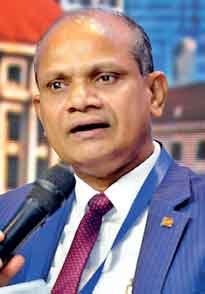 |
| Department of Commerce Acting Director General Somasena Mahadiulwewa |
Sri Lanka will prioritise its stalled trade negotiations with India and China before turning to new markets in Africa and the Middle East, following a Government review of free trade agreements (FTAs), the Department of Commerce said yesterday.
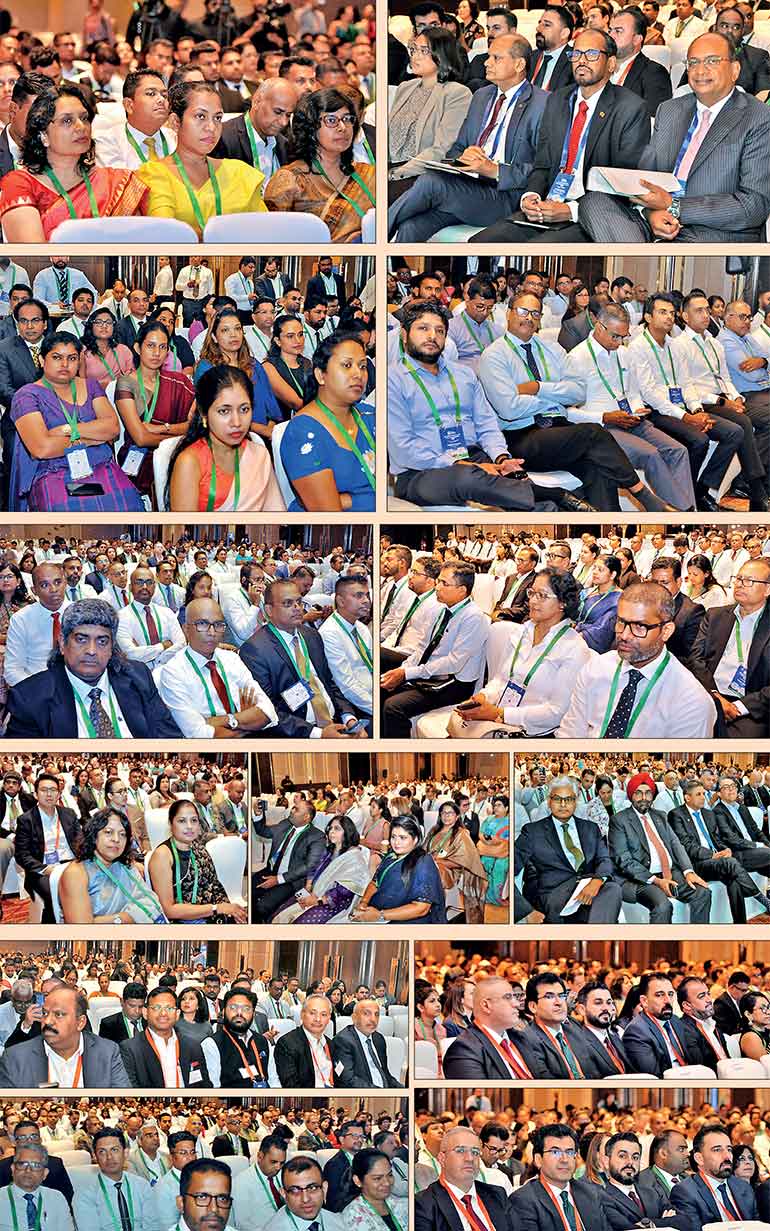
Speaking at the investment panel of the Sri Lanka Economic and Investment Summit (SLEIS) 2026, Department of Commerce Acting Director General Somasena Mahadiulwewa said the new Government had decided to review all existing FTAs, as well as those on hold. The review, ordered in October last year and completed in August, has been adopted by policymakers, with directions given to proceed with new FTAs.
The Ministry of Trade Secretary has been appointed Chief Negotiator, a National Trade Negotiating Committee is being set up and sub-committees have been appointed, he said.
Future FTAs will not be limited to goods but will cover investment, services, Government procurement, e-commerce, trade facilitation and dispute settlement, Mahadiulwewa said. They will link exports, investment and services, aim to connect Sri Lanka to global and regional value chains and be based on feasibility studies.
The first priority will be the agreements on hold: deeper engagement with India under the proposed Economic and Technology Cooperation Agreement (ETCA), which would build on the existing goods-only FTA, and a pending FTA with China. Sri Lanka would then reach out to new regions, he said, noting that proposals had been received from the UAE and Oman and that agreements with Africa were under assessment. The department is also considering opening new trade posts in Africa.
Mahadiulwewa acknowledged that Sri Lanka’s trade negotiating capacity was limited, so new agreements would be taken up gradually.
The comprehensive FTA with Thailand, signed in 2024, has not been ratified due to legal issues. The Government hopes to implement it next year once ratification is completed, he said.
Sri Lanka’s bid to join the Regional Comprehensive Economic Partnership (RCEP), the 15-member bloc comprising the ASEAN nations, China, Japan, South Korea, Australia and New Zealand, is also progressing. Sri Lanka applied in 2023 and has answered hundreds of questions on its readiness, and ASEAN ministers have appointed an ad hoc working group to take its accession forward.
Sri Lanka will also have to reapply for the EU’s Generalised Scheme of Preferences Plus (GSP+), which grants duty-free access, under the scheme’s next cycle, given changes including the country’s income classification, Mahadiulwewa said. The process has already begun. Under the UK’s Developing Countries Trading Scheme (DCTS), Sri Lanka has since January been allowed to use third-country fabric in apparel exported to the UK, a major benefit for the apparel industry, he noted.
Preferential schemes currently cover 41% of Sri Lanka’s exports, with EU GSP+ alone accounting for over 18%. In contrast, the country’s FTAs and regional trade arrangements together account for only 8% of total exports.
Of Sri Lanka’s exports to India, which exceeded $ 1 billion last year, 61% went under the FTA, while only 9% of imports from India used it, he said. Over 64% of exports to Pakistan go under the FTA with that country. Key exports to India under the agreement include garments, insulated wires, bicycles, furniture, spices, aluminium products, rubber gloves, tyres and activated carbon, while exports to Pakistan are mainly essential oils, spices and desiccated coconut, with pineapple recently added. Apparel accounts for over 75% of exports to the UK under the DCTS.
“If you are thinking of entering the Asian and South Asian markets through Sri Lanka while keeping your investment base here, this is the time,” Mahadiulwewa told investors.
The department’s 33 commercial officers, stationed in Sri Lankan missions in 28 countries, are responsible for investment and tourism promotion as well as trade, and serve as a first point of contact for prospective foreign investors, he added.