Tuesday Nov 10, 2026
Tuesday Nov 10, 2026
Tuesday, 10 November 2026 00:18 - - {{hitsCtrl.values.hits}}
By Safna Malik
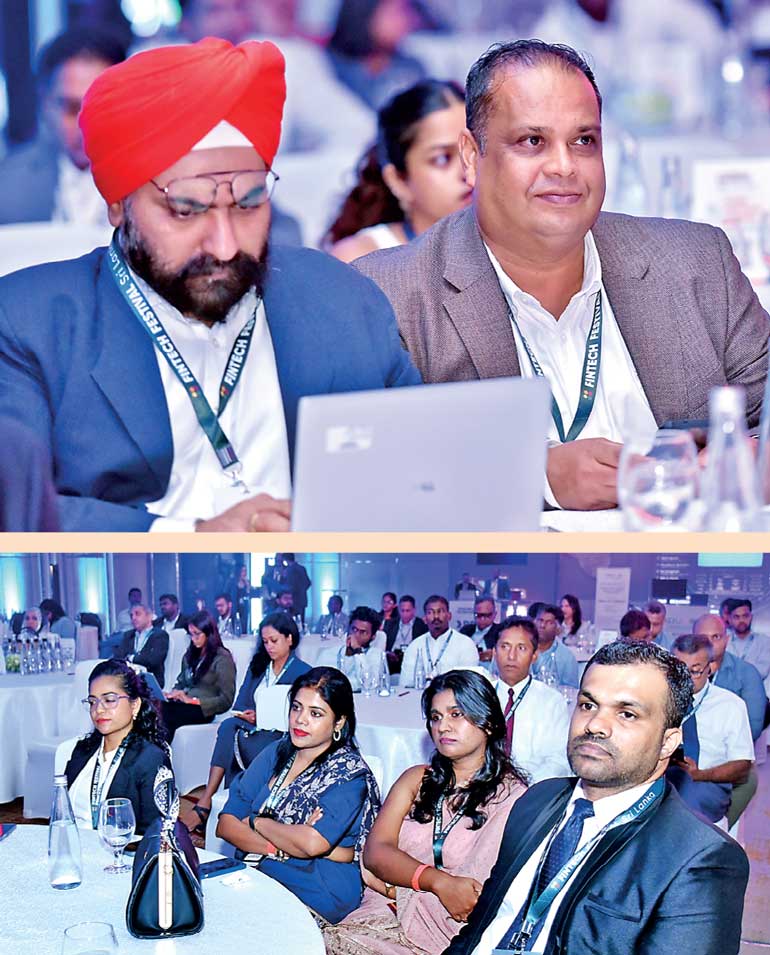
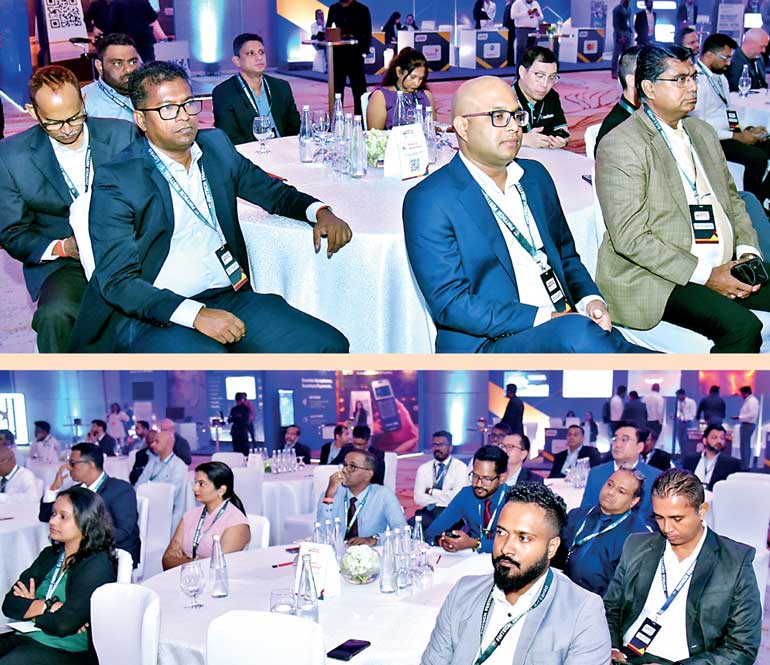
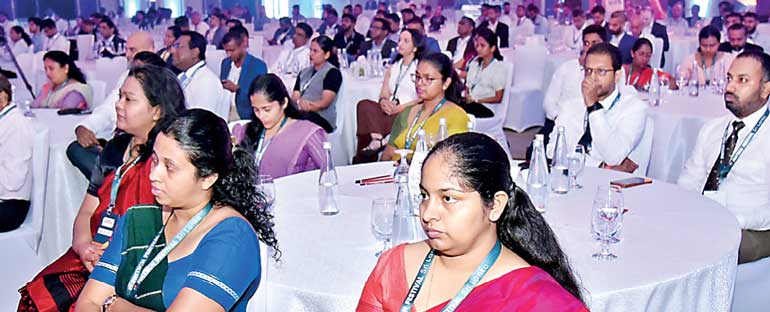
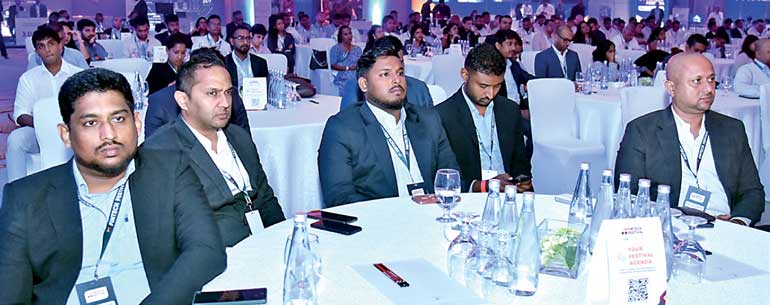
The Sri Lanka FinTech Festival 2026, organised by FinTech Forum Sri Lanka in collaboration with the Digital Economy Ministry and powered by Visa, recently brought together policymakers, regulators, financial institutions, fintechs, technology providers and investors to discuss the future of digital finance and Sri Lanka’s ambitions to become a regional fintech hub.
Opening the discussions, PhonePe CEO and International Payments Executive Director Ritesh Pai said successful fintech innovation starts with solving real customer problems rather than building products without clear demand. “It’s very fashionable for founders to fall in love with their solution and then go in search of a pain point. It doesn’t work like that,” he said.
Adoption depends on removing friction. “If you want to drive consumption, you have to eliminate friction,” Pai said. He urged banks, fintechs and telecom operators to work together while maintaining strong risk management and regulatory engagement. “The future of fintech isn’t about disruption through destruction, but by growth through collaboration.”
Pai identified agentic AI, decentralised digital KYC and graph neural networks as technologies that could reshape financial services. He said Sri Lanka has the potential to build “a very lean, efficient, and a deeply inclusive financial infrastructure”.
Future of FinTech
A panel featured NPCI Managing Director and CEO Dilip Asbe, PictureWealth Co-founder and Chairman Neal Cross, GovTech Sri Lanka Chairman and Chief Advisor to the President on Digital Economy Dr. Hans Wijayasuriya, Visa Sri Lanka and Maldives Country Manager Avanthi Colombage, and LOLC Finance and LOLC Technologies Chairman Conrad Dias.
Asbe said fintechs have expanded financial inclusion, QR payments and digital customer experiences, with AI expected to be the next growth driver. Firms must also strengthen compliance, cybersecurity and risk management as the industry moves from APIs to AI. “The fintechs that transition now, from the API era to the AI era, will be very interesting to watch.”
For Sri Lanka to reach the next level, Asbe called for sovereign payments, sovereign data capabilities and sovereign financial-services models built on digital public infrastructure, interoperability and consumer choice. “First, sovereign payments, sovereign data and sovereign models.” He also backed innovation-friendly policies and the value of self-regulatory organisations.
Cross said banks and fintechs are increasingly becoming customer-focused financial-services providers. He urged Sri Lankan fintechs to expand beyond payments into lending, wealth management and corporate banking. There would be no concept of banks and fintechs, he said, “just finance companies solving retail customers’ problems.”
Sri Lanka has strengthened its foundations through digital identity, digital KYC and regulatory improvements, Cross noted, but further reforms are needed to help startups raise capital and scale locally. “For a Sri Lankan fintech, if you want to be successful, you currently have to headquarter in Singapore.”
Dr. Wijayasuriya said fintech is critical to converting digital activity into economic value. He highlighted progress on digital public infrastructure, including the upcoming digital ID programme, but warned that adoption must accelerate. “Are we going in the correct direction? Yes. Are we going fast enough? No.”
He revealed that Sri Lanka is developing a virtual asset regulatory framework with the Central Bank. “A newer initiative coming up is the setting up of a steering group together with the Central Bank of Sri Lanka to chart out a broad-spectrum digital financial services roadmap for the next two to three years.” He added that the country’s smaller market needs “a guided ecosystem where each layer is correctly populated with the right talent and the right innovative companies.”
Colombage said the industry is shifting from disruption towards collaboration. Banks should view fintechs as partners rather than competitors, she said, combining innovation with the trust and infrastructure of established institutions. “Collaboration is at the centre of everything and solving a consumer’s problem is the priority.”
Dias said fintech firms must move beyond payments to broader needs such as credit and financing as payment functions become embedded in digital experiences. “This payment, in reality we are talking about agentic commerce and all that, will be hidden or invisible.” The FinTech Forum is already working with the Central Bank on governance structures for fintech providers, he noted. “It is the problem we are going to solve for the end user or end customer.”
Building unicorns and monetisation
Speaking on “Building Unicorns and Monetisation," Arc Founder James said Sri Lanka has the ingredients to build globally successful startups but must strengthen its ability to attract talent, capital and entrepreneurs. He highlighted Arc’s presence in the country, including its Mirissa campus, and revealed that Curious Ventures, a $10 million pre-seed fund, has allocated $1 million for founders building through Arc Sri Lanka.
James called for an entrepreneurial visa, founder-friendly tax policies and a fintech regulatory sandbox. Regulatory barriers and difficulties in attracting foreign investment often force startups to set up holding companies overseas, he said, sending intellectual property, capital and future value out of the country.
“If you pull it all together, you can create an incredible zone that truly means that Sri Lanka is the best destination in the world outside maybe San Francisco to build financial technology and unicorns,” he said.
A panel then explored how to build global fintech companies from Sri Lanka. It featured Surge Global Founder and Short Circuit Group Managing Director Bhanuka Harischandra, James, iPiD APAC Regional Director Quinn Pham and Pai, who is also PhonePe CEO of International Payments.
Harischandra said Sri Lanka’s biggest challenge is not ambition but the concentration of talent, capital and experience. “One of the things Sri Lanka truly lacks and needs to spend considerably more time and energy on is talent density.” Limited access to capital often forces startups to structure treasury functions overseas, he said. “We arranged the structure so that our capital centre, treasury function and core operations were in Singapore, while the Sri Lankan operations functioned primarily as a delivery centre.”
He warned that AI is rapidly commoditising software. “Software itself is being commoditised so aggressively that its value is declining.” Sri Lanka’s reluctance to embrace risk remains a major barrier, he said. “We have a culture of not taking risks.” Even so, fintech is one of the strongest candidates for the country’s next billion-dollar business. “There is a very real possibility that Sri Lanka’s next unicorn could be a fintech company.”
Local banks are increasingly supporting overseas expansion through offshore lending facilities, he said. “We used the offshore lending capabilities of domestic banks.”
James encouraged founders to prioritise customer problems, recurring revenue and sustainable business models over valuation headlines. “We tend to get influenced by herd mentality. We focus on what I call vanity metrics, such as valuations and the number of customers onboarded, without examining whether these activities are actually generating profits.”

Sri Lankan startups often receive lower valuations than comparable regional companies because venture capital activity remains limited, he said. “The same quality of company could attract five to ten times that valuation in Singapore.” While Sri Lanka can produce unicorns, retaining them and their value will be the greater challenge.
James also highlighted the rise of agentic finance. “In five to ten years, decisions may not necessarily be made directly by people. AI agents could be making many of these decisions and carrying out transactions.”
Pham said the next major opportunity in cross-border payments lies in trust and recipient verification as real-time transactions become the norm. “Money is now moving instantly. The next major opportunity is to facilitate greater trust and provide safer payment experiences.”
Pai said PhonePe used payments as an entry point to build a broader ecosystem of consumer and financial services. “Payment is the final stage of fulfilling a transaction.” Explaining PhonePe’s decision to move its headquarters from Singapore back to India, he said the move was driven by the location of its users, merchants and revenue base. He urged Sri Lankan founders to build with global ambitions from the outset. “The country has the potential to produce unicorns, but it needs robust public digital infrastructure.”
Countries should invest in domestic payment infrastructure to strengthen resilience, he said. “It is imperative for every country to have its own domestic payment ecosystem.”
Sustainable and inclusive FinTech
Speaking on “Inclusion and Sustainability in Fintech”, Visa APAC Vice President and Head of Home Platforms and Digital Solutions Krishna Tiruvengaram said fintech should be judged not by access alone but by how well it improves financial outcomes for individuals and businesses. He urged firms to design for underserved users, taking digital literacy, connectivity and trust into account, and encouraged lenders to build models that reflect the real income patterns of small businesses and informal workers.
He pointed to LankaQR, a supportive regulatory environment and initiatives such as Visa Acceptance as foundations for the next phase. “We can get the first transaction, we need to earn the second,” he said.
A panel moderated by Advocata Institute CEO Dhananath Fernando featured Global Finance & Technology Network Group CEO Sopnendu Mohanty, BPC APAC Head of Presales Geoffrey Tunbridge, Maharaja Foods PLC Chairman and Board Director/Advisor Imran Furkan, Ant International Head of Sustainability James Jing Xu and PickMe Founder and CEO Jiffry Zulfer.
Tunbridge said interoperability is the foundation of a successful payments ecosystem. “Interoperability is essential because it drives down prices and fees.” Long-term sustainability will come from value-added services rather than charging users for payment access, he said.
Drawing on Singapore’s experience, Mohanty said Sri Lanka should build on its payment infrastructure by encouraging competition and wider adoption among small businesses, with cybersecurity, consumer protection and fraud prevention keeping pace. He said transaction data could support credit assessments and called for regulation that aligns compliance with risk levels. “Sri Lanka should consider moving from entity-based regulation towards activity-based regulation.”
Zulfer identified trust, reliability and transaction costs as the biggest barriers to wider adoption. “We must remember that we are competing with cash.”
Xu said digital adoption among tourism SMEs depends on more than connectivity. It requires simple onboarding, transparent pricing, strong customer support and acceptance of international payment methods, he said. “Technology becomes a bridge between international tourists and local SMEs.”
Furkan said the financial sector must move beyond collateral-based lending. Open-banking frameworks, invoice financing and potential digital banking licences could improve SME access to capital, he said. “Transaction data today is far more valuable than collateral.”
Cybersecurity and fraud prevention
Speaking on “Cybersecurity and Fraud Prevention”, Novus Technologies Ltd COO Thorsten Hellwig warned that Sri Lanka’s fast-growing digital payments ecosystem is a larger target for cybercriminals, with AI-powered fraud, phishing and deepfake attacks becoming more sophisticated. Traditional controls are no longer sufficient, he said, calling for intelligence sharing, real-time transaction monitoring and AI-driven fraud detection. “AI attacks can only be defended with AI defence,” he said.
A panel featured Círculo de CISO Founder and President Sujit Christy, Commercial Bank of Ceylon Chief Information Security Officer Sunari Dandeniya, Council of Europe Cybercrime Programme Office Programme Manager Catalina Stroe, Central Bank of Sri Lanka Chief Information Security Officer Sanje Balasuriya and HSBC Managing Director and Global Head of Fraud, Risk and Compliance Levent Kutluca.
Christy warned that AI-powered identity impersonation could be the most dangerous challenge over the next year. “A trusted identity impersonation powered by AI. That is going to be the biggest threat.” Dandeniya said AI is accelerating the scale and speed of attacks. “The sheer volume of attacks and the localisation of targets. Fraud is increasingly powered by AI.”
Stroe said cybercrime routinely crosses borders and cannot be tackled by institutions or countries acting alone. “The harm crosses borders and institutions. We need a coordinated response and strong inter-agency and international cooperation.” Balasuriya added: “We need to work collaboratively and share intelligence to prevent sophisticated attacks.”

Dandeniya called for faster mechanisms to remove phishing websites, fraudulent domains and scam phone numbers. “When a bank detects a phishing domain or a scam telephone number, there should be a way to have it taken down quickly.”
Attackers increasingly target customers, suppliers and third-party vendors rather than banks directly, she warned. “Sometimes, it is easier to attack a small-scale vendor connected to a bank than to attack the bank itself.”
Balasuriya said cyber incidents become financial stability concerns once they undermine public confidence. “When an incident affects the wider system, it is no longer just an institutional issue. It becomes a matter of financial stability and trust.”
Kutluca said cyberattacks are becoming faster, larger and more sophisticated. “What used to be an elite capability is now widely accessible.” Banks should create friction for criminals rather than legitimate users, he said. “The objective should not simply be to make everything seamless. It should be to make the experience seamless for the customer while introducing friction for the criminal.”
On AI governance, Christy warned that employees may unintentionally expose sensitive information through AI tools. “You have to treat it like an identity. You need to map its entire lifecycle.” Balasuriya highlighted the challenge of unauthorised “shadow AI”. “We need a proper governance framework, with appropriate guardrails to protect sensitive information.”
Stroe highlighted the value of Sri Lanka’s participation in the Budapest Convention on Cybercrime. “It provides the possibility of requesting the urgent preservation of electronic evidence and access to a trusted network of designated points of contact.” She said fraud victims should be supported rather than blamed.
Digital assets and asset tokenisation
Speaking on “Digital Assets and Asset Tokenisation”, PictureWealth Co-Founder and Chairman and Peppermint Innovation Non-Executive Director Neal Cross said the biggest opportunity lies not in cryptocurrency speculation but in tokenising real-world assets and mainstream financial products.
He said digital assets fall into three categories, namely digital currencies, tokenised assets and NFTs. Volatile assets such as Bitcoin behave more like equities, he said, while stablecoins are better suited to payments because they hold a one-to-one relationship with fiat currencies. Tokenisation allows illiquid assets such as property, bonds, equities, artwork and commodities to be divided into smaller units and traded more efficiently. “When something is cheaper and faster, it tends to be successful,” he said.
Regulation is less of a barrier than many assume, as several jurisdictions already apply existing securities frameworks to tokenised assets, Cross argued. Institutions entering the sector must focus on governance, board-level understanding, risk management and custody, he said, and cannot afford to ignore customer demand. “The stuff we do today is getting a remap for tomorrow,” he said. “And we need to be ready.”
The two-day event included the FinTech Expo conference, with exhibition floors, keynotes and panel discussions. It concluded with FinTech Night and the FinTech Awards 2026, which recognised contributors to Sri Lanka’s fintech ecosystem.
- Pix by Ruwan Walpola