Thursday Oct 22, 2026
Thursday Oct 22, 2026
Thursday, 25 June 2026 05:10 - - {{hitsCtrl.values.hits}}
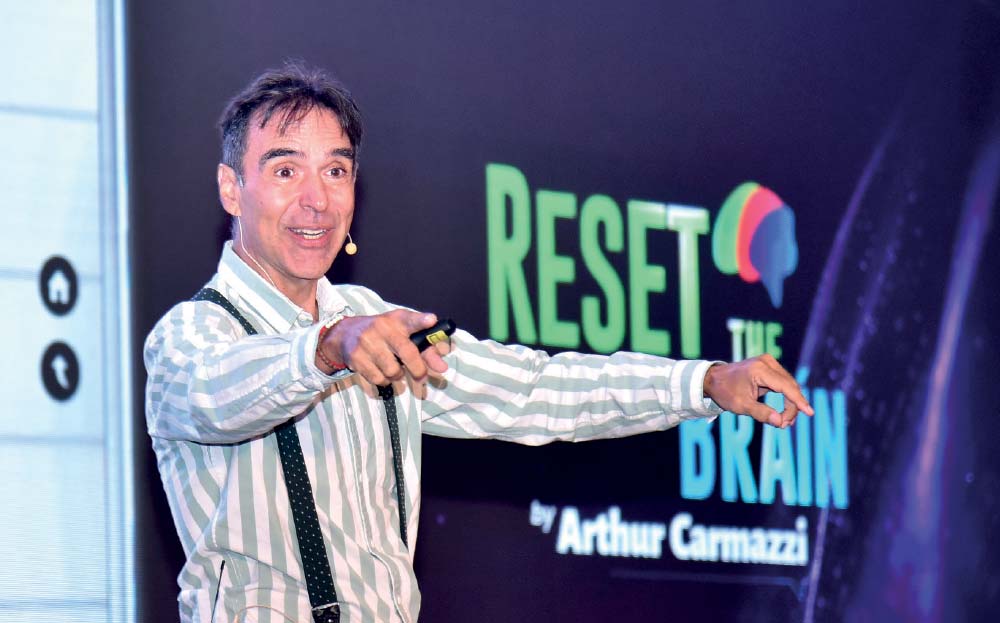
World’s #1 Culture/Colour Brain Thinker and bestselling author Arthur Carmazzi
 The standard belief is that if you’re going to create a culture, it’s got to be top down. But that’s not how it works anymore… If we’re going to create real culture change, it needs to be bottom-up
By Divya Thotawatte
In an era where organisations are grappling with employee disengagement, generational shifts, and evolving workplace expectations, traditional management practices are increasingly failing to meet the needs of a rapidly changing workforce, renowned leadership expert Arthur Carmazzi said recently.
He stressed that the solution was not management frameworks or performance systems, but a fundamental rewiring of workplace culture. He said that organisations must move beyond measuring outputs alone, instead creating environments where employees feel connected to a shared purpose and are empowered to contribute and grow.
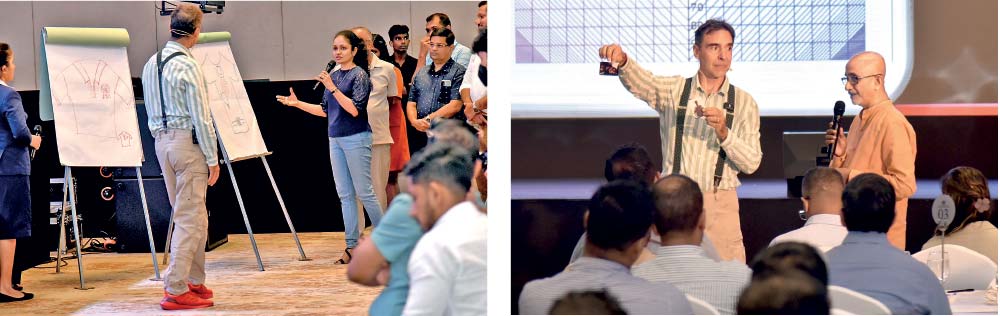
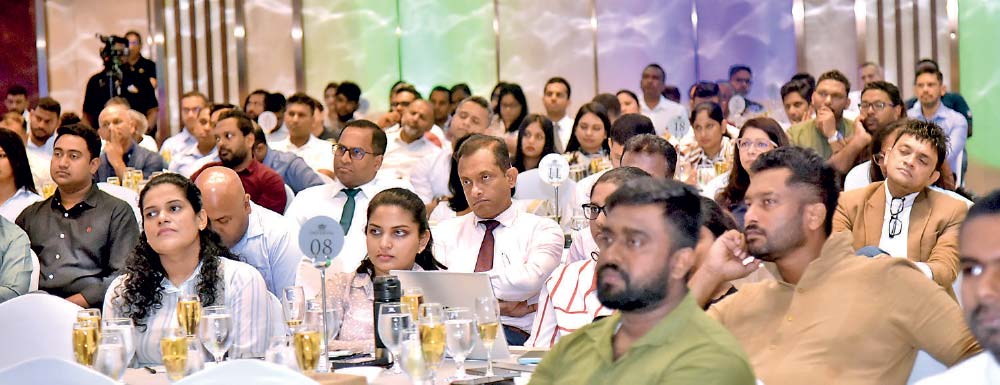
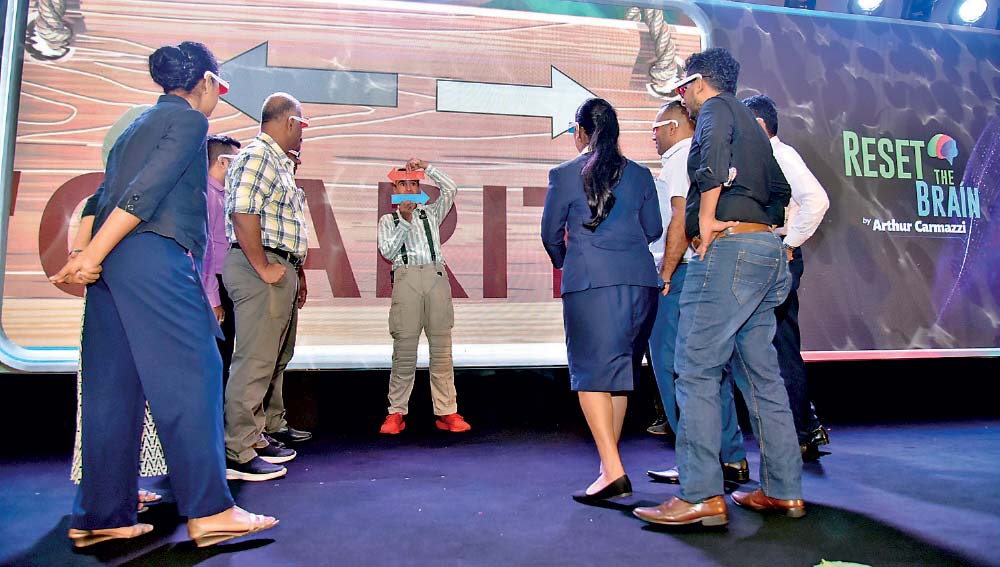
Carmazzi, the world’s #1 Culture/Colour Brain Thinker and bestselling author, shared these views during his highly anticipated ‘Reset the Brain’ workshop in Sri Lanka organised by AdStore Events in partnership with the Daily FT. The event focused on team dynamics, leadership development, and organisational culture transformation through his exclusive expertise, gathering an audience of corporate leaders, business leaders, decision-makers, and department heads.
Addressing the organisational leaders and professionals present, Carmazzi stressed that workplace culture was not shaped merely by policies or management structures, but by human behaviour, relationships, and purpose. According to him, one of the biggest barriers to employee engagement is that often, people tend to define themselves through their job titles rather than through the value they create.
“If we identify ourselves with just the title of our job instead of what our job and our effort mean to the big picture, well, it›s not really exciting,” he said, explaining that the reason many employees grew detached from their work was because they struggled to connect their daily responsibilities to organisational goals.
“On Monday morning, when you wake up, do you go, ‘Wow, I get to go to work today? Yay!’ Or do you go, ‘oh, is it Monday again?’”
Carmazzi advised that organisations must do more to help employees connect their daily responsibilities to meaningful outcomes if they hoped to build teams that were more highly engaged. Similarly, employees also need to feel valued within their organisations, he said.
Asking the workshop participants if they believed their organisations would be affected if they left, he observed how only a few indicated that they felt indispensable. According to Carmazzi, employees who understand their value are more likely to take ownership and show initiative, while remaining committed to organisational success.
If you can understand people well enough, you can help them succeed
Moving beyond outdated performance reviews
One area that requires urgent change is performance management, said Carmazzi. He questioned the effectiveness of annual and biannual performance reviews, noting that they often provided feedback too late to influence behaviour or improve outcomes. “By the time you already have the annual review, it’s too late.”
Carmazzi advised that instead of focusing solely on end results, organisations should identify the behaviours that contribute to success and provide employees with opportunities to develop those behaviours continuously. He said that performance measurement should become a tool for growth rather than a process that only highlights mistakes after they have occurred.
“What if we could actually take the lower performers and the medium performers and help them rise? Would it help your company to not only be more successful, but help people to feel good about themselves because they’re more successful in the company?”
Many companies invest heavily in training programs, but fail to create workplace environments that support employees in applying what they have learned. Carmazzi explained that employees frequently return from training motivated to implement new ideas, only to encounter organisational cultures that discourage experimentation or fail to reinforce positive behavioural change. As a result, many initiatives fail to deliver lasting impact despite the significant investments made for employee learning and development, he highlighted.
Understanding how people think
A central focus during Carmazzi’s workshop was his ‘Coloured Brain’ framework, which sought to explain how individuals process information and gain clarity. He explained that many workplace conflicts stemmed not from differences in goals, but differences in how people approached problems and made decisions. “Remember, behaviour is analysis. The process is different.”
Carmazzi explained that individuals generally sought clarity in different ways. In his Coloured Brain framework, green-brained individuals gain clarity through action, red-brained individuals through structure and logic, purple-brained individuals through information and details, while blue-brained individuals rely more on reflection and intuition.
He stressed that no colour was inherently better than the other, as each brought different strengths to problem-solving, communication, and decision-making. He further stressed that the framework was not intended to categorise personalities but rather to understand how people arrived at conclusions and make sense of their environment. By recognising these differences, organisations could improve communication, reduce misunderstandings, and create stronger collaboration across teams.
Throughout the workshop, Carmazzi demonstrated how understanding individual thinking styles could help leaders identify employee motivations, manage expectations, and build more effective working relationships, highlighting how “if you can understand people well enough, you can help them succeed.”
Instead of just letting AI do all this work for you and giving you something mediocre, you give it the direction. You give it the vision
Rethinking culture change
Carmazzi also challenged the conventional belief that workplace culture was created exclusively by senior management.
“The standard belief is that if you’re going to create a culture, it’s got to be top down. But that’s not how it works anymore… If we’re going to create real culture change, it needs to be bottom-up.”
He explained that the modern workplace operated in the “post-Facebook era”, where employees had immediate access to recognition, validation, and social connection outside the workplace. As a result, organisations could not rely entirely on their management directives to change behaviour and engagement anymore. Instead, employees themselves must also play a role in creating the culture they want to work within.
“The people create the culture for themselves within the guidelines, and then, the people perpetuate the culture because it’s their culture.”
Employees who feel ownership over their workplace are more likely to sustain and protect it over the long-term, he added. He compared this approach to the sense of autonomy people felt when managing their own projects, where they become more invested in outcomes and more committed to collective success.
While leadership still plays a critical role in establishing boundaries and direction, culture becomes more effective when employees play a part in shaping it rather than simply being expected to follow it, he said.
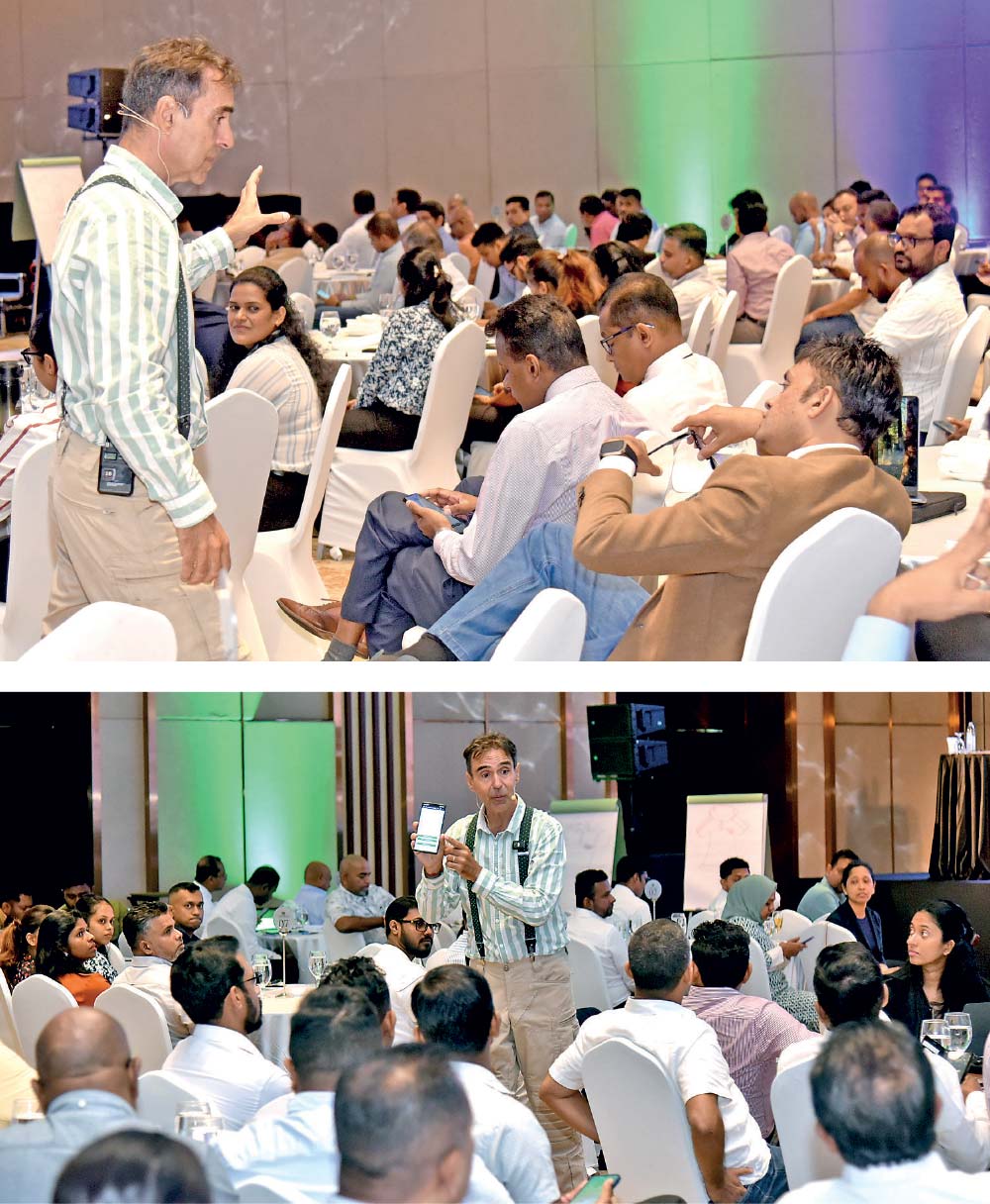
If we identify ourselves with just the title of our job instead of what our job and our effort mean to the big picture, well, it’s not really exciting
Workplaces that feel safe
Psychological safety was also a central theme throughout the workshop.
Speaking on his own experiences in leadership, Carmazzi highlighted how departments within organisations often became trapped in cycles of blame, creating environments where employees focused on protecting themselves rather than solving problems. He discussed a period of his own career when he had found himself frustrated by organisational dysfunction, and only had later realised that many of the people he blamed faced similar challenges.
“I found out that they were real human beings. They also wanted to do big things. They wanted to create great things. They wanted to be the best version of themselves. But they also got stuck.”
The problem was not individuals employees, but workplace environments that discouraged risk-taking and open communication, Carmazzi explained. He advised that organisations must actively create “no-blame zones” where mistakes are treated as opportunities for learning rather than reasons for punishment.
“When somebody blames you, how do you feel after they blame you? Do you feel like, ‘oh, great! Now I’m ready to go and fix the problem!’?”
Instead of assigning fault, managers should help employees understand the consequences of the mistakes, identify solutions, and take ownership of corrective action, he advised, noting that such an approach would strengthen accountability while reducing fear and defensiveness.
Carmazzi also highlighted the tendency for people to create assumptions and interpretations for situations without having all the facts, leading to unnecessary conflict and mistrust. By recognising these tendencies and encouraging open communication, organisations could create environments where employees feel comfortable sharing ideas, raising concerns, and taking initiative.
Human creativity in the age of AI
As artificial intelligence becomes increasingly embedded in workplaces, Carmazzi warned against allowing technology to replace critical thinking. While AI can process information rapidly and assist with routine tasks, human creativity, judgement, and leadership still remain indispensable, he said.
“The moment that you start giving all of your creativity to AI, you start losing your creativity.”
According to Carmazzi, many employees use AI simply to obtain quick answers rather than leveraging it as a tool to expand their thinking. Instead, professionals could guide AI through better questioning, stronger context, and clearer direction.
“Instead of just letting AI do all this work for you and giving you something mediocre, you give it the direction. You give it the vision.”
He also expressed concern that younger generations risked becoming overly dependent on technology if they failed to develop the critical thinking skills necessary to challenge, refine, and improve AI-generated outputs. For organisations, the challenge is not whether AI will become part of the workplace, but whether employees will learn to lead technology rather than be led by it, he emphasised.
Designing the ideal workplace
While workplaces continued to evolve with technology, Carmazzi highlighted how the core drivers of employee engagement had remained unchanged.
During one exercise, he requested participants to identify the characteristics of their ideal working environment. Despite differences in age, profession, seniority, and background, he highlighted how the responses were noticeably consistent.
Carmazzi also brought up similar exercises conducted in dozens of countries, where employees had repeatedly identified many of the same priorities: trust, teamwork, clear communication, supportive leadership, and opportunities to enjoy their work.
The findings demonstrated that while people may think differently and approach challenges in different ways, they often shared common aspirations about the environments in which they want to work. Organisations that understand these human needs will ultimately be able to better attract talent, improve engagement, and sustain long-term performance, Carmazzi noted.
“We don’t want to be mediocre, we want to be successful. Successful in our own way, whatever our own way is, but we want to feel like we have purpose in our life,” he pointed out.
Corporate sponsors of the workshop were LOLC and Interocean Logistics. Electronic media partners were Kiss FM, Real FM, Siyatha TV and FM and hospitality partner was Jetwing Colombo 7 whilst knowledge partners were Sri Lanka Institute of Directors and Sri Lanka Institute of Marketing.
- Pix by Ruwan Walpola