Friday Oct 02, 2026
Friday Oct 02, 2026
Tuesday, 18 August 2026 11:32 - - {{hitsCtrl.values.hits}}

Geopolitics Scholar Prof. C. Raja Mohan, Opposition MP Dr. Harsha de Silva, Former BOI Chief Thilan Wijesinghe, AMW CEO Jawahar Ganesh, Former Foreign Secretary Prasad Kariyawasam, Daily FT Editor/CEO Nisthar Cassim (Moderator)
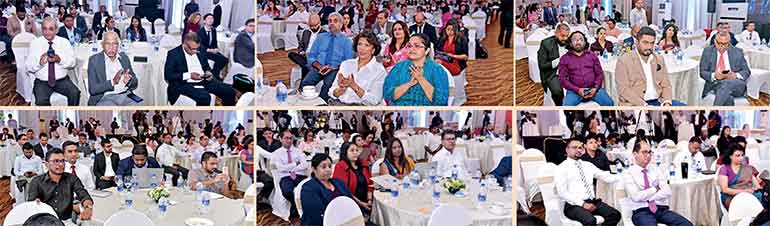
Sri Lanka’s next phase of economic integration with India will require more than another trade agreement: it will demand political champions, stronger negotiating capacity, institutional continuity and a willingness to confront vested interests, according to a high-powered panel at the “India Calling” forum organised by the Lanka India Business Association (LIBA) recently. The panel brought together former Foreign Secretary Prasad Kariyawasam, former BOI Chief Thilan Wijesinghe, Opposition MP Dr. Harsha de Silva, Indian geopolitics scholar Prof. C. Raja Mohan, BASL President Rajeev Amarasuriya and AMW CEO Jawahar Ganesh. The session was moderated by Daily FT Editor and CEO Nisthar Cassim. The experts argued that the debate must move beyond traditional questions of exports and imports towards deeper production, services, investment and supply-chain integration. Below are excerpts of the discussion;
By Charumini de Silva
Q: It has been nearly three decades since the Indo-Lanka FTA was signed and 26 years since implementation. Why has deeper integration stalled, and how can we move forward?
Thilan: Things have changed, largely because the environment for proactive reforms is no longer as conducive. To understand how we move forward, we need to understand what enabled the original FTA. First was the research and policy foundation. The idea of integrating the Indian and Sri Lankan economies was promoted by Dr. Rajah Wadhana, who later became an economic adviser to President Chandrika Kumaratunga, the political champion of the agreement. Second was research support. The Central Bank’s Research Department played an important role when negotiations reached an impasse because of Treasury opposition. The Central Bank presented the case directly to the President and made the argument for proceeding. Third was institutional capacity within the Department of Commerce, particularly the negotiating team. Fourth was the political relationship between India and Sri Lanka. I remember being told by an Indian Joint Secretary of Commerce: “Tell your President that this is the best time to negotiate a free trade agreement.” Late Prime Minister Atal Bihari Vajpayee had apparently told Indian officials that India had been “unfair to Sri Lanka”, particularly in relation to the events of the 1980s. Therefore, even where a particular clause might have been somewhat unfavourable to India, they were prepared to accommodate Sri Lanka. That helped produce an asymmetric agreement that was highly beneficial to us. Those conditions need to be recreated. We need a political champion, strong research support and institutional capacity.
Q: Professor, what were the political and administrative obstacles at the time?
Prof. Raja: I would add to what Thilan said. Interestingly, the agreement was signed between India’s Commerce Department and Sri Lanka’s Finance Ministry, rather than the Commerce Ministry. That itself demonstrates some of the institutional asymmetries. There was considerable reluctance in both countries. In India, there was pressure from States, particularly Kerala, over certain products. That resulted in quotas for apparel, paper, desiccated coconut and tea. One might ask why a large economy like India needed quotas on imports from a small economy such as Sri Lanka. But it demonstrates how difficult the negotiations were. Ultimately, the vision and persistence of Dr. Rajah Wadhana and Dr. Manmohan Singh, who was the key Indian-side champion, helped overcome that resistance. Both had worked at WIDER and were instrumental in pushing the process despite reluctance within the bureaucracy and resistance from sections of the private sector. The FTA was a major breakthrough. But the real bottleneck was institutional and political reluctance on both sides.
Q: What were the key bottlenecks?
Prof. Raja: The agreement was asymmetric and Sri Lanka benefited more than India. But an important point is that much of the economic relationship that subsequently developed has happened outside the FTA framework. The FTA has been successful in many respects, but it is now 25 years old and needs to be updated and upgraded.
Q: What has changed in India’s approach to FTAs after the first deal with Sri Lanka?
Prof. Raja: The original opening towards Sri Lanka was driven considerably by political leadership and the logic of being a good neighbour, rather than purely by economics. Vajpayee was willing to approach neighbouring countries and essentially ask: “Tell me what you want; let’s see what we can do.” But Indian industry and the economic bureaucracy did not necessarily fully share that approach. The limited opening India undertook with Asia during the 1990s and 2000s eventually produced a backlash as trade deficits increased. When the NDA Government returned to power in 2014, there was actually an effort to review existing FTAs because of concerns that they were not delivering sufficient benefits. The situation changed significantly after 2019. Trade deficits had increased, while the Trump administration’s policies also demonstrated that access to Western markets could not be taken for granted. What is remarkable is that India, historically one of the most difficult trade negotiators, has now signed or concluded a significant number of FTAs in a relatively short period. This is therefore a good moment to look at our relationship from first principles. India is more open today than it was previously. The question now is how to build economic interdependence and mutual benefit, rather than simply making a political gesture. The time is right to think afresh and think big.
Q: Is there political space today to move ETCA forward?
Dr. Harsha: Theoretically, it should be a much better environment. Practically, I don’t see enough movement. Both the President and Prime Minister have visited India, but none of the joint statements specifically mentioned ETCA. Why? Interestingly, many of those who opposed the second generation of the FTA are now relatively quiet. Trade unions are not saying much and most professional bodies have also been relatively quiet. So, there is space to move forward. But the context has changed fundamentally. It is no longer simply “Made in India” versus “Made in Sri Lanka.” Increasingly, it is “Made in India and Sri Lanka” as part of regional and global supply chains. That completely changes the economic logic. We also have a trust problem, particularly concerns that Governments negotiate behind closed doors. Transparency is therefore critical. I believe this is the right time to push forward.
Q: What are the risks?
Dr. Harsha: This should not be a Government Vs. Opposition issue. Regardless of who is in office, Sri Lanka’s relationship with India has to be strengthened. India came to our assistance when Sri Lanka was in serious trouble. But we should not approach the relationship purely through sentiment. We need to look at the economic benefits for both sides. This should be an apolitical conversation. India’s experience shows that Governments change, but the broader strategic direction can continue. India has concluded numerous FTAs in recent years because it increasingly sees economic integration as a policy choice. If we believe that, political ideology should not prevent us from moving forward.
Q: Let’s turn to currency. What is preventing greater use of the Indian rupee in bilateral trade?
Jawahar: I will approach this purely from a business perspective. AMW represents major Japanese brands, many of which have invested heavily in India. As a result, a substantial portion of our imports now comes from India. But we currently transact in US dollars. Last year, we imported roughly $ 200 million worth of goods. During that period, the Sri Lankan rupee moved from around Rs. 300 to around Rs. 335–340 against the dollar. That means our purchase costs in rupee terms increased by roughly 11%, even though the dollar price of the goods had not changed. Ultimately, the customer pays more, while we have to absorb some of the pressure through lower margins. If we could purchase directly in Indian rupees, there could potentially be a significant benefit. As I understand it, there is no direct INR-LKR transaction mechanism between the Reserve Bank of India (RBI) and the Central Bank of Sri Lanka (CBSL) that allows businesses to transact seamlessly. Transactions effectively go through the dollar: INR to USD to LKR. If the two central banks could establish a direct INR-LKR conversion mechanism, that would be a major improvement. The second issue is liquidity. Sri Lanka is a net importer from India, so there are concerns about whether sufficient Indian rupee reserves exist for direct settlement. But look at the broader numbers. Sri Lanka imports around $ 4.5 billion from India and exports about $ 1.5 billion, excluding tourism. Tourism offers another opportunity. Around half a million Indian tourists come to Sri Lanka, and that number should grow. If arrivals reached one million and average spending increased, there would be a substantial pool of Indian rupees circulating here. Why can’t some of those rupees be used to settle imports from India? That would reduce our dependence on scarce US dollars, which are needed for debt servicing and other obligations. There is a facility, but it is not yet operating at sufficient scale. My request to both RBI and CBSL is simple; make direct INR-LKR settlement work in practice.
Q: Have you raised this with the authorities?
Jawahar: Not personally. But I was encouraged by the Indian High Commission’s rupee convention in June, where several Indian banks participated. I have also spoken to major Sri Lankan banks. They are supportive and willing to facilitate this. The problem is that we still cannot transact directly at scale.
Q: What should Sri Lanka get right in the next round of negotiations?
Rajeev: I am not a trade expert, but one issue is obvious across our economy and bureaucracy: lack of cohesion. Different institutions operate in silos, with different priorities and sometimes conflicting objectives. When you enter a trade negotiation, ministries and agencies can therefore arrive with completely different positions. Add political ideology and the problem becomes even more complicated. We also have five-year political cycles, with Governments sometimes taking completely different directions. If we are serious about long-term economic strategy, we need to rethink how Government policymaking works. India has developed considerable negotiating capacity. They are extremely thorough. They do not allow a word or paragraph into an agreement without understanding its implications. We need that capacity. Trade negotiations require lawyers, economists, sector specialists and people who understand commercial realities. Negotiators also need accumulated experience. You cannot simply take an official from one department, give them a brief and send them into negotiations without adequate preparation. When negotiating with a much larger country, we need the expertise and confidence to negotiate effectively. If we do not have that expertise internally, we need to bring it in.
Q: Should the Finance Ministry lead the process, as it did with the original agreement? The Government has been reviewing existing FTAs for more than two years. How do we get this right?
Prasad: The existing FTA was signed in 1998. It is now almost three decades old and has clear limitations. Sri Lankan exporters complain about market access because of non-tariff barriers, sanitary and phytosanitary requirements, licensing and other regulations. India is also a federal country, so businesses face both central and State-level regulations. India appears keen to move the ETCA process forward. We have had several rounds of negotiations, made some progress and then stopped. But while market-access problems remain, we should also recognise that the existing FTA has produced successful outcomes. Brandix’s investment in Visakhapatnam, for example, employs around 20,000 Sri Lankans. The Colombo Port West Terminal is another significant India-Sri Lanka collaborative project. There could be many more if we move forward. Ultimately, breaking these barriers is a political task. Bureaucracies naturally preserve the status quo. Political leadership is needed to change that. We also need a new narrative. Instead of saying that Sri Lanka is seeking “access to the Indian market,” we should talk about Sri Lanka becoming a gateway to India. The two economies are asymmetric, but that does not mean one must lose for the other to gain. The principle should be that Sri Lanka benefits from India’s success and India benefits from Sri Lanka’s success. Whether the process is led by a particular ministry or a highly empowered chief negotiator is a secondary issue. What matters is high-level political involvement.
Q: What does the original FTA teach us about reform?
Thilan: Policy and reform are never easy for politicians. What drives successful reform is evidence-based, research-based policymaking. Consider the decision to privatise the first port terminal in Colombo. The political objective was simple: the port should never go on strike. Similarly, the drive to bring private capital into Sri Lanka Telecom was based on a simple question: should a Sri Lankan have to wait two and a half years for a fixed-line telephone? Simple evidence-based questions can drive reform. ETCA suffers from ideological confusion and a lack of research into the actual benefits. The Indo-Lanka FTA produced significant results. Within five years, Sri Lanka’s exports to India increased roughly tenfold, from around $ 50 million to $ 550 million. At one point, around 98% of Sri Lankan exports to India were under preferential tariff lines. Today, that figure is closer to 65%. India’s exports to Sri Lanka, meanwhile, have never represented more than around 10% of India’s total exports. So we should ask a basic question: What are we exporting to India, and what would it take to scale those exports? If a company exports $ 100 million, what would it take to reach $ 300 million or $ 400 million? That should form the basis of our policy and negotiating strategy. The FTA helped create export-oriented industries. CEAT is one example. Its investment created the capacity to export tyres to India, demonstrating how trade agreements can catalyse investment and production. We have institutions such as the National Planning Department, the Department of Commerce and the Central Bank’s research capacity. But policy is often made in a vacuum, driven by ideology, trade union pressure or rent-seeking interests. We need three things: policy, research and a champion.
Q: How do you assess the capacity of the Government and public sector?
Dr. Harsha: You only need to look at my report on the $ 2.5 billion debt-payment issue to see the capacity problem. We need a major transformation. When we negotiate internationally, who exactly is negotiating on our behalf? We are supposed to have an Office of International Trade, but it has never been properly established. Negotiators move from one ministry to another. There is no permanent Chief Negotiator for the country. You cannot treat international trade as a side project undertaken by officials in addition to their regular responsibilities. It has to be front and centre. And I disagree with thinking only in terms of what Sri Lanka exports to India and what India exports to Sri Lanka. That is the old paradigm. Look at Vietnam. It imports and exports hundreds of billions of dollars because it is integrated into global production networks. The future is about integration. Instead of asking, “What can Sri Lanka export?” we should ask, “What can Sri Lanka and India produce together?” That is a completely different paradigm. Ultimately, this is about jobs. We can talk about trade figures and investment flows, but the real question is whether a young Sri Lankan can build a good life without leaving the country. Economic integration is a means to that end.
Thilan: There is another fundamental problem: the widening gap between public- and private-sector remuneration. In some areas, the gap may be as much as 1:20. The public sector is therefore not attracting the talent it needs. We have also developed a culture of being reluctant to pay for expertise. Indonesia, even during the Suharto era, brought in firms such as BCG and McKinsey to advise the Government. When I was involved in PPPs, technical assistance from USAID enabled me to hire local and international experts. Research support was also critical to the FTA negotiations. We need to be prepared to hire the expertise we require and pay for it.
Dr. Harsha: I recently raised the same issue regarding the Auditor General. How can you attract someone capable of overseeing the finances of the entire State if the compensation is only around Rs. 250,000 a month? At the Central Bank, senior salaries have been structured to attract expertise. A director can earn around Rs. 1.2 million a month. Why should similar expertise elsewhere in the public sector be paid a fraction of that? If we want capacity, there are two options: pay people properly or use technical assistance, consultancy arrangements and fixed-term contracts to bring in expertise. We need to move away from the idea that everyone working for the Government must be paid as little as possible.
Q: What else needs to change?
Prasad: We need supply chains and value chains that work across both countries. The domestic value-addition requirement for exports to India is around 35%, and that needs urgent review. Unless these arrangements are revised, businesses will find it difficult to participate more actively in India-Sri Lanka production networks. That is another reason to expedite ETCA.
Q: How does India attract and retain public-sector talent?
Prof. Raja: India has a much larger and more established public-service structure, so the comparison is not entirely straightforward.
Dr. Harsha: But the numbers are instructive. A Secretary to a Ministry in Sri Lanka earns roughly $ 900 a month, while the equivalent senior position in India is around $ 3,000–3,600. With allowances, housing, transport and other benefits, the difference is even greater. At Cabinet Secretary level, total compensation in India is roughly $ 4,800 a month, compared with around $ 900 for a comparable senior position in Sri Lanka. That is a very significant difference.
Audience questions
Q: AI models estimate that major India-Sri Lanka connectivity projects could significantly increase Sri Lanka’s future per-capita income. Is the problem partly that people do not understand the scale of the opportunity?
Jawahar: From a business perspective, I don’t think the potential is necessarily radical. Look at the Netherlands. It is relatively small, yet it is one of the world’s largest agricultural exporters. Sri Lanka has fertile land and enormous potential in agriculture. We also have opportunities in renewable energy, logistics, tourism, fisheries and digital services. We are seriously underestimating the opportunity. India should not be viewed simply as one market. It is effectively a collection of large regional economies. The four southern States alone represent enormous economic potential for Sri Lankan businesses. We can work together in digital technology, rubber, logistics, fisheries, agriculture and many other sectors. India has enormous digital capabilities, but they are concentrated in particular hubs. Sri Lanka can develop specialised capabilities of its own. If the question is whether Sri Lanka could increase per-capita income by $ 10,000 or more over a longer period, I don’t think that is beyond possibility. The AI may actually be underestimating the opportunity.
Q: Any thoughts on that vision?
Dr. Harsha: I completely agree with the idea of the art of possibility. Politics is ultimately about understanding what is possible and understanding the aspirations of people, particularly young people. We need to give people hope. Whether the number is $ 20,000 or $ 30,000 per capita is secondary. What matters is whether opportunities exist. Over the next three decades, Sri Lanka will sit at the centre of one of the world’s most dynamic regions. Look beyond southern India. Look at BIMSTEC, Bangladesh, Myanmar, Thailand, Indonesia and the wider Indian Ocean. The problem is that we have failed to capture the imagination of our people. Politicians need a bigger vision.
Prasad: For 10 or 15 years, successive Governments and senior bureaucrats have said Sri Lanka will become an Indian Ocean hub. But we haven’t walked the talk. We haven’t captured even a fraction of the opportunity. The answer is reform: infrastructure, regulatory mechanisms, institutional capacity, trained personnel and negotiating expertise. The private sector also has responsibilities. Vested interests resist competition and liberalisation. Professional mobility is one example. Restrictions affect IT, medicine, law, accounting and other services. These can be negotiated with safeguards and reciprocal opportunities. But professional groups have strong lobbying power, and political authorities often back away. This has happened regardless of which party is in Government. It is time to get together and actually do it.
Dr. Harsha: We managed to conclude the Sri Lanka-Singapore FTA in less than three years when we were in Government. The lesson is that things can be done with political commitment and a proper negotiating structure. Professional bodies resisted that agreement too. Professional services and Mode 4 commitments are difficult in virtually every trade agreement. But if we want transparency and we should not negotiate secretly, we need a process where stakeholders can understand what is being negotiated and the benefits and risks. If people trust the process and see the value, they can be brought around.
Rajeev: Sri Lanka is a land of opportunity, but this message must reach the electorate. Every five years, Governments make promises about improving economic wellbeing. Those promises should be measurable. Governments and political parties should be able to say: “This is our economic goal. This is where we will take the country. Test us against it.” We do not do that. We continue to think five years at a time. That mindset has to change.
Thilan: There are two cancers holding us back. The first is fear of competition, which exists even at the professional level. You cannot easily establish joint ventures in professions such as architecture, law or accounting. The second is vested interests, which extend into the public sector. Look at power-sector reform. The objective was to reduce electricity costs. One way was to restructure generation assets, retire debt and address the CEB’s debt burden. But reforms were implemented piecemeal. The same happened with the port sector. When I was at the PPP Agency, I was blocked from implementing the India-Japan-Sri Lanka framework for the East Terminal. As a result, we lost time, market share and income. Where is the industrial zone? Where is the Special Economic Zone law? We are underperforming across sectors. Much of this can be solved through economic leadership.
Q: What would it take to create 100 successful, investment-ready medium-sized Sri Lankan companies capable of entering India? What can the private sector do without waiting for large-scale reforms?
Thilan: The structural framework needs to exist despite Government constraints. We have enough entrepreneurial talent. What we lack are the enabling conditions. The cost of power, logistics and finance, and the lack of private equity, all constrain businesses. I have advocated limited liability partnership legislation for years because it would allow capital to be aggregated more effectively. But we also need to identify perhaps five or six sectors and focus on them. Conduct the research. Identify the tariff and non-tariff barriers. Understand the Indian market. Then build a strategy around those companies. At the same time, we need to address the domestic factors that make businesses uncompetitive. Power is one. I have advocated specialised electricity tariffs for export-oriented industries. Once companies scale up, they should also be free to hire the best talent globally, whether that talent comes from Sri Lanka, India or elsewhere. So, the strategy must address both market access and the underlying competitiveness of the businesses.
Dr. Harsha: In this regard, we must ask why was electricity reform reversed by the Government? The whole objective was to bring electricity costs down. It was not necessarily about creating special export tariffs. If the overall cost of electricity falls, production costs fall. The World Bank, ADB and USAID supported the reform. The law was passed and then changed. Why? We should ask the policymakers making those decisions what the logic was. There are brilliant companies and entrepreneurs who succeed despite the system. It should not be despite the system. It should be with the help of the system.
Q: How do we ensure continuity across Governments?
Dr. Harsha: Dr. Montek Ahluwalia’s book Backstage gives an excellent account of how India’s bureaucracy provides continuity. There was an instance where, as the Government changed, the Finance Minister pointed to Ahluwalia and essentially said: the Government may change, but he stays. That is important. India retained a professional administrative structure. Sri Lanka abolished the Ceylon Civil Service in its original form in 1971. Today, an Indian Administrative Service officer and a Sri Lanka Administrative Service officer are difficult to compare. We also need to pay our public servants properly. Politicians come and go, but bureaucratic continuity matters. Every time a Minisiter changes here, the secretary, chairman, director-general and board can change. That destroys institutional memory.
Thilan: If I had 30 seconds and one wish from everything we have discussed, it would be this: Bring back dignity to the public service so that we can rebuild institutional memory. Every time a minister changes, not even a Government, the Secretary, Chairman and Director-General can change. Where is the consistency? Where is the institutional memory? I am the son of a public servant. He was able to buy a car and educate me on a public-sector salary. BWe need to restore the dignity of public service and rebuild a professional, capable and independent public service.
Q: Could Sri Lanka use its position to mediate between India and other powers such as China or Pakistan, as Singapore has done?
Prasad: We first need to establish the objective of our foreign policy. It should be Sri Lanka’s prosperity, stability, peace and the wellbeing of Sri Lankans. From that, we should develop an independent and dynamic foreign policy. We should not seek influence in another country’s conflict simply for the sake of influence. If involvement serves Sri Lanka’s interests, we should consider it. If it does not, we should not. The primary question must always be: What is in Sri Lanka’s national interest?
Rajeev: I agree, but “national interest” can become dangerous if it is defined entirely by the Government of the day. One Government may define national interest differently from the next. That is why strong bureaucracies and independent institutions matter. Politicians can change policy direction, but the bureaucracy should be able to explain the long-term consequences and institutional constraints. I would also question whether our traditional concept of neutrality should simply be taken for granted. We have maintained an independent and non-aligned position for decades. But should that automatically remain the right approach? I’m not saying it must change. But we should have the confidence to test even long-standing assumptions against current national interests.
Prasad: I would be careful with the term “neutral.” We can have an independent foreign policy, but simply declaring ourselves neutral does not tell us what we should do. Switzerland is formally neutral, for example, but deeply embedded in the Western economic and political system. I would therefore favour a dynamic, interest-based foreign policy. Whether we are aligned, non-aligned or somewhere in between should be determined by Sri Lanka’s interests at a particular point in time. The policy cannot be static.
Rajeev: Exactly. Politicians and bureaucrats need to work together. And because institutional reform takes time, we also need think tanks, academia, professional bodies and the private sector to provide continuity and independent analysis.
Jawahar: I have one modest request for India Calling. Can we get a direct INR–Sri Lankan rupee settlement mechanism? That is probably the easiest thing we could do. If we can get that, I’ll give you a number, and I’m happy to be part of your negotiating team.
Pix by Upul Abayasekara