Monday Sep 14, 2026
Monday Sep 14, 2026
Monday, 14 September 2026 02:46 - - {{hitsCtrl.values.hits}}

 Sri Lanka Association of NVOCC Agents Chairperson Swabha Wickramasinghe says empty-container backlogs, rising terminal charges threaten sector competitiveness and require urgent policy action
Notes over 75 NVOCC lines strengthen Sri Lanka’s regional connectivity across India, China, the Far East and Middle East
Asserts geopolitical and shipping disruptions are heightening need for flexible, alternative trade routes
Insists on predictable policies, efficient processes to materialise Colombo’s ambition of becoming a regional logistics hub
By Charumini de Silva
|
SLANA Chairperson Swabha Wickramasinghe |
Sri Lanka’s NVOCC sector is losing ground to competing regional markets amid continued uncertainty over terminal handling charges (THC), with the industry warning that the issue is making Colombo commercially less attractive for regional shipping services and putting pressure on predominantly SME operators.
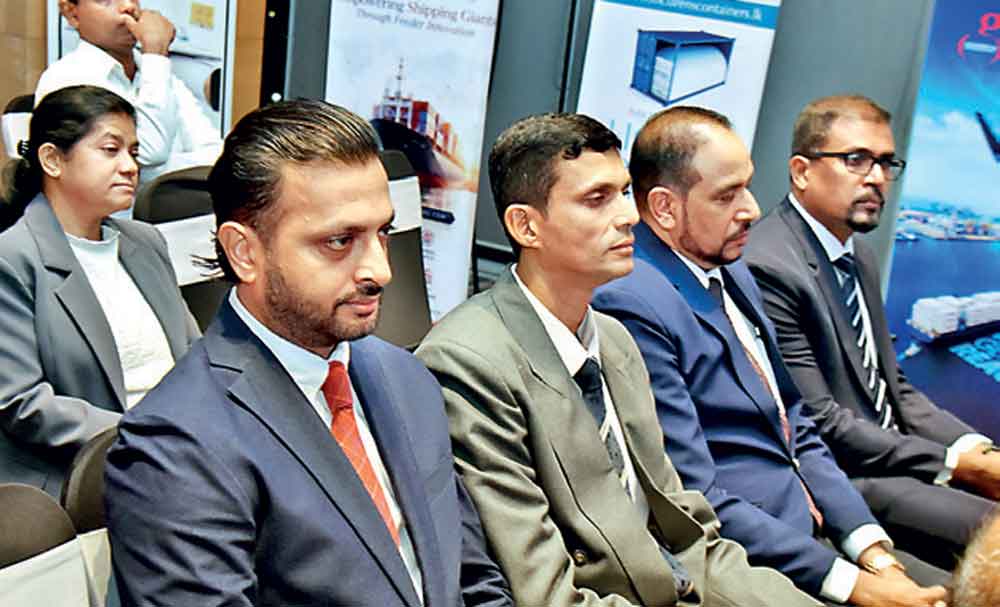
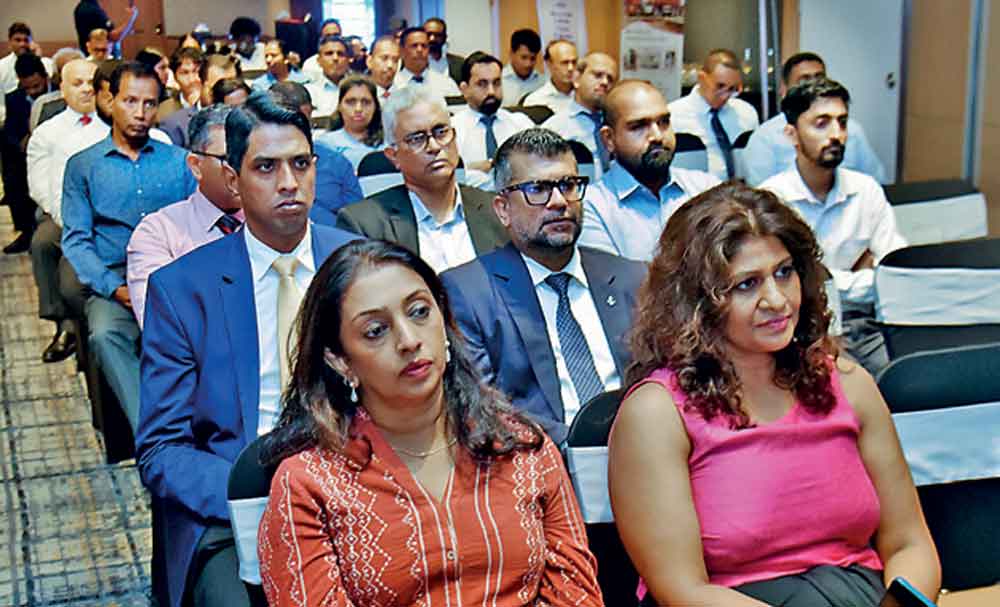
Sri Lanka Association of NVOCC Agents (SLANA) Chairperson Swabha Wickramasinghe made the call at the association’s 9th Annual General Meeting, calling the Government to expedite a promised committee to examine the THC issue and deliver a practical solution.
Wickramasinghe, who became SLANA’s first elected female Chairperson in 2024 and was re-elected for a third consecutive term, said the association had repeatedly raised concerns over the treatment of THC as a separate land-based cost in international markets, while Sri Lanka continued with a different practice.
“One of the main reasons is the continued difficulty in collecting the Colombo terminal charges as a separate land-based cost,” she stressed.
She warned that the issue was no longer simply about the charge itself, but the broader economics of operating NVOCC services from Sri Lanka.
“When Sri Lanka becomes less commercially attractive compared with other regional destinations, the consequences eventually reach our members,” Wickramasinghe said.
More than 75 NVOCC lines currently operate in Sri Lanka, supporting regional connectivity across India, China, the Far East, Middle East and beyond. Wickramasinghe said their role had become particularly important given the regional nature of Sri Lanka’s trade, with China and India accounting for around 44% of imports, while India is the country’s second-largest export market.
She said NVOCC operators had also demonstrated their importance during the COVID-19 pandemic, when major carriers prioritised long-haul routes and NVOCCs helped sustain regional trade flows.
But the sector is now facing a combination of geopolitical conflicts, sanctions, changing trade policies and shipping-route disruptions, making flexibility and alternative connectivity increasingly important.
“Whatever happens in the world, trade must continue to move and we must be prepared to keep it moving,” she said.
Wickramasinghe asserted that the majority of SLANA members were SMEs employing people, paying taxes and investing in their operations, making the competitiveness issue broader than the profitability of a single industry.
“This is not simply a request to improve the profitability of one sector. It is about creating a fair and internationally competitive operating environment for Sri Lankan businesses,” she said.
Wickramasinghe also called for an urgent resolution to the continuing issue of uncleared empty containers at the Port of Colombo, noting delays were preventing containers from being released to their designated carriers. SLANA has been engaging with Sri Lanka Customs and the Ports Ministry and is seeking a practical solution, including through a possible Cabinet paper.
The association is also monitoring proposed rates and charges for services provided by terminal operators, urging that inland and terminal-related charges remain reasonable and competitive with regional ports.
Despite the challenges, Wickramasinghe said Colombo’s expanding capacity offered a major opportunity to move beyond transhipment and develop into a regional logistics hub integrating port capacity, connectivity, warehousing, distribution and other value-added services.
“The bigger opportunity goes beyond simply handling more containers,” she said.
For that opportunity to materialise, however, she stressed that businesses need confidence, predictable policies and transparent processes.
“As SLANA, we will continue to work constructively with the Government and all stakeholders to build a stronger, more competitive and efficient maritime and logistics industry in Sri Lanka,” Wickramasinghe said.
- Pix by Upul Abayasekara