Friday Oct 02, 2026
Friday Oct 02, 2026
Monday, 1 December 2025 03:20 - - {{hitsCtrl.values.hits}}
|
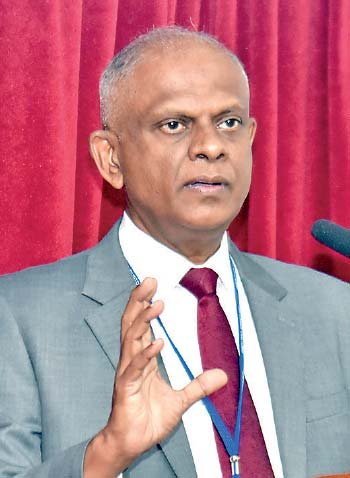
Customs Director General Seevali Arukgoda – Pic by Upul Abayasekara
|
Sri Lanka Customs Director General Seevali Arukgoda in a rare public appearance last week delivered one of his sharpest criticisms of the private sector trading community, warning that its unwillingness to adjust its work ethic to match the Customs’ operational readiness is now the main barrier to trade facilitation, even as the Department accelerates digitalisation and meets record revenue targets.
Speaking at the Association of Clearing and Forwarding Agents’ (ACFA) forum on Digital Signatures and New Customs Entry Framing, Arukgoda said Customs is operating around the clock and rolling out new IT systems, while clearing agents, shipping lines, banks, and importers continue to work on restricted schedules. He argued that this mismatch is undermining pressure from the same private sector for faster clearance and streamlined processes.
“There is a demand for the Customs to work 24 hours, 24x7, which we are doing in most cases. Are you ready to work 24x7 with us? Are the importers ready to work 24x7? Are the banks ready to open 24x7? Are the shipping lines ready to open 24x7 and issue delivery orders 24x7? Are the clearing agents ready to work 24x7? So we work 24x7, are you ready to work 24x7? In most cases, no.”
He pointed to a recent weekend operation at the Rank Container Terminals (RCT) yard as an example of how limited private sector participation neutralises the Customs’ efforts.
“During a recent weekend, there was a congestion, so our staff was working both Saturday and Sunday. But on Sunday, we only could release 27 containers. We usually release over 350 to 400 containers a day, so you, the Custom House Agents, did not come. So the trade facilitation initiatives cannot be implemented one-sided.”
Arukgoda said the Customs cannot continue to be the only institution responding to demands for faster turnaround times while the rest of the supply chain sticks to traditional working hours. He warned that if clearing agents do not adjust, their privileged legal status may come under review.
“For the Customs House Agents, I must say that the Customs Director General is empowered to issue permits to you. We conduct training sessions, we conduct classes, we conduct certificate courses, we issue certificates and issue you a licence. It is a privilege that you get,” he said.
“But if the Customs House Agents are not ready to work with us 24x7, then we would be compelled to find alternative methods, like removing the requirement of having a Customs House Agent to clear goods. The importers themselves can clear goods,” Arukgoda warned.
He said many traders are already asking why the law mandates the use of Customs House Agents when their availability is inconsistent. “There are many enquiries as to why this law is there. So please work with us, support us in our initiatives. As and when your presence is required, please come and attend to your work.”
Arukgoda said the Department’s automation agenda is advancing quickly, with full digitalisation of import and export procedures targeted for 2027, though some manual steps will remain. But he stressed that digital systems alone will not improve clearance times unless the private sector participates fully.
“We expect the complete digitalisation of the import and export procedure to be complete in 2027 to provide you a better service. But at the same time, there is a manual job that needs to be done in some cases. So we are ready to open 24x7, are you ready to work with us 24x7? In most cases it does not happen, unfortunately.”
He noted that the Customs IT division, which he described as the strongest in the public sector, is deploying new applications, redesigned processes, and IT-based solutions specifically to speed up trade and reduce costs.
“Our team has been busy throughout the last so many years in developing many solutions and, one by one, we are releasing to the general public for their benefit. It must be really appreciated—the fact that the IT division and the officers are fully occupied—they are doing their best to develop very important initiatives and then put them into practice so that the trade can also benefit.”
Arukgoda said these reforms are already translating into better fiscal performance. “As of today, we are about Rs. 130 billion ahead of our target—for the first time in history—and that has eased the expenses the Government needs to earn. It has supported the Government in reducing borrowing limits and that is a plus point for the entire economy.”
But he noted that the Customs cannot relax procedures or shift more processes into risk managed channels unless compliance by traders improves.
“Please support us in facilitating trade by complying with the regulations, by following guidelines that we have put forward, by being compliant and making your clients also compliant. Because, when the compliance level goes up only we can facilitate more trade. But the compliance level is low. Non-compliant traders will always have a negative impact on organisational objectives of the Customs Department.”
He framed the relationship between the Customs and the clearing and forwarding community as a partnership that depends on both sides learning, adapting, and performing reliably.
“Your contribution is very much appreciated at this forum because it is the opportunities like this where we get the chance to speak to the trading community so that we can share with you the new initiatives that we are formulating and you can apply them in a manner that is conducive for an excellent trading relationship.”
Arukgoda urged participants to use the session to clarify doubts and understand new requirements. “When we are ready, we want you also to be ready and take the maximum out of it. Please take this opportunity to learn what you have come here to learn, and finally support us in our effort to provide better trade facilitation to the entire trading community in the country.”
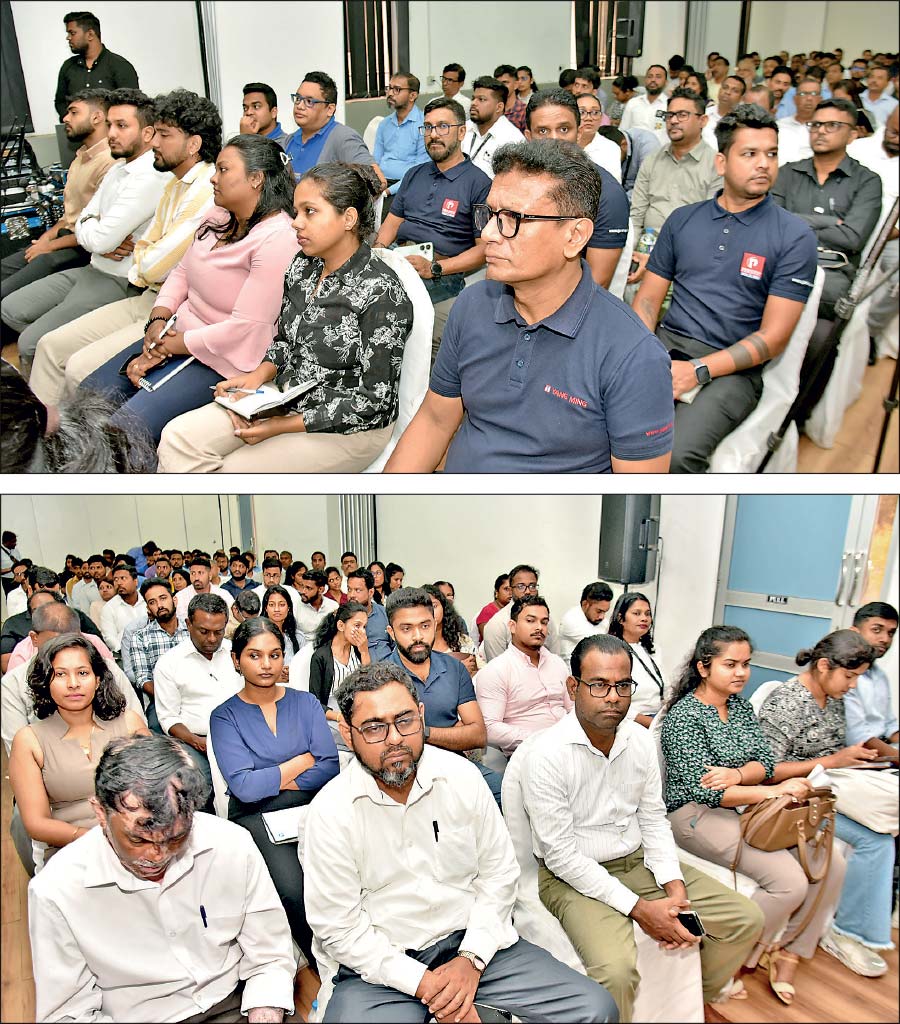
The ACFA forum was a familiarisation program which covered Digital Signature and its usage, standardised industry best practices’ compliance requirements, and a risks readiness and compliance checklist. The technical sessions were conducted by Sri Lanka Customs Senior Deputy Director Ashan Weeraman, Senior Manager IT Lakshanth Jayasekara, and Assistant Superintendents Dinuk Wijeratne and Primali Alwis.
In November, Sri Lanka Customs surpassed its 2025 annual revenue target of Rs. 2.115 trillion, collecting Rs. 2.117 trillion as of 11 November, marking the highest-ever revenue in the Department’s history and setting a new benchmark for State revenue generation. Despite being a key revenue mobilising agency for the State, Sri Lanka Customs, along with the Inland Revenue Department, was singled out for chronic issues related to corruption, efficiency, and governance in the International Monetary Fund’s Governance Diagnostic Report on Sri Lanka.