Friday Oct 02, 2026
Friday Oct 02, 2026
Monday, 18 May 2026 00:06 - - {{hitsCtrl.values.hits}}
A global maritime liability regime that will cap compensation at approximately $ 360 million per disaster at sea for Hazardous and Noxious substances (HNS) is now on track to be enforced as early as 30 November 2027, following fresh ratifications by Belgium, Germany, the Kingdom of the Netherlands and Sweden a recent report from the International Maritime Organisation (IMO) said.
The 2010 HNS Convention aims to ensure adequate, prompt, and effective compensation for those affected by incidents involving HNS carried on seagoing ships. This is particularly relevant given the increasing amounts of chemicals and alternative fuels being transported in bulk by sea.
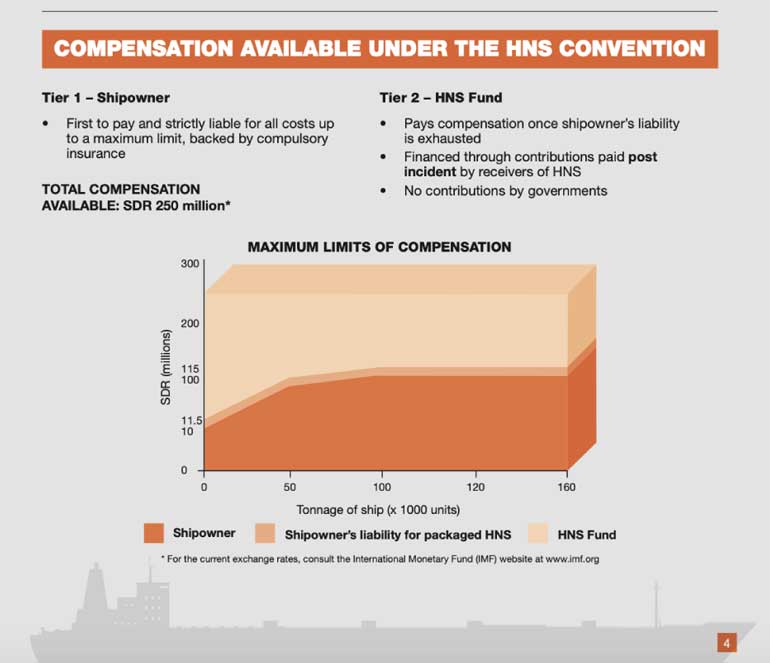
The 2010 HNS Convention establishes the principle that the ‘polluter pays’ by ensuring that the shipping and HNS industries provide compensation for those who have suffered loss or damage resulting from an HNS incident. An HNS Fund will be established, to pay compensation once the shipowner’s liability is exhausted. This Fund will be financed through contributions paid post incident by receivers of HNS cargoes.
The 2010 HNS Convention complements existing regimes already in force for the transport of oil as cargo, bunker oil used for the operation and propulsion of ships, the removal of hazardous wrecks and claims for death of or personal injury to passengers, or for damage to their luggage, on ships.
Total compensation available under the HNS Convention will be capped at 250 million Special Drawing Rights (SDR) of the International Monetary Fund (approximately $360 million at current exchange rates) per event. Shipowners are held strictly liable up to a maximum limit of liability established by the Convention for the cost of an HNS incident. Registered owners of ships carrying HNS cargoes have to maintain insurance that is State certified. The HNS Fund will pay compensation once the shipowner’s liability is exhausted and is financed through contributions paid post incident by receivers of HNS cargoes.
The HNS Fund will be administered by States and contributions will be based on the actual need for compensation. HNS covered by the Convention include: oils; other liquid substances defined as noxious or dangerous; liquefied gases; liquid substances with a flashpoint not exceeding 60˚C; dangerous, hazardous and harmful materials and substances carried in packaged form or in containers; and solid bulk materials defined as possessing chemical hazards. The shift comes as global container shipping faces growing concern over misdeclared/improperly packed cargo and vessel fires. Industry reports have indicated that fires aboard container vessels reached a decade high in 2024, with wrongfully declared hazardous cargo identified as a contributing factor in many incidents.
Industry specialists say unlike bulk tanker shipping, container vessels may carry thousands of cargo interests involving multiple shippers, freight forwarders, consolidators and operators. This fragmentation complicates one of the central principles underpinning the HNS Convention: identifying responsibility when incidents occur.
Questions surrounding who received hazardous cargo, who declared it, where liability begins and where compensation obligations end become significantly more complex in modern liner shipping.
A single container, for example, may discharge in one jurisdiction, transfer through another transshipment hub and eventually move inland to a final destination in a separate country. Determining who qualifies as the “receiver” of hazardous cargo (a key component of the HNS compensation framework) may generate differing interpretations between states, and even those claiming for compensation and those liable to pay.
It is estimated that around 65,000 vessels worldwide will be required to carry HNS certification and compliant insurance once the regime is implemented.



