Friday Oct 16, 2026
Friday Oct 16, 2026
Monday, 2 February 2026 00:02 - - {{hitsCtrl.values.hits}}
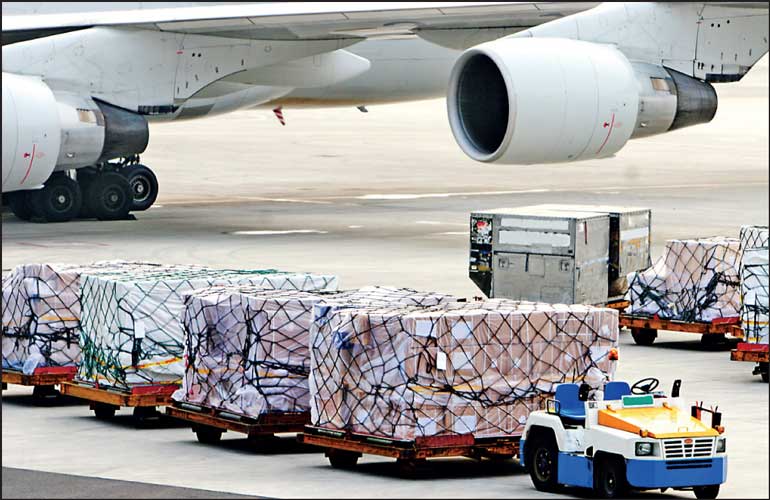
The International Air Transport Association (IATA) last week released data for full year 2025 and December 2025 global air cargo market performance showing:
Additionally, IATA noted that full-year yields fell 1.5% year-on-year. This is the smallest decline in three years as a more normal supply-demand balance is achieved and the exceptionally strong yields of COVID and post-COVID continue to taper. Despite competitive pressure capping air cargo’s pricing power, yields remain 37.2% above 2019 levels.
IATA’s Director General Willie Walsh said: “Air cargo delivered a strong performance in 2025, with demand up 3.4% year-on-year. Global e-commerce strength drove volumes, even as trading relationships with the US faced rising tariffs, the removal of de minimis tariff exemptions, and continuing policy uncertainty. Air cargo rose to the occasion. It adapted quickly to support global businesses and supply chains as they front-loaded product deliveries ahead of tariff impositions and adjusted to rising demand within Asia and between Asia and Europe as US-Asia trade stagnated.”
“Growth in 2026 is expected to moderate slightly to 2.4%, in line with historical trends. We can expect that demand will continue to be shaped by trade and geopolitical developments. Whatever trading patterns emerge, we can be confident that reliance on air cargo to keep global supply chains running will remain, with carriers responding to the challenge by deploying capacity and designing their networks for optimum flexibility,” added Walsh.
Several factors in the operating environment should be noted:
Regional performance
Asia-Pacific airlines saw 8.4% year-on-year demand growth for air cargo in 2025, the strongest among the regions. Capacity increased by 7.4% year-on-year. December year-on-year demand increased 9.4% and capacity increased 8.3%.
North American carriers saw a 1.3% year-on-year decline in demand growth for air cargo in 2025, the only regional decline and the weakest performance globally. Capacity decreased by 1.1% year-on-year. December year-on-year demand decreased 2.2% and capacity decreased 2.6%.
European carriers saw 2.9% year-on-year demand growth for air cargo in 2025. Capacity increased by 3.1% year-on-year. December year-on-year demand increased 4.9% and capacity increased 3.9%.
Middle Eastern carriers saw 0.3% year-on-year demand growth for air cargo in 2025. Capacity increased by 4.5% year-on-year. December year-on-year demand increased 4.2% and capacity increased 10.6%.
Latin American and Caribbean carriers saw 2.3% year-on-year demand growth for air cargo in 2025. Capacity increased by 4.5% year-on-year. December year-on-year demand decreased by 4.1%, the lowest performance of all regions. Capacity increased 4.5%.
African airlines saw 6.0% year-on-year demand growth for air cargo in 2025. Capacity increased by 7.8% year-on-year. December year-on-year demand increased by 10.1%, the highest of all regions, and capacity increased 9.8%.
Trade lane growth
2025 trade lane data shows a clear shift in global air cargo flows from Asia–North America to Asia–Europe driven by tariff pressures and the removal of the US de minimis exemption. The Within Asia, and the Middle East–Asia corridor also recorded strong growth.




