Friday Oct 02, 2026
Friday Oct 02, 2026
Monday, 11 May 2026 00:04 - - {{hitsCtrl.values.hits}}
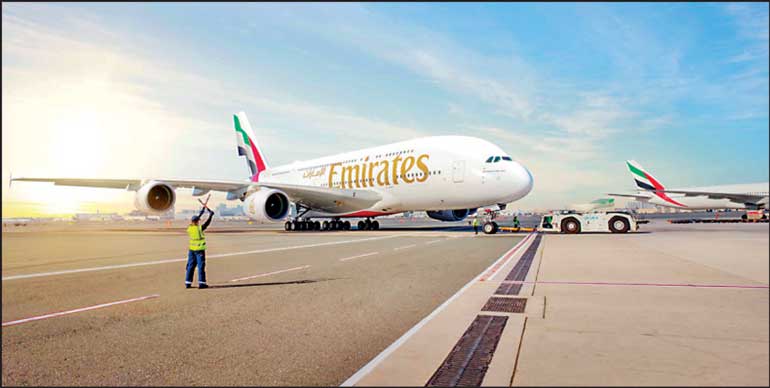
The Emirates Group last week released its 2025–26 Annual Report, achieving new record profit, revenue, and cash balance levels despite a disruptive and challenging final month of its financial year.
The Dubai-based group reported record profits, revenues, and cash reserves across both Emirates airline and dnata.
For the year ending March 31, 2026, the Emirates Group posted a record profit before tax of $ 6.6 billion, a 7% increase from the previous year, with a strong profit margin of 16.2%.
Group revenue rose 3% to an all-time high of $ 41 billion, while cash assets climbed 12% to 16.2 billion. EBITDA reached $ 11.2 billion, underlining the group’s strong operational performance.
Following the implementation of OECD Pillar Two tax rules in the UAE, the group’s corporate tax rate increased from 9% to 15%. After taxes, net profit stood at $ 5.7 billion, up 3% year-on-year.
The group also declared a dividend of $ 1 billion to its owner, the Investment Corporation of Dubai.
During the year, Emirates Group invested $ 4.9 billion in aircraft, facilities, technologies, and infrastructure to support future growth.
Its global workforce expanded 8% to 130,919 employees, while the number of UAE nationals employed by the group surpassed 4,000.
Emirates airline retained its position as the world’s most profitable airline, reporting a record pre-tax profit of $ 6.2 billion, also up 7% from last year, with a profit margin of 17.4%.
Revenue increased 2% to $ 35.7 billion, and cash assets reached a record $ 15 billion.
The airline expanded its global network during the year by launching services to four new destinations: Da Nang, Hangzhou, Siem Reap, and Shenzhen.
By March 2026, Emirates served 152 cities across 80 countries and strengthened its connectivity through 32 codeshare and 117 interline partnerships, giving customers access to more than 1,700 cities worldwide.
Fleet expansion remained a major focus. Emirates received 15 Airbus A350 aircraft, bringing the total number of A350s in operation to 19 flying to 21 destinations.
The airline ended the year with a fleet of 277 aircraft and an average fleet age of 10.8 years.
At the 2025 Dubai Airshow, Emirates announced additional fleet investments worth $ 41.4 billion, including orders for 65 Boeing 777-9s and eight A350-900s.
Its total order book now stands at 367 aircraft scheduled for delivery through 2038.
Passenger and cargo capacity increased slightly to 60.6 billion available tonne kilometres (ATKMs).
Emirates carried 53.2 million passengers during the year, while maintaining a strong seat factor of 78.4%. Passenger yield rose 4%, reflecting sustained demand and pricing strength.
Fuel remained the airline’s largest operating cost, accounting for 29% of expenses, although total fuel expenditure fell slightly due to lower fuel prices.
Emirates SkyCargo also delivered strong results, transporting 2.4 million tonnes of cargo, a 3% increase year-on-year.
Revenue reached $ 4.4 billion, contributing 12% of Emirates’ total revenue.
During the year, SkyCargo expanded its freighter network and introduced new logistics products, including Emirates Courier Express and specialist aerospace cargo solutions.
The cargo fleet ended the year with 13 Boeing 777 freighters and eight more on order.



