Monday Nov 09, 2026
Monday Nov 09, 2026
Monday, 9 November 2026 04:38 - - {{hitsCtrl.values.hits}}
 Sri Lanka's ambition to establish itself as a leading maritime and logistics hub in the Indian Ocean requires an open, competitive and forward-looking investment environment. Attracting international shipping lines, logistics operators and infrastructure investors will undoubtedly play an important role in achieving this ambition.
However, discussions surrounding foreign investment and ownership regulations must take into consideration the economic realities of the countries involved, the structure of their respective industries and the long-term interests of the domestic economy.
The ongoing debate surrounding foreign ownership in Sri Lanka's shipping agency and freight forwarding sectors presents an opportunity to examine these issues more closely.
The objective must be to attract investment that expands Sri Lanka's economic capacity, creates employment and strengthens its position as a maritime hub, while ensuring that local enterprises remain meaningful participants in that development.
Sri Lanka's maritime industry is already substantially open to foreign investment
An important aspect of the current debate is the need to recognise the extent to which Sri Lanka's maritime and logistics industry has already been opened to foreign participation.
Sri Lanka's maritime sector underwent significant liberalisation during the 1990s, allowing international shipping lines to operate in the country's shipping market. Subsequently, in 1992, foreign participation in shipping agency operations was permitted, subject to an equity ownership framework.
Today, foreign investors can participate in a wide range of maritime and logistics-related activities, with 100% foreign ownership permitted in numerous sectors, subject to applicable regulatory and investment approvals.
These include:
These are fundamental components of a fully developed maritime and logistics hub.
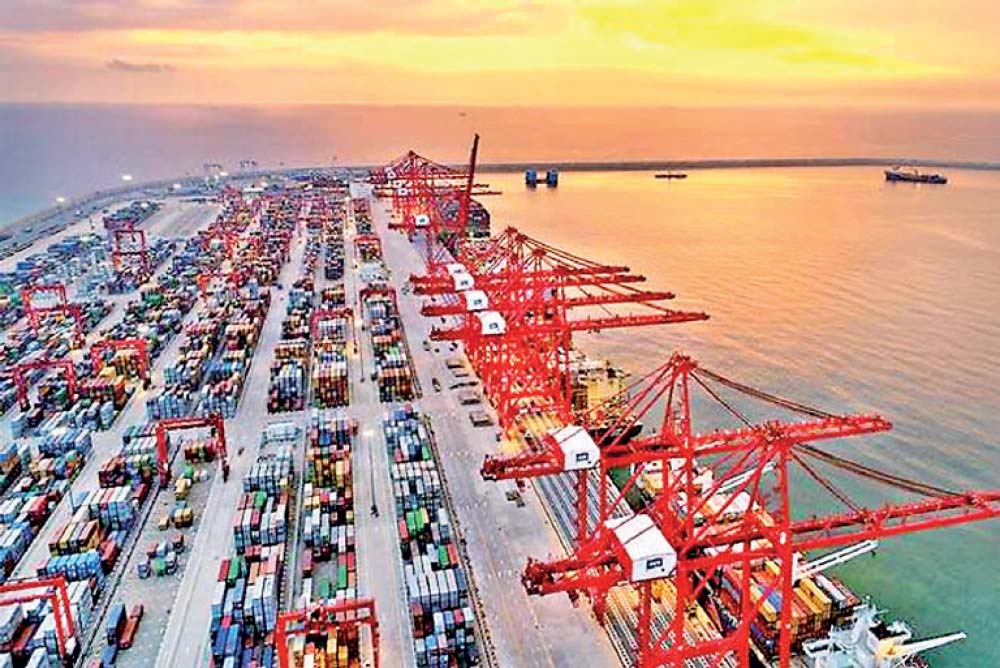
Sri Lanka has also demonstrated its willingness to accommodate substantial international participation in strategic port infrastructure. Foreign investors have participated in major terminal developments, including South Asia Gateway Terminal, Colombo International Container Terminal, Hambantota International Port and Colombo West International Terminal.
Furthermore, shipping lines and logistics operators have opportunities to establish wholly owned regional headquarters and administrative offices in Sri Lanka, subject to the relevant regulatory frameworks, including opportunities available through the Colombo Port City.
This demonstrates that Sri Lanka is not generally closed to foreign investment in its maritime industry.
The principal distinction in the existing regulatory framework concerns shipping agency and freight forwarding operations, where foreign equity participation is generally restricted to 40%, unless a higher percentage is approved by the Board of Investment.
It is therefore important that discussions on liberalisation accurately distinguish between the wider maritime investment environment and these specific service activities.
Foreign investors are encouraged to explore the considerable opportunities available in infrastructure, terminals, warehousing, distribution, marine services and other areas that can bring substantial new economic activity and significant investments into Sri Lanka.
The distinction between infrastructure investment and shipping agency ownership
There is a fundamental difference between investing in a port terminal, establishing a logistics park or developing a container depot and acquiring an ownership interest in an existing shipping agency.
Infrastructure investments generally require substantial capital commitments and have the potential to increase national capacity, introduce new technology, generate additional economic activity and create employment.
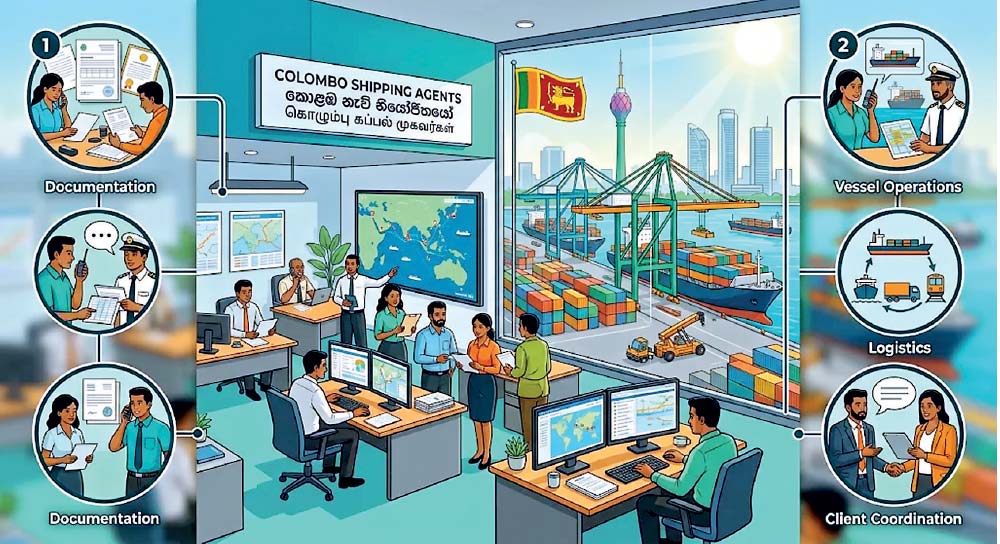
Shipping agency operations, on the other hand, are predominantly service-oriented businesses that represent and facilitate the interests of international shipowners, operators and charterers within the local jurisdiction.
These operations depend on local expertise, established commercial relationships, regulatory knowledge and the coordination of vessel and port-related activities.
The two activities therefore have different investment characteristics and economic implications.
The fact that Sri Lanka welcomes substantial foreign investment in capital-intensive maritime infrastructure does not automatically establish that identical ownership arrangements should apply to every service activity within the industry.
The existing ownership framework should be assessed according to the nature of each business, its economic contribution and the potential consequences of regulatory changes.
Recognising the economic asymmetry between India and Sri Lanka
One of the most important considerations missing from discussions surrounding reciprocal ownership is the fundamental difference in the economic scale of India and Sri Lanka.
India is a substantially larger economy, with a domestic market, financial system, industrial base and corporate sector operating on a scale considerably greater than that of Sri Lanka.
The difference is reflected in the World Bank's 2025 nominal GDP figures, which place India's economy at approximately $ 3.96 trillion, compared with Sri Lanka's approximately $ 108.8 billion.
This represents an economic scale difference of approximately 36 times.
Such a disparity has important implications when evaluating the practical opportunities available to businesses operating in both markets.
Sri Lankan companies seeking to establish operations in India are entering a significantly larger and more competitive market, where they must compete with businesses that may have access to considerably greater financial resources, established distribution networks and domestic commercial advantages.
The same dynamics do not necessarily apply in reverse.
An Indian shipping or logistics company entering Sri Lanka would be operating in a much smaller market, with a substantially different competitive and financial landscape.
Consequently, comparing the ownership opportunities available to Sri Lankan companies in India with those offered to Indian companies in Sri Lanka purely on the basis of equity percentages does not provide a complete picture of investment reciprocity.
True reciprocity must also consider relative economic strength, market size, access to capital and the competitive conditions faced by businesses in both countries.
A regulatory arrangement that appears equal in percentage terms may produce considerably different commercial outcomes for businesses operating in economies of vastly different sizes.
Financial capacity and the potential imbalance in ownership liberalisation
Another important consideration is the difference in access to capital and financing between businesses operating in the two economies.
Established Indian corporate groups and international logistics operators can often draw upon larger domestic capital markets, institutional financing and substantial corporate balance sheets.
Sri Lankan shipping agents, many of which are locally established enterprises and SMEs, operate within a considerably smaller domestic financial environment.
This difference has important implications when considering the removal of foreign ownership restrictions.
If 100% foreign ownership were permitted without appropriate safeguards, well-capitalised international operators could potentially acquire existing local businesses, establish wholly owned operations or expand rapidly through their greater financial capacity.
Their ability to finance acquisitions, sustain operating losses during market expansion and invest in commercial infrastructure could create a substantial competitive imbalance.
Local companies could find themselves competing against businesses with considerably greater access to capital, making it increasingly difficult to maintain their market position.
It is also important to recognise that the opportunity available to a Sri Lankan company to establish and sustain a fully owned operation in India cannot simply be assumed to be equivalent to that of an Indian company establishing itself in Sri Lanka.
The difference in market size and financial resources makes the practical commercial implications of reciprocal ownership considerably more complex than a simple comparison of regulatory percentages.
These realities must be considered before making changes that could fundamentally alter the structure of the domestic shipping agency industry.
Foreign investment should bring additional investment, not merely a change in ownership
Sri Lanka must remain ambitious in attracting foreign investment. However, the objective should be to attract investment that brings additional economic value into the country.
There is a fundamental difference between a foreign investor establishing a new logistics facility, developing infrastructure and creating additional employment, and acquiring an existing local business that is already contributing to the domestic economy.
The former expands the country's productive capacity. The latter may simply result in a transfer of ownership without necessarily generating additional economic activity.
If international shipping and logistics companies wish to establish operations in Sri Lanka with greater ownership participation, the country should seek meaningful investment commitments that go beyond the establishment of an agency office.
Such commitments could include:
The benefits of any proposed regulatory reform should be measurable.
If the principal objective is to develop Sri Lanka as a maritime and logistics hub, investment opportunities should be structured to achieve that objective rather than simply facilitate a change in the ownership of existing businesses.
Protecting employment and the development of local maritime expertise
The shipping agency and freight forwarding sectors support a considerable network of direct and indirect employment opportunities in Sri Lanka.
Beyond their own employees, these businesses support transport operators, documentation services, port-related service providers, customs-related services, suppliers and numerous other supporting enterprises.
Sri Lanka's Export Development Board identifies the wider logistics industry as supporting approximately 40,000–50,000 direct jobs. Shipping agencies and freight forwarders form an important part of this wider employment ecosystem.
Local shipping agents have also invested in developing the professional expertise required to manage increasingly complex international shipping operations.
A transition towards fully foreign-owned agency operations could have implications for this existing employment structure.
International companies may choose to consolidate regional functions, centralise administrative operations or introduce operating structures that reduce the requirement for certain locally based positions.
There is also the possibility that some functions currently performed by local enterprises could be transferred to regional offices outside Sri Lanka.
While these outcomes are not inevitable, they are legitimate considerations that must be assessed before introducing changes to the existing regulatory framework.
An earlier industry assessment identified a workforce of more than 12,000 jobs potentially exposed to the effects of relaxing the existing ownership restrictions. This was an industry estimate at the time and should not be confused with the current employment figure for the entire logistics sector.
Sri Lanka must ensure that the pursuit of foreign investment does not unintentionally weaken existing employment opportunities and professional capabilities.
The objective should be to create additional employment, develop local talent and strengthen the domestic maritime workforce.
Foreign investment should complement and expand the existing industry rather than simply replace businesses and employment opportunities already established within it.
The contribution of local shipping agents to the maritime economy
Sri Lanka's shipping agency industry is made up of established companies and a considerable number of small and medium-sized enterprises.
These businesses have played an important role in developing Colombo's international reputation and supporting shipping operations across multiple cargo segments.
In particular, local shipping agents have historically been instrumental in attracting and servicing casual-caller vessels, including bulk carriers, tankers and other specialised vessels that do not operate on regular liner schedules. More than 7,300 vessel calls annually, with much of this business being developed and canvassed by local shipping agents, particularly SMEs.
This demonstrates that the contribution of shipping agents extends well beyond representing major container shipping lines.
Local agents also facilitate international commercial relationships, support port operations and provide the operational expertise necessary to service a diverse range of maritime activities.
Over the years, local industry participants have invested in inland container depots, warehouses, free-zone operations, ships, marine craft and other supporting infrastructure. Several have also expanded internationally, generating foreign exchange and establishing Sri Lankan commercial capabilities beyond the domestic market.
A further consideration is the potential impact on Government tax revenue. With increased foreign control, there is a risk that regional management, administrative and commercial functions could be centralised overseas, leaving Sri Lankan operations primarily functioning as local cost centres. While these entities would remain liable for applicable taxes in Sri Lanka, the shifting of higher-value functions and profit recognition to overseas jurisdictions could reduce locally taxable profits and, consequently, the Government's long-term tax revenue from the sector. This is an important economic consideration that must be weighed against the anticipated benefits of further liberalisation.
It would therefore be inaccurate to characterise the domestic shipping agency sector as an industry that has not contributed to the wider economy. Its contribution should be recognised when evaluating the future ownership and investment framework.
India's maritime development should encourage regional cooperation
India's continued investment in port infrastructure, domestic shipping connectivity and logistics capabilities is a significant development for the wider region.
Rather than viewing this solely as a competitive threat to Colombo, Sri Lanka should identify opportunities to strengthen its position within the evolving regional shipping network.
Colombo's future competitiveness will depend on its ability to offer efficient terminal operations, competitive costs, reliable connectivity and a comprehensive range of maritime services.
The development of Indian ports does not necessarily eliminate the commercial relevance of Colombo. There remains considerable potential for complementary port operations, regional transhipment, feeder connectivity and integrated supply chain development.
However, maintaining this position will require continuous investment, improved operational efficiency and a business environment that encourages innovation and long-term commercial partnerships.
The focus should be on strengthening Sri Lanka's competitive advantages while ensuring that local industry participants remain active contributors to its development.
The real priorities for developing Sri Lanka as a maritime and logistics hub
The development of Sri Lanka as a leading maritime and logistics centre requires a comprehensive national strategy.
While ownership regulations form part of the investment environment, they are not the only factors determining the country's attractiveness to international investors.
Other priorities include:
These are areas where Sri Lanka can actively welcome and facilitate substantial international investment.
Indeed, the existing framework already allows foreign investors to participate in many of these activities with full ownership.
The priority should therefore be to make these opportunities more attractive through consistent policy, efficient administration, competitive taxation and improved infrastructure.
A maritime hub cannot be developed by focusing on the ownership of a single service activity while overlooking the wider investment and operational requirements of the industry.
A balanced and consultative approach to regulatory reform
The future development of Sri Lanka's maritime sector should be guided by constructive engagement between the Government, local shipping agents, international shipping lines, terminal operators, logistics providers and other relevant stakeholders.
Any proposed changes to the existing ownership framework should be preceded by a comprehensive assessment of their economic implications.
Such an assessment should consider:
Sri Lanka should not be opposed to foreign investment or the continued liberalisation of the wider maritime industry. On the contrary, it should welcome international investors who are prepared to make meaningful and sustainable contributions to Sri Lanka's development.
However, the opening of the remaining restricted activities must be considered in the context of their specific economic characteristics and the potential consequences for the domestic industry.
Conclusion: Investment must strengthen the economy, not simply change ownership
Sri Lanka's maritime industry has been developed through decades of commitment and investment by local shipping agents, international principals, terminal operators and supporting service providers.
The domestic shipping agency sector is an integral part of this ecosystem and has contributed significantly to the development of Colombo as an internationally recognised maritime hub.
Sri Lanka has already opened substantial areas of its maritime and logistics industry to 100% foreign investment. There are considerable opportunities for international investors to develop port infrastructure, terminals, warehousing, distribution, marine services and other activities that can bring fresh capital, technology and employment into the country.
The remaining ownership restrictions in shipping agency and freight forwarding operations should not be confused with a general resistance to foreign investment.
The two countries also operate within vastly different economic environments, with significant differences in market size, access to capital and the ability of domestic enterprises to compete. These realities must form part of any discussion on reciprocal investment.
Sri Lanka must remain open to international investment while ensuring that such investment brings tangible economic benefits, including fresh capital, additional employment, technology, skills development and new business opportunities.
Allowing foreign ownership without adequately considering these factors could result in a transfer of existing commercial activity rather than the creation of new economic value.
The objective should not be to restrict foreign participation or shield local businesses from legitimate competition. It should be to establish a framework in which international investors can contribute meaningfully while Sri Lankan enterprises retain the opportunity to grow, compete and participate in the country's maritime future.
A successful maritime hub is not measured simply by how much foreign ownership it permits, but by how effectively it converts international trade and investment into sustainable national economic value.