Sunday Sep 13, 2026
Sunday Sep 13, 2026
Monday, 23 February 2026 00:35 - - {{hitsCtrl.values.hits}}
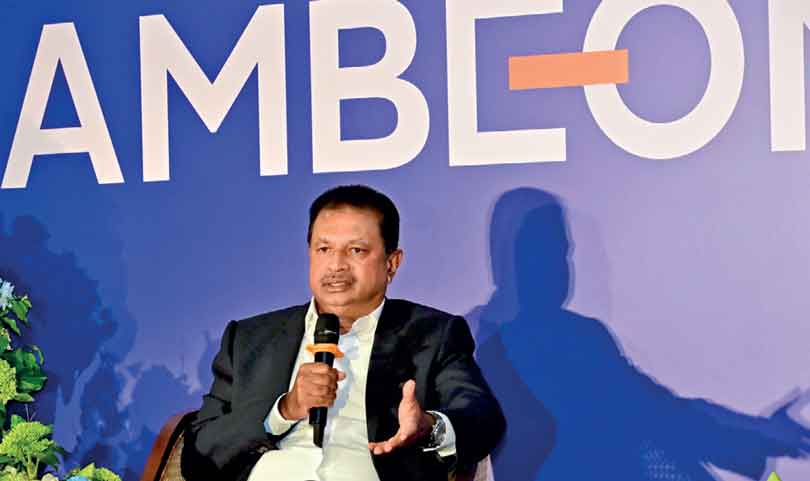
Laugfs Holdings Chairman Dr. W.K.H Wegapitiya
The majority of our people… they want to become employees… You need to create people who are brave enough, adventurous enough to create things
If entrepreneurs are not making profit, it will not convert into capital. If capital is not invested, no country can become an economically prosperous nation
Today, if you look at the macroeconomic environment compared to five years ago, the most conducive environment… is in terms of the fiscal environment. Today is the best time to convert your profit into capital and invest
By Divya Thotawatte
|
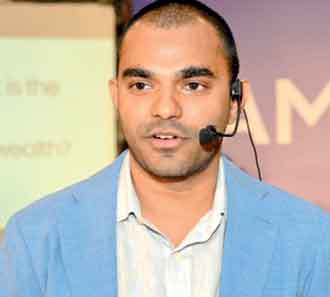
Revantha Devasurendra
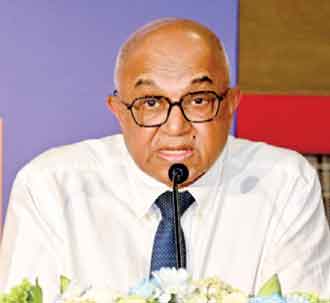
Ambeon Securitiess Chairman Mangala Boyagoda
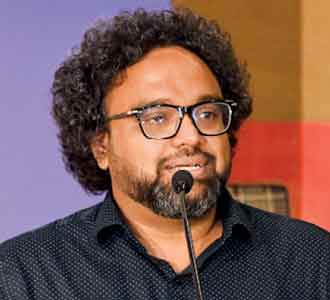
Ambeon Securities CEO |
Sri Lanka’s economic recovery is dependent on creating capital and reinvestment, LAUGFS Holdings Co-Founder and Chairman Dr. W.K.H. Wegapitiya said recently, stressing that entrepreneurship was the true driver of national wealth.
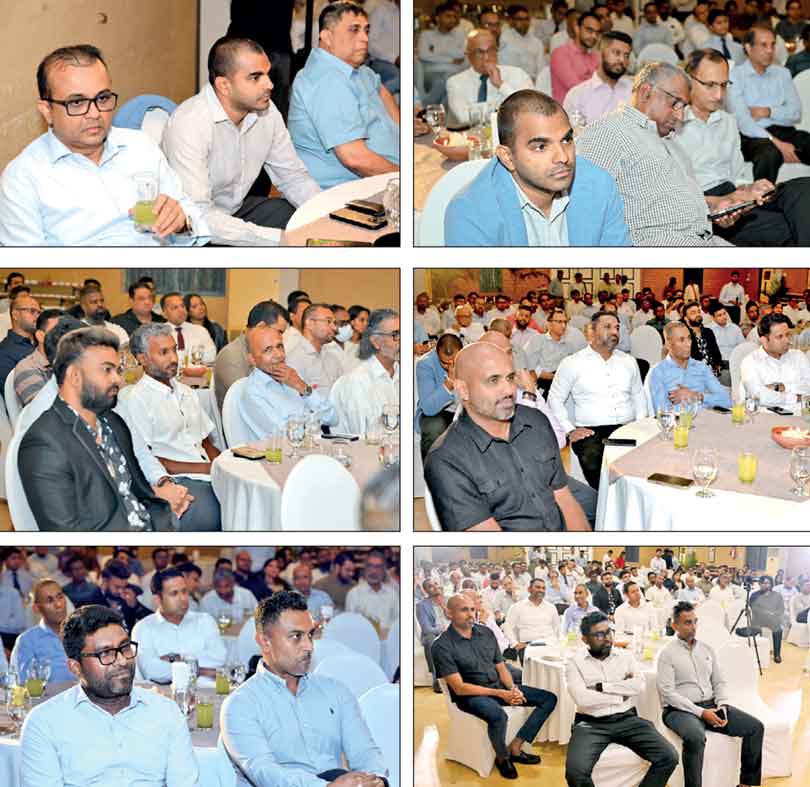
He made this observation during a Fireside Chat at the ‘Wealth Creation through Equity Investment’ Forum organised by Ambeon Securities. The exclusive session brought together investors, market participants, and business leaders for a discussion on long term investment and capital formation. The event explored how equity markets could support both individual wealth-building and national growth, with Wegapitiya discussing the post-crisis investment climate and the role of private capital in economic recovery.
He began the session highlighting, “Entrepreneurship, in its most meaningful sense, is the change agent for every nation. It is the catalyst for innovation and wealth creation for the economic prosperity of every nation.”
Wegapitiya underscored this point with history. In 1950 – merely two years after its independence – Sri Lanka (then Ceylon) had acquired a national wealth of $ 1.4 billion, standing in second place in Asia’s economies while being within the first 20 of the Global Prosperity Index. In comparison, Taiwan had $ 1.2 billion. “So imagine, from this 20th place, we slipped down to 90th place in GDP ranking with just US$ 84 billion, whereas Taiwan… became an almost 1 trillion dollar economy.”
According to him, Sri Lanka’s economic decline was a result of weak entrepreneurship and insufficient capital investment. He argued that natural resources alone could not create economic prosperity.
The formula for wealth
Wealth creation began with profit and the reinvestment of that profit, Wegapitiya said, stressing that the country must change its attitudes on gains. “Entrepreneurship happens when the profit converts into capital. If entrepreneurs are not making profit, it will not convert into capital. If capital is not invested, no country can become an economically prosperous nation.”
He argued that Sri Lanka struggled not because businesses failed to earn profits, but because social and political pressures prevented those profits from being productive investments.
“Our country… profit is a crime. If somebody is making profit, you call them “dealer”… when you make a profit, everybody wants a price reduction. Everybody asks to give it for free.” Price control and policy pressure effectively drained corporate earnings before they could become investment capital, he said. As a result, companies remained small, industries failed to expand, and national wealth stagnated.
The only way for a country to become a prosperous nation was to invest all the saved profits into creating capital, he explained.
A cultural barrier
Wegapitiya also highlighted that Sri Lanka’s economic issues were as much cultural as it was financial, and that the country trained students for employment rather than entrepreneurship.
“The majority of our people… they want to become employees,” he said, noting how there were fewer than 200 companies listed in the Colombo Stock Exchange. Families still encouraged children to become doctors, engineers, or government officers, resulting in a considerably small entrepreneurial population.
Wegapitiya further discussed Sri Lanka Labour Survey figures that suggested that only about 2% of the workforce was entrepreneurially oriented. According to him, this mindset blocked wealth-building at both personal and national levels.
Entrepreneurs were fundamentally creators, not merely business owners, and societies must encourage risk-taking if they wanted prosperity, he said. “You need to create people who are brave enough, adventurous enough to create things.”
Policy and finance
While cultural change is crucial, policy also plays a decisive role in national growth.
Wegapitiya noted that one major problem with Sri Lanka’s current system was the lack of development financing. He argued that Sri Lanka needed a dedicated development bank similar to those supporting startups in countries like South Korea.
Another major challenge is policy instability. “You plan everything based on the existing government policies… by the time you finish your product, coming into the market, the environment has changed. So there has to be a policy consistency.”
He explained that without stable taxation and regulatory frameworks, entrepreneurs were discouraged from investing and businesses struggled to grow.
The significance of now
Wegapitiya shared further practical advice for the country’s economic recovery. He began with lessons learnt from the 2022 economic crisis, where businesses faced soaring interest rates, power shortages, currency instability, and trade restrictions. He explained that the response was not expansion but survival where companies halted capital spending, negotiated with banks, and cut costs.
“Survival was the aim. We stopped all our capital expansion… holding our ground until the environment settled.” However, economic cycles were temporary, and capital preservation could determine long-term wealth, he highlighted.
Despite the challenges of Sri Lanka’s recent past, Wegapitiya was optimistic of its current state. Compared to the years in crisis, macroeconomic conditions were stabilising, he said. “Today, if you look at the macroeconomic environment compared to five years ago, the most conducive environment… is in terms of the fiscal environment. Today is the best time to convert your profit into capital and invest.”
Wegapitiya also identified specific sectors he said would drive Sri Lanka’s future growth.
Agriculture was one which must expand its GDP contribution beyond the current levels. “To achieve the economic goal, we need to increase our GDP contribution from 10% to 36%. Anything related to agriculture, it could be: growing, processing, and selling goods.”
With Sri Lanka’s ageing demographics, healthcare was also a strategic sector. He explained by 2030, 25% of the country’s population would be aged over 60, making healthcare, pharmaceuticals, food, life care, elderly care, and child care vital for economic survival and growth.
He added that consumer and electronic manufacturing should be another focus area. “I always advocate for manufacturing. Services can shift from here to there. But if you develop your manufacturing using our own natural resources, it will help you.”
The session concluded with a practical presentation on long-term investment conducted by investor and entrepreneur Revantha Devasurendra. Shifting the discussion from macroeconomics to personal finance, he pointed out a common pattern among Sri Lankan investors who preferred the comfort of saving but hesitated to grow wealth through equity exposure.
Using a ten-year comparison between a fixed deposit and investing in bank shares, he highlighted how long-term equity investment could potentially generate stronger returns through dividends and capital appreciation. He acknowledged concerns like fear of losing capital, volatility, and lack of knowledge, encouraging participants to “let time work for you” rather than attempt short-term market timing.
-Pix by Harsha Perera