Saturday Oct 17, 2026
Saturday Oct 17, 2026
Monday, 1 June 2026 00:04 - - {{hitsCtrl.values.hits}}
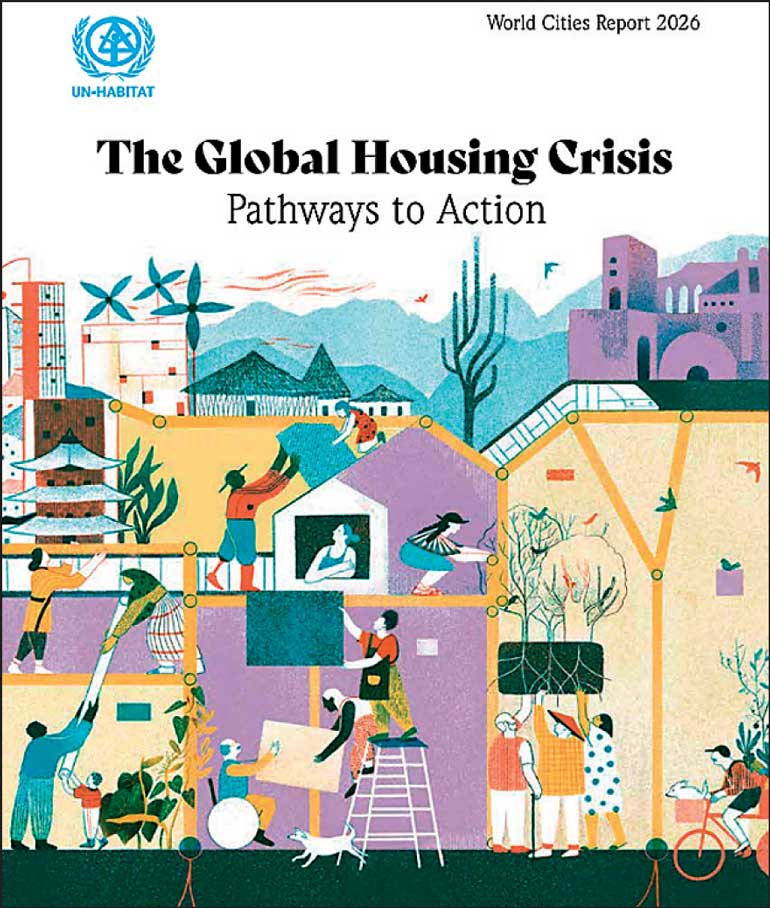
Nearly 40% of the world’s population – around 3 billion people – are now affected by a global housing crisis marked by soaring costs, housing shortages, poor-quality living conditions and inadequate access to basic urban services such as water and sanitation, according to the latest edition of the World Cities Report released by UN-Habitat.
The report, World Cities Report 2026: The Global Housing Crisis: Pathways to Action, launched during the thirteenth session of the World Urban Forum, warns that the crisis is deepening rapidly across both developed and developing countries and threatens progress towards sustainable development worldwide.
The report shows that global housing shortages have risen by 30% in just over a decade – from around 201 million units in 2010 to more than 268 million units in 2023.
At the same time, housing prices continue to outpace incomes in most regions. Globally, price-to-income ratios increased from 9.3 in 2010 to 11.2 in 2023, reaching as high as 16.8 in Central and Southern Asia. Rental affordability is also worsening, with 44% of households worldwide spending more than 30% of their income on housing.
The report highlights how climate change is intensifying housing insecurity, particularly for vulnerable populations living in informal settlements and high-risk areas.
Climate-related hazards are projected to destroy 167 million homes by 2040. In 2023 alone, natural catastrophes caused $280 billion in losses globally, most of which were uninsured.
At the same time, the housing sector remains a major contributor to emissions. Buildings account for around 34% of global energy use and 37% of CO₂ emissions, with housing alone responsible for an estimated 17 to 21% of total emissions.
The report notes that around 60% of the buildings expected to exist by 2050 have not yet been built, presenting what it describes as a “decisive window” to embed low-carbon and climate-resilient housing solutions at scale.
The report also links the housing crisis to growing displacement and urban informality.
By the end of 2024, 123.2 million people had been forcibly displaced worldwide – double the figure recorded a decade earlier. Many displaced people settle in cities where they often face insecure tenure, overcrowding and heightened risk of eviction.
Meanwhile, informal settlements continue to expand globally.
The report stresses that the housing crisis is fundamentally a human rights challenge, disproportionately affecting vulnerable populations including residents of informal settlements, low-income households and displaced communities.
It warns that the growing commodification of housing has increasingly prioritised market value over affordability and access, leaving millions exposed to forced evictions, insecure tenure and homelessness.
An estimated 3 billion people worldwide still lack access to adequate housing, including access to clean water and sanitation.
“A new social contract for adequate and affordable housing is required – a sense of shared responsibility among governments, the private sector and communities to mobilise investment and align the social and economic functions of housing,” said UN-Habitat Executive Director,
Anacláudia Rossbach.
According to the report, solving the global housing crisis will require large-scale public investment, stronger governance and coordinated action across sectors.
Global financing needs for adequate and affordable housing are estimated at $3 to 4 trillion annually through 2030, in addition to investments needed to maintain and upgrade existing housing stock.
The report calls for expanded investment in social and affordable housing while incentivising private-sector participation through targeted subsidies, community-based financing and de-risking measures.
It also argues that isolated interventions and housing construction alone will not be sufficient. Instead, it calls for integrated approaches that combine housing policy with infrastructure, land management, finance, governance and community participation.
The World Cities Report 2026: The Global Housing Crisis: Pathways to Action was released during the World Urban Forum, the premier global conference on sustainable urban development, taking place in Baku from 17 to 22 May 2026.




