Wednesday Aug 19, 2026
Wednesday Aug 19, 2026
Tuesday, 16 December 2025 02:55 - - {{hitsCtrl.values.hits}}
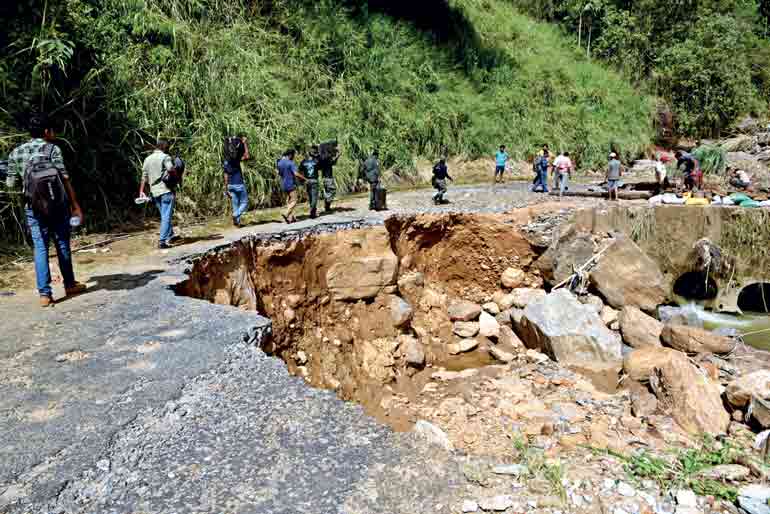
Sri Lanka is once again under the grip of severe floods and landslides as continuous rainfall impacts several districts. Families have been displaced, infrastructure is under strain, and rescue teams are working around the clock. While extreme weather is a global reality, the scale of damage we now face has been intensified by unsafe construction practices and development in high-risk zones.
As the Ceylon Institute of Builders (CIOB), we must speak decisively: construction in dangerous areas needs to stop immediately, and these zones must be officially identified, marked, and enforced.
Construction has already occurred in unsafe zones
For years, Sri Lanka has seen construction—both legal and unauthorised—taking place in:
Steep slopes vulnerable to landslides, Flood plains along rivers and reservoirs, Wetlands and marshland filled for development, Areas with unstable soil and weak drainage, Hill-country road edges where slope stability is compromised. Some of these sites have already shown signs of failure, and many now lie directly within the areas most affected by the current disaster.
This situation underscores a serious gap: dangerous zones have not been clearly demarcated, monitored, or enforced, allowing construction to advance into areas that should have been protected from development.
Immediate demarcation and enforcement needed
 |
| Ceylon Institute of Builders President Dr. Rohan Karunaratne |
CIOB strongly urges the government, NBRO, UDA, and local authorities to urgently demarcate all high-risk zones, including: Red Zones (no-build areas), Landslide-prone slopes, Flood retention basins, Natural stormwater paths, River reservations and canal buffer zones.
These zones must be publicly marked on the ground, not only on maps—using signage, fences, boundary markers, and digital hazard layers that can be accessed by communities, engineers, and contractors.
Once demarcated, authorities must enforce a strict halt to construction in these areas, regardless of project size or ownership.
Construction sector must accept its role
It is undeniable that some contractors, landowners, and developers have built on unsuitable land or modified slopes without adequate engineering oversight. While many projects follow proper standards, others have contributed to the worsening effects of natural disasters.
CIOB stresses that the industry must accept responsibility: Excavations and slope cuts made without geotechnical evaluation, Retaining walls built without structural design, Drains blocked during construction, redirecting water flow, Wetlands filled for quick profit, Buildings approved without full environmental assessment.
These practices cannot continue. The current crisis clearly shows the consequences of ignoring natural terrain and hydrology.
Stop all activity in hazard zones during rainfall
CIOB recommends an immediate suspension of all construction in risk-prone areas during this rainfall period—particularly: Hillside projects, Sites with active excavation, Locations with known soil movement, Areas where cracks or water seepage have been observed. Contractors must prioritise human safety over deadlines or commercial pressure.
A turning point for safer development
Sri Lanka must now rethink how and where it builds. Key reforms recommended by CIOB include: Mandatory geotechnical reports before approvals, Protection and restoration of natural drainage systems, Strict adherence to NBRO’s hazard maps, An integrated national database identifying danger zones, Criminal liability for unauthorised high-risk construction. We cannot allow this disaster to repeat year after year.
Conclusion: Build safely, build responsibly
As President of the Ceylon Institute of Builders, I urge policymakers, professionals, and the public to recognise a simple truth: nature has already warned us where not to build. Demarcating dangerous zones and stopping construction in those areas is not optional—it is essential to protect lives. With responsible planning, strict enforcement, and disciplined construction practices, Sri Lanka can prevent further tragedies and build safely for the future.



