Saturday Sep 26, 2026
Saturday Sep 26, 2026
Wednesday, 27 May 2026 14:10 - - {{hitsCtrl.values.hits}}
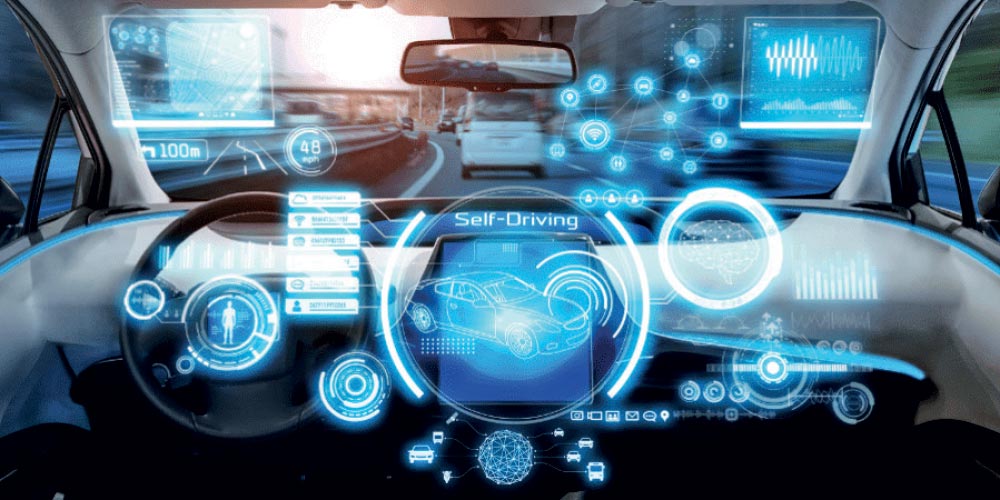
The global automotive industry is undergoing one of the most significant transformations in its history. From electric vehicles and autonomous driving technologies to sustainability initiatives and digital connectivity, the sector is rapidly evolving to meet the changing demands of consumers, governments, and environmental standards. What was once a traditional manufacturing-driven industry has now become a technology-focused ecosystem driven by innovation, efficiency, and sustainability?
For more than a century, the automotive industry has played a vital role in economic development across the world. It contributes significantly to employment generation, industrial growth, transportation, tourism, and global trade. Countries with strong automotive industries such as Japan, Germany, the United States, China, and South Korea have used the sector as a key driver of economic progress. Emerging markets are also increasingly investing in vehicle assembly, component manufacturing, and mobility infrastructure to strengthen their economies.
One of the biggest developments shaping the automotive industry today is the rise of electric vehicles (EVs). Governments worldwide are encouraging the transition from conventional internal combustion engine vehicles to cleaner alternatives in an effort to reduce greenhouse gas emissions and combat climate change. Leading automobile manufacturers are investing billions of dollars into EV research and development, battery technology, and charging infrastructure.
Consumers are becoming more environmentally conscious and are showing growing interest in electric mobility. Modern EVs offer improved driving range, lower maintenance costs, and advanced technological features. As battery costs continue to decline and charging networks expand, electric vehicles are expected to become more affordable and accessible to the average consumer. Many experts predict that EVs will dominate the automotive market within the next two decades.
In addition to electrification, autonomous driving technology is also transforming the future of transportation. Self-driving vehicles, powered by artificial intelligence, sensors, cameras, and machine learning systems, are being tested and developed by major automotive and technology companies. Autonomous vehicles have the potential to reduce road accidents, improve traffic management, and provide mobility solutions for elderly and disabled individuals.
Although fully autonomous vehicles are still facing regulatory, safety, and infrastructure challenges, many modern cars already include semi-autonomous features such as adaptive cruise control, lane-keeping assistance, automatic emergency braking, and parking assistance systems. These technologies are improving road safety and enhancing driving comfort for consumers.
Digital connectivity is another important trend reshaping the automotive industry. Today’s vehicles are no longer just transportation tools; they are becoming smart connected devices. Modern cars are equipped with internet connectivity, infotainment systems, GPS navigation, voice recognition, smartphone integration, and real-time vehicle diagnostics. Consumers now expect seamless digital experiences inside their vehicles similar to those they enjoy with smartphones and other smart devices.
Automobile manufacturers are increasingly focusing on software development and digital ecosystems. Over-the-air software updates, remote diagnostics, predictive maintenance, and connected vehicle services are becoming standard features in many modern vehicles. This digital transformation is changing the relationship between manufacturers and customers, creating new revenue streams through subscription services and software-based features.
Sustainability has also become a major priority for the automotive industry. Manufacturers are under increasing pressure to reduce their environmental impact not only through cleaner vehicles but also through sustainable production methods. Many companies are investing in renewable energy for factories, recycling programs, and environmentally friendly materials for vehicle interiors and components.
The concept of the circular economy is gaining importance within the sector. Automotive companies are exploring ways to recycle batteries, reduce manufacturing waste, and improve resource efficiency throughout the supply chain. Sustainability is no longer viewed as a corporate responsibility alone; it has become a competitive advantage that influences consumer purchasing decisions and investor confidence.
Supply chain resilience has become another critical issue following recent global disruptions such as the COVID-19 pandemic and semiconductor shortages. The automotive industry heavily depends on global supply networks for components, electronics, and raw materials. Production delays caused by supply shortages highlighted the importance of diversification, local sourcing, and strategic inventory management.
Many automotive manufacturers are now reevaluating their supply chain strategies to improve flexibility and reduce dependency on single suppliers or regions. Investments in localized production facilities and regional partnerships are expected to increase in the coming years to ensure long-term stability and operational efficiency.
The automotive aftermarket sector is also experiencing growth and transformation. As vehicle ownership continues to rise globally, demand for spare parts, maintenance services, repair solutions, and customization products is increasing. Digital platforms are making it easier for consumers to purchase automotive products online and access vehicle servicing solutions more conveniently.
In developing countries, the automotive industry presents significant opportunities for economic development. Vehicle assembly plants, component manufacturing, and dealership networks can create employment opportunities and support local industries. Governments can further strengthen the sector through supportive policies, investment incentives, skills development programs, and infrastructure improvements.
Sri Lanka, for example, has the potential to expand its automotive sector through vehicle assembly operations, electric mobility initiatives, and automotive component manufacturing. Encouraging investment in charging infrastructure, technical education, and sustainable transportation policies could help position the country as a regional player in the future mobility landscape.
However, the automotive industry also faces several challenges. Rising raw material costs, environmental regulations, intense competition, and rapidly changing consumer expectations require companies to continuously innovate and adapt. The transition toward electrification and digitalization also demands significant capital investment, workforce reskilling, and technological expertise.
Cybersecurity has become another growing concern as connected vehicles collect and transmit vast amounts of data. Protecting vehicle systems from cyber threats and ensuring data privacy will be essential as automotive technology becomes increasingly advanced and interconnected.
Despite these challenges, the future of the automotive industry remains highly promising. Innovation is accelerating at an unprecedented pace, creating opportunities for manufacturers, suppliers, technology firms, and consumers alike. The convergence of mobility, sustainability, and digital technology is redefining how people travel, interact with vehicles, and experience transportation.
The next decade is expected to witness dramatic changes in urban mobility, public transportation, shared mobility services, and smart city integration. Electric buses, ride-sharing platforms, autonomous delivery vehicles, and intelligent traffic systems could significantly reshape urban transportation networks around the world.
Ultimately, the automotive industry stands at the center of a global mobility revolution. Companies that successfully embrace innovation, sustainability, and customer-centric strategies will be best positioned to thrive in this rapidly evolving environment. As technology continues to transform transportation, the automotive industry will remain a key pillar of economic growth, industrial development, and human connectivity in the modern world.




