Friday Oct 16, 2026
Friday Oct 16, 2026
Wednesday, 27 May 2026 14:09 - - {{hitsCtrl.values.hits}}
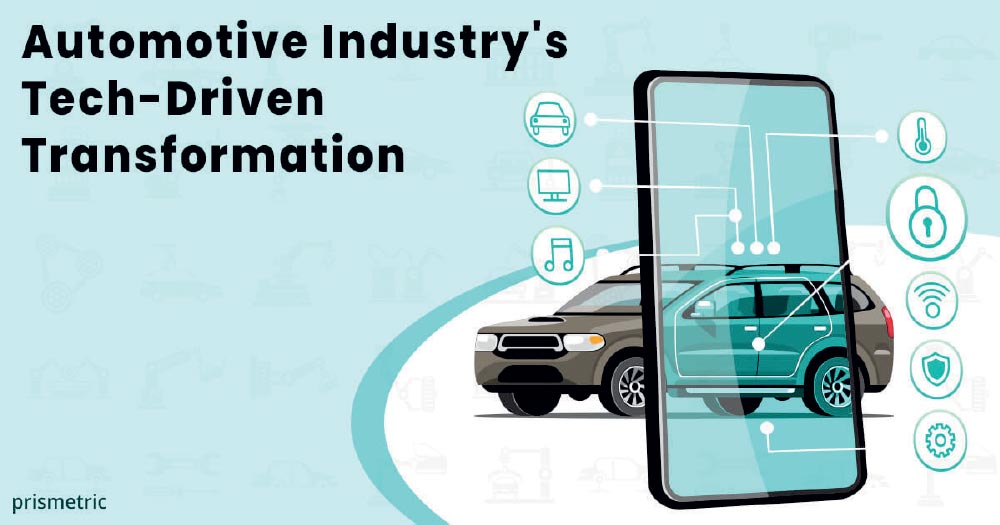
The automotive industry has always been closely linked with innovation. From the invention of the first motor vehicle to the development of modern luxury cars, technological progress has consistently shaped the future of transportation. Today, the industry is experiencing one of the biggest transformations in its history as digital technology, artificial intelligence, sustainability initiatives, and changing customer expectations redefine the global automotive landscape.
Modern vehicles are no longer simply machines designed to transport people from one location to another. They have become highly advanced technological products equipped with intelligent systems that improve safety, comfort, efficiency, and connectivity. As a result, the automotive industry is evolving into a technology-driven sector where software, data, and innovation play an increasingly important role.
One of the most significant technological advancements in the automotive industry is the rapid growth of electric vehicles (EVs). Environmental concerns and global efforts to reduce greenhouse gas emissions have accelerated the shift from traditional fuel-powered vehicles to cleaner alternatives. Governments around the world are introducing stricter emission regulations while encouraging consumers to adopt electric mobility through incentives and tax benefits.
Electric vehicles offer numerous advantages. They produce zero tailpipe emissions, reduce air pollution, and lower fuel dependency. Compared to conventional vehicles, EVs also have fewer moving parts, which can reduce maintenance costs over time. Improvements in battery technology have significantly increased driving range and charging efficiency, making electric vehicles more practical and attractive to consumers.
Many leading automotive manufacturers are investing billions of dollars into electric vehicle development. Companies are launching new electric models across different market segments, including passenger cars, SUVs, buses, and commercial vehicles. Charging infrastructure is also expanding rapidly, helping address one of the biggest concerns among potential EV buyers. As renewable energy sources become more common, electric vehicles are expected to play a major role in creating a more sustainable transportation system.
Artificial intelligence (AI) is another major force transforming the automotive industry. AI-powered systems are improving vehicle safety, enhancing driving experiences, and supporting autonomous driving technologies. Modern vehicles are equipped with advanced driver assistance systems (ADAS) that use cameras, sensors, and machine learning algorithms to monitor road conditions and assist drivers in real time.
Features such as automatic emergency braking, adaptive cruise control, blind-spot monitoring, lane departure warnings, and parking assistance are becoming increasingly common. These technologies help reduce accidents caused by human error and improve overall road safety. In the future, fully autonomous vehicles could revolutionize transportation by eliminating the need for human drivers altogether.
Self-driving technology has the potential to create safer and more efficient roads. Autonomous vehicles could reduce traffic congestion, improve fuel efficiency, and provide greater mobility for elderly and disabled individuals. Although fully autonomous driving still faces regulatory and technical challenges, many experts believe it will eventually become a major part of future transportation systems.
Connectivity is also changing the relationship between drivers and vehicles. Connected cars use internet technology and cloud-based systems to provide real-time communication, navigation, entertainment, and diagnostics. Drivers can now access smartphone integration, voice assistants, live traffic updates, and remote vehicle monitoring directly from their vehicles.
Connected vehicle technology also benefits manufacturers and service providers. Real-time data collection helps companies monitor vehicle performance, predict maintenance requirements, and improve customer service. Fleet operators can use telematics systems to optimize routes, reduce fuel consumption, and manage vehicle operations more efficiently.
The rise of smart manufacturing is another important development within the automotive sector. Modern automobile production facilities are increasingly using robotics, automation, and data analytics to improve manufacturing efficiency and quality control. Industry 4.0 technologies allow manufacturers to automate repetitive tasks, reduce production errors, and increase productivity.
Advanced manufacturing systems also enable greater flexibility in production processes. Automotive companies can respond more quickly to changing consumer demands and market conditions while maintaining high product quality standards. Robotics and automation are particularly valuable in tasks such as welding, painting, assembly, and inspection, where precision and consistency are essential.
Sustainability has become a central focus for automotive manufacturers worldwide. Consumers are increasingly concerned about environmental issues and expect companies to adopt responsible business practices. As a result, many automotive companies are investing in sustainable production methods and environmentally friendly materials.
Manufacturers are reducing carbon emissions in factories, using renewable energy sources, and increasing recycling efforts. Lightweight materials such as aluminum and carbon fiber are being used to improve fuel efficiency and reduce emissions. Some companies are also exploring eco-friendly interiors made from recycled or plant-based materials.
Changing consumer preferences are also influencing the future of the automotive industry. Younger generations are becoming more interested in convenience, flexibility, and digital experiences rather than traditional vehicle ownership. Urbanization, traffic congestion, and rising living costs are encouraging consumers to explore alternative transportation options such as ride-sharing, car-sharing, and vehicle subscription services.
Mobility-as-a-Service (MaaS) is emerging as a new transportation model that integrates multiple forms of transport into a single digital platform. Users can plan, book, and pay for different transportation services through mobile applications. This approach aims to improve urban mobility while reducing traffic congestion and environmental impact.
Automotive companies are increasingly collaborating with technology firms, software developers, and mobility service providers to remain competitive in this changing environment. Partnerships between automakers and tech companies are driving innovation in autonomous driving, battery development, software systems, and digital mobility solutions.
Despite these advancements, the automotive industry continues to face several challenges. Global supply chain disruptions, semiconductor shortages, rising raw material costs, and economic uncertainty have affected vehicle production and pricing in recent years. Manufacturers must also manage the complex transition from traditional combustion engines to electric mobility while balancing profitability and investment requirements.
Cybersecurity is another growing concern within the automotive industry. As vehicles become more connected and software-dependent, protecting digital systems from cyber threats is becoming increasingly important. Automotive companies are investing heavily in cybersecurity technologies to safeguard vehicles, customer data, and connected services.
In developing countries, the automotive industry remains an important contributor to economic growth, industrial development, and employment generation. Expanding infrastructure, urbanization, and increasing household incomes are driving vehicle demand in many emerging markets. Governments are also promoting local manufacturing and investment to strengthen domestic automotive sectors.
Sri Lanka, like many developing nations, has opportunities to benefit from global automotive trends. The adoption of electric vehicles, improvements in public transportation, and investments in automotive services and infrastructure could contribute to economic development and environmental sustainability. Policies that support innovation, renewable energy, and technical education will be essential for long-term industry growth.
In conclusion, technology is transforming the automotive industry at an unprecedented pace. Electric vehicles, artificial intelligence, connected mobility, smart manufacturing, and sustainability initiatives are reshaping the future of transportation. While challenges remain, the industry’s ongoing evolution presents enormous opportunities for innovation, economic growth, and environmental improvement. As automotive technology continues to advance, the future of mobility will become smarter, safer, cleaner, and more connected than ever before.




