Saturday Sep 26, 2026
Saturday Sep 26, 2026
Wednesday, 27 May 2026 14:06 - - {{hitsCtrl.values.hits}}
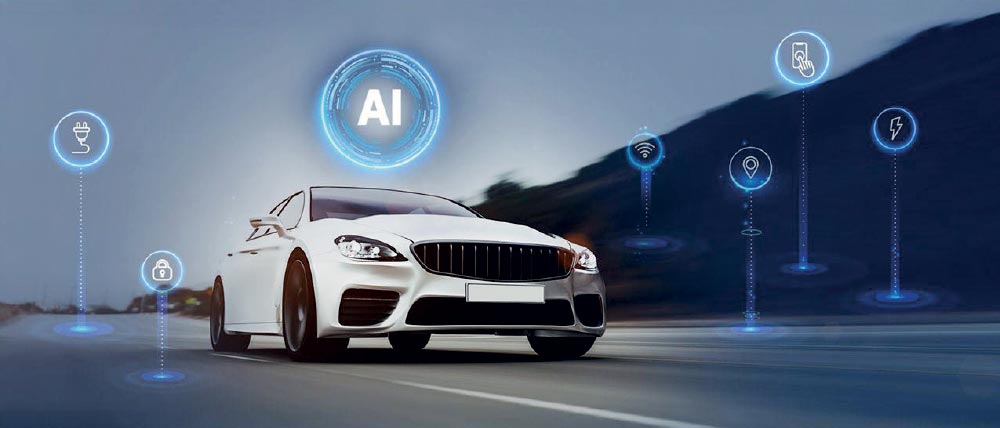
Artificial intelligence is rapidly transforming the global automotive industry, reshaping how vehicles are designed, manufactured, driven, and maintained. Once considered futuristic technology, AI is now deeply integrated into modern automobiles, offering improved safety, efficiency, and convenience for consumers worldwide.
One of the most visible applications of AI in the automotive sector is advanced driver assistance systems. Features such as lane departure warnings, adaptive cruise control, automatic emergency braking, and parking assistance rely heavily on artificial intelligence algorithms. These systems analyze real-time data from cameras, sensors, and radar technologies to help drivers make safer decisions.
The development of autonomous or self-driving vehicles represents another major milestone in AI integration. Technology companies and automotive manufacturers are investing billions into autonomous driving research. Self-driving systems use machine learning, computer vision, and complex data analysis to interpret road conditions, traffic signals, pedestrians, and other vehicles.
AI is also revolutionizing vehicle manufacturing. Smart factories equipped with robotic systems and predictive analytics can improve production efficiency while reducing waste and operational costs. Manufacturers use AI to monitor equipment performance, predict maintenance requirements, and optimize supply chain management.
Customer experience has become another important area influenced by AI. Modern vehicles increasingly feature intelligent infotainment systems capable of voice recognition, navigation assistance, and personalized driving recommendations. Drivers can interact with vehicles through natural language commands, making technology more user-friendly.
Predictive maintenance is becoming a valuable service for vehicle owners. AI systems can analyze vehicle data to identify potential mechanical issues before they become serious problems. This proactive approach helps reduce repair costs, minimize breakdowns, and improve overall vehicle reliability.
The insurance industry is also adapting to AI-driven mobility solutions. Usage-based insurance models allow insurers to evaluate driving behavior through connected vehicle technologies. Safe drivers may benefit from reduced premiums while insurance companies gain more accurate risk assessments.
AI contributes significantly to road safety. Human error remains one of the leading causes of traffic accidents globally. Intelligent driving systems can react faster than humans in certain situations, potentially reducing collisions and saving lives.
Electric vehicles are also benefiting from AI integration. Smart battery management systems optimize charging efficiency, monitor battery health, and maximize driving range. AI-powered navigation can identify nearby charging stations and calculate the most efficient travel routes.
Despite its advantages, the adoption of AI in automobiles raises important challenges. Data privacy and cybersecurity concerns are becoming increasingly significant as vehicles collect and transmit large amounts of information. Manufacturers must ensure that connected systems remain secure from cyber threats.
Regulatory frameworks are another major consideration. Governments worldwide are working to establish legal standards for autonomous driving, liability issues, and AI safety protocols. Policymakers face the challenge of balancing innovation with public safety.
Employment patterns within the automotive industry may also evolve due to AI-driven automation. While automation can improve productivity, some traditional manufacturing roles may decline. At the same time, demand for software engineers, AI specialists, and data analysts is expected to increase.
Consumer acceptance remains a crucial factor in the success of AI-powered vehicles. Many drivers appreciate convenience and safety features, but fully autonomous driving still faces skepticism in some markets. Building public trust will require consistent performance, transparency, and strong safety records.
AI technology is expected to become even more advanced in the coming years. Future vehicles may communicate directly with each other and with surrounding infrastructure to improve traffic management and reduce congestion. Smart cities and intelligent transportation networks could significantly reshape urban mobility.
The automotive industry is entering a digital age where software is becoming as important as mechanical engineering. Companies that successfully integrate artificial intelligence into their products and operations are likely to gain competitive advent.




