Tuesday Aug 25, 2026
Tuesday Aug 25, 2026
Monday, 1 June 2026 00:08 - - {{hitsCtrl.values.hits}}
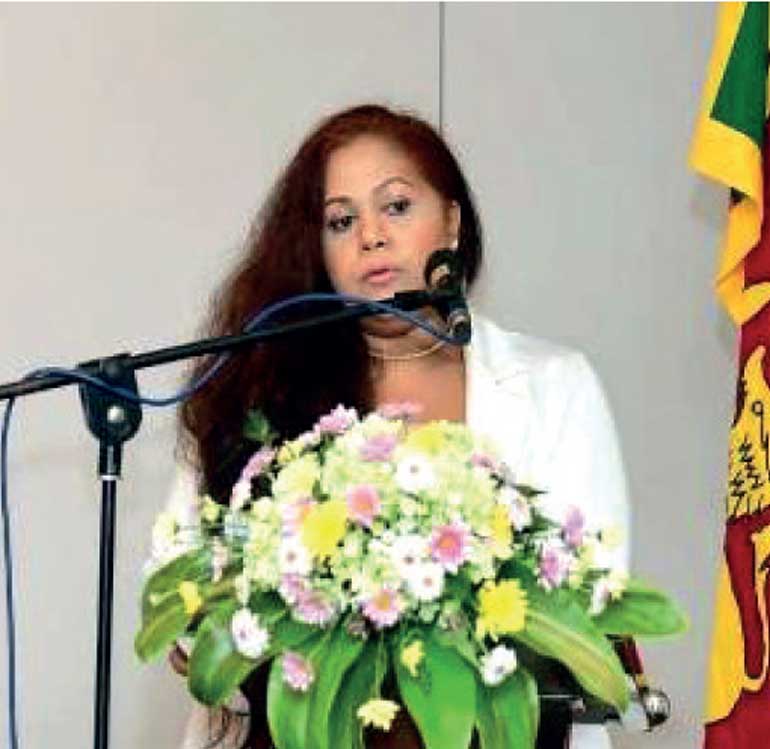
TMC Colombo Chairperson Duneeshya Bogoda
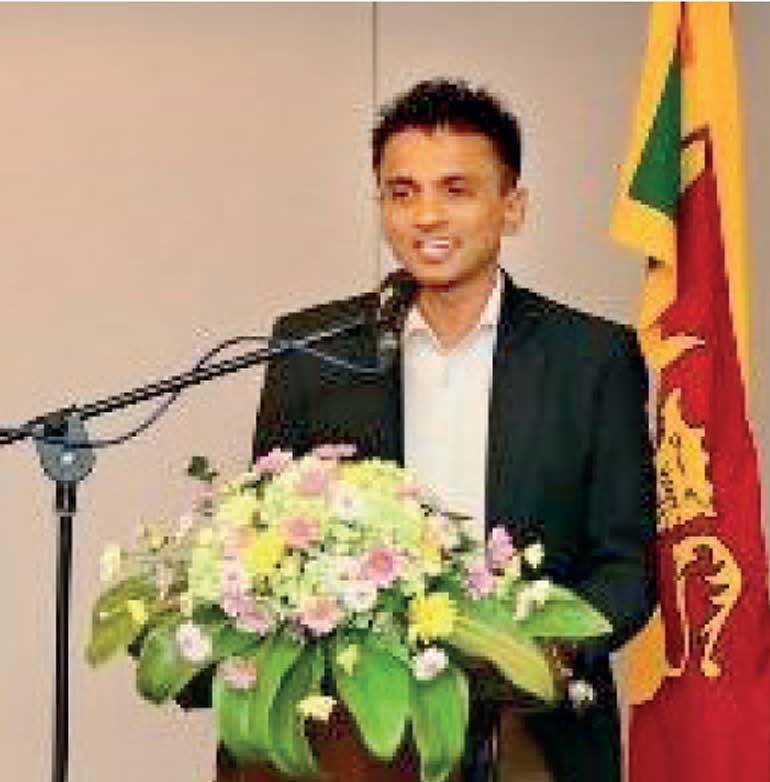
Advocata Institute CEO Dhananath Fernando
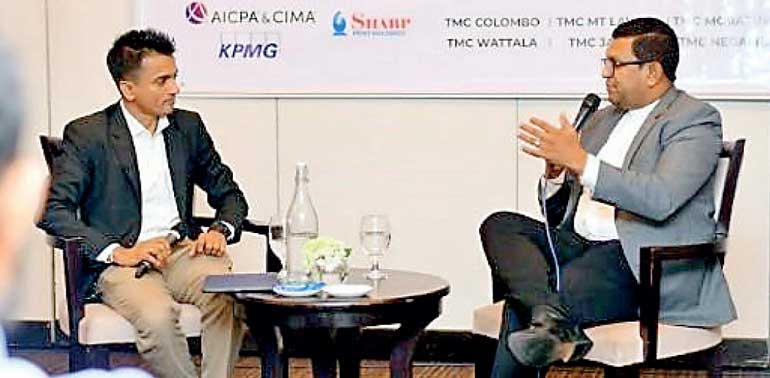
Guest Speaker Dhananath Fernando (left) with moderator
Mahesh Senanayake

From left: Advocata Institute HR Head, Advocata Institute CEO Dhananath Fernando, TMC Colombo Chairperson Duneeshya Bogoda, Project Chairman Ranjith Fernando, TMC Colombo Secretary Shiwanthie Wijesuriya
A presentation under the topic ‘Current economic environment and way forward in Sri Lanka” organised by The Management Club (TMC) of Colombo was held on 26 May at the Cinnamon Grand Colombo.
During the presentation, Advocata Institute Chief Executive Officer and Founder Dhananath Fernando commented on the current economic situation of the country, “Diesel price, even without any taxes, should be Rs.403 but currently the selling price is Rs.392 which is not market reflective. Ideally it has to go up since there is nothing that is sold below cost, if not, someone has to bear the difference”he said. Speaking further, Fernando said that the country went through an economic crisis due to the failure to adjust fuel prices against the rising USD in 2022. He agreed and accepted the fact, that price adjustments corresponding with costs, is not a popular decision, but if that is not done the costs borne by the government will have to be collected through taxes which is the direct source of revenue. He further said that the present subsidising of diesel fuel prices could result in an increased consumption, leading to a dollar out flow adding pressure on the rupee and in turn contributed to depleted dollar reserves. He further said the resulting inflationary impact needs to be reduced by increasing interest rates which curtails economic development. When commercial banks release dollars to the Central Bank for imports, an equivalent amount of money is printed by the Central Bank to purchase dollars,which in turn increases the probability of creating inflation. He further said that as long as there is no dollar inflow (either way of FDI/ Grants/ Fund facilities), the pressure on the rupee will increase.
The middle east crisis has a significant impact on the fuel price escalation but even if there is a cessation of hostilities, it may take two to three months for the fuel production to come back to previous production levels. So he stressed that if a cost reflective fuel price adjustment does not take place, it may lead to a deterioration of public finance, since the state cannot not effect tax increases in such a scenario.
During the presentation which enlightened the audience on important economic issues, hitherto not discussed in detail, Fernando said that it was published in a World Bank Report that 70% of the fuel is consumed by 30% of the wealthiest segment. Therefore, when the highest payment made out of all imports, is to cover the fuel bill, and again when it is subsidised, it mainly assists the people who can afford for such adjustments. The fuel price subsidy amounting to Rs.15- 20 b per month amounting to around Rs.120 b annually, equals the amount paid to the poorest of the poor under the Aswasuma financial assistance scheme. He was of the view that such people need to be cushioned from price escalations to face day to day living expenses.
It has been possible to subsidise fuel prices, since the Government had benefitted from 120% taxes imposed on vehicle imports realising around Rs. 900 b and by generating more income tax and VAT vide expanding the tax net. These factors had helped to convince the IMF of improved revenue collection to enable the release of the next installment in the near future. The revenue loss of 30% from the drop in tourism in March and April this year due to the mid east crisis had been compensated by the increased remittances from Sri Lankans working abroad, mainly from skilled male worker migration. Sri Lanka has a significantly higher percentage of migrated workers vis-à-vis the population compared to other countries. Even though the migrant diaspora have contributed to significant dollar inflows, the aging local population and shrinking birth rates have impacted adversely on the growth of the economy with less skilled workers for employment in local industries.
Explaining the macro-economic situation, Fernando warned remittances from Expatriate Sri Lankans will be constant through formal, legitimate channels as long as they have confidence over the market and state policies. But when the credibility is doubted, exporters and expatriate workers will hold dollar remittances, whilst remittances taking place through informal channels, such as Undiyal and Hawal, causing pressure on existing dollar reserves, leading to the depreciation of the rupee. This resulted in the crisis the country faced in 2021 and 2022. It could not be averted even though several measures were taken to increase the dollar inflows through proper channels. Money printing led to the rupee ending at Rs. 360 per USD and inflation climbing up to 70%. Hence cautioning against such a situation, Fernando said his recommendation is to have proper cost reflective price adjustment for fuel imports by preserving dollar reserves to ward off a financial crisis.
Speaking on a positive note, he explained that it is a far remote chance of another financial crisis like what we experienced in 2022 during the next few years in view of the US dollar reserves currently standing at 6.8 billion. The budget deficit too has come down significantly. He attributed the economic stability to the reforms introduced by the Economic Transformation Act No. 45 of 2024, The Public Financial Management Act No. 44 of 2024, The Public Debt Management Act No. 33 of 2024 and the Central Bank of Sri Lanka Act No. 16 of 2023.
He further explained in detail the meaning of inflation in relation to the market dynamics and confirmed that money printing contributes to this situation as a major factor. Also the money printing will contribute towards an increase in imports which in turn affect the reserves. The fundamental thing that can tackle this situation is to increase the interest rates. So this is a vicious cycle, hence needs to balance carefully and willfully.
While noting the significant developments in the monetary sector achieved through reforms, he observed that no such reforms had taken place for the growth of the economy. The migrant diaspora is a key driver for economic growth not only in terms of the remittances they make, but also in terms of the know-how and knowledge they bring as it happens in India. To harness such knowledge the country needs to do away with constraints caused by factor markets, such as land allocation and distribution encumbrances, and multiple labour regulations. For example there are over twelve or so approvals and certifications are necessary for an investment project approval, and which investor can afford to spend time/ money on those irrational processors. Further in and around western province, the BOI zones which facilitate investments are almost 95% occupied. There are no new investment zones opened up recently in more feasible locations to attract investors. On the other hand, when compared to neighbouring countries, Sri Lanka has failed to introduce a reasonable number of new high revenue earning export products, thereby leveraging only on products of low value which is another reason for the slow economic growth. The other significant reason is the high reliance on diesel and coal to generate power, rather than on renewable sources such as hydro, solar power.
The Chairperson Duneesha Boyagoda gave an introduction of the services rendered by the Management Club (TMC), with branches in Colombo, Mount Lavinia and Jaffna which serves as a dynamic platform for professionals to interact and exchange ideas for professional growth through education, training, skill enhancement and for networking among its members. TMC promotes ethical leadership and modern business practices.



