Thursday Mar 26, 2026
Thursday Mar 26, 2026
Monday, 8 December 2025 00:50 - - {{hitsCtrl.values.hits}}
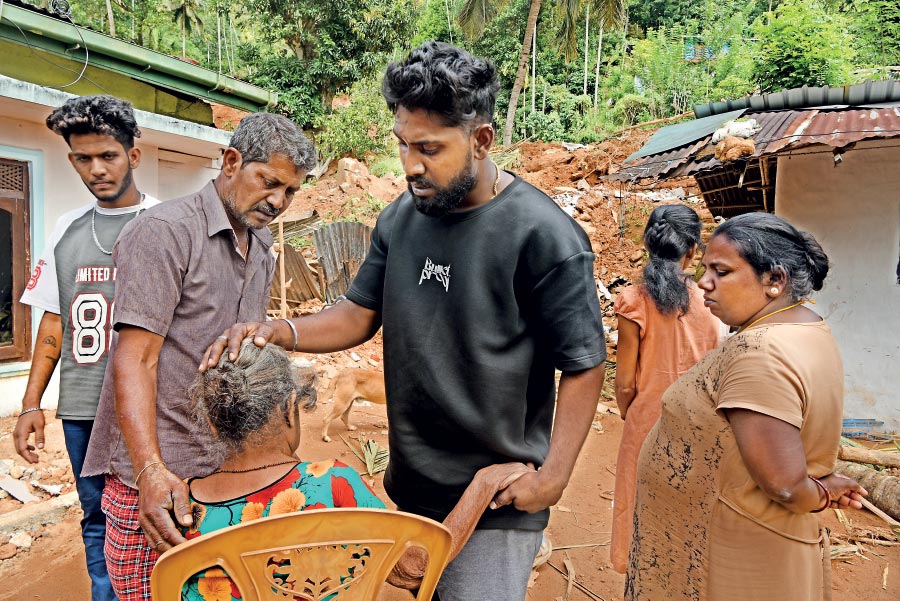
Sri Lanka’s progress has repeatedly been hindered by decisions that neglect the “unseen,” a tendency evident in nearly all Government policy, but particularly urgent today is the response to Ditwah as well as monetary policy
 In the aftermath of Ditwah, shortages of food, water, and basic necessities have emerged. Retailers, facing constrained supply and higher risks, have raised prices. The Commissioner General of Essential Services has declared such increases as “immoral and illegal,” vowing legal action. This policy ignores critical “unseen” market mechanisms. Higher prices in scarcity perform vital functions. They ration limited goods
 The Parable of the Broken Window
In 1850, the French economist Frederic Bastiat penned “The Parable of the Broken Window.” A boy breaks a shop window, and a glazier is paid six francs to repair it. Onlookers muse that such accidents are good for trade, as they keep windowmakers in business. This logic, Bastiat argues, focuses only on the “seen” consequence—the glazier’s gain—while ignoring the “unseen.”
The shopkeeper, now six francs poorer, cannot spend that money on a new hat, shoes, or a book. The “unseen” consequence is the business denied to the tailor, the cobbler, and the bookseller. In a better world, the shopkeeper would have both his window and a new good. Bastiat’s lesson is that sound policy must also account for “unseen” effects.
Sri Lanka’s progress has repeatedly been hindered by decisions that neglect the “unseen,” a tendency evident in nearly all Government policy, but particularly urgent today is the response to Ditwah as well as monetary policy.
The fallacy of price controls in a disaster
In the aftermath of Ditwah, shortages of food, water, and basic necessities have emerged. Retailers, facing constrained supply and higher risks, have raised prices. The Commissioner General of Essential Services has declared such increases as “immoral and illegal,” vowing legal action. This policy ignores critical “unseen” market mechanisms.
Higher prices in scarcity perform vital functions. They ration limited goods, ensuring, for example, water is used for the sick rather than watering gardens, and prevent wasteful hoarding. Furthermore, elevated profits incentivise entrepreneurs to take significant risks—navigating flood-damaged infrastructure—to deliver essential goods. This increased supply and competition would, over time, drive prices back down, fostering a robust recovery.
We see this model working in the private sector: In the telecommunications space we observe that internet data consumption is controlled through careful time or usage based pricing. General purpose data is expensive. However, data specifically for social media (including WhatsApp), and entertainment media can be obtained through data packages, which offer better value. Furthermore data is lower priced or unlimited at off-peak hours. This nuanced pricing prevents shortages of internet data, which has become akin to a critical good.
Similarly the private transport space has also shown abundance and resilience in times of crisis through flexible pricing allowing driver bidding, and making excellent use of technology.
By targeting businesses for raising prices, the Government prevents these natural corrective mechanisms. The “seen” effect is the suppression of a price spike; the “unseen” consequence is prolonged shortage, misallocation of resources, and a disincentive for the private sector to shoulder recovery.
While politically challenging, the Government must consider empowering the market’s knowledge system rather than attempting to override it. Controlling an economy’s vast array of prices, goods, and services is an informationally impossible task for any central authority, as evidenced by economic history worldwide and the experience of developed nations
The Central Bank and the inflation tax
Economic turmoil followed the COVID pandemic, marked by a plummeting rupee and soaring cost of living. With Ditwah a similar outcome can be expected if the same policies that led to that outcome are followed.
Due to the promised public reliefs the Government spending must increase. However, it will have difficulty financing this increase with tax takings. To solve this problem it is likely to rely on the central bank, as it has done in the past.
The post-COVID economic turmoil was due to the inflationary actions of the central bank. Seduced by political expediency, the bank printed money to bridge the gap between diminished tax takings and elevated spending. Classical economics holds that inflation is the expansion of money supply; price rises are merely a symptom.
This printed money diluted purchasing power without an explicit levy. Printing money is an “invisible tax”, and its wider impacts are corrosive and often unseen. It facilitates the Cantillon Effect: those closest to new money (contractors, financial institutions) spend it first at full value, while the general public bears the cost through higher prices, effectively transferring wealth from the poor to the rich.
Moreover, as Nobel laureate Friedrich Hayek described, it cheapens credit, creating a “business cycle” of artificial booms and malinvestment, followed by inevitable busts when real resources prove scarce. This causes the economy to continuously weaken over time.
This steady weakening has been observed since the central bank’s creation in 1950, prior to which the rupee was pegged to the Sterling Pound and could not be inflated.
As Jörg Guido Hülsmann explains in “The Ethics of Money Production”, inflation encourages debt, punishes savers, weakens family ties as people seek work abroad, hyper-centralises state power and encourages war. All of these symptoms have been observed in Sri Lanka’s post independence history.
As a cherry on top, the completion of the Lotus Tower just prior to economic collapse eerily mirrors the “Skyscraper Index” phenomenon, a hallmark of an inflationary bubble caused by central banks.
Economic turmoil followed the COVID pandemic, marked by a plummeting rupee and soaring cost of living. With Ditwah a similar outcome can be expected if the same policies that led to that outcome are followed
Due to the promised public reliefs the Government spending must increase. However, it will have difficulty financing this increase with tax takings. To solve this problem it is likely to rely on the central bank, as it has done in the past. The post-COVID economic turmoil was due to the inflationary actions of the Central Bank
Conclusion: Learning to see the unseen
The instinct to control prices and print money for reliefs addresses only the immediate, “seen” political problem while unleashing a cascade of “unseen” economic devastation. It repeats the error of the broken window, celebrating the glazier’s work while forgetting the tailor’s lost sale.
The central bank mandate, as stated in the Monetary Law Act, is to ensure financial, economic and price stability. By any objective measure it has completely failed in its mandate. As per Hülsmann’s explanation, the cultural and societal costs of inflationary policy over the decades have hurt Sri Lankans profoundly.
Globally, the role of central banks is being questioned, from the “End the Fed” movement in the US to Javier Milei’s proposal in Argentina to abolish the central bank altogether.
While politically challenging, the Government must consider empowering the market’s knowledge system rather than attempting to override it. Controlling an economy’s vast array of prices, goods, and services is an informationally impossible task for any central authority, as evidenced by economic history worldwide and the experience of developed nations.
The focus should shift toward a disciplined consolidation of the Government’s role. By focusing on its fundamental duties, i.e. upholding the rule of law, protecting property rights, and ensuring a stable monetary framework, the Government would create the conditions for a private-sector-led recovery.
Such a framework of Government restraint would free capital, honour savers, and allow market prices to perform their vital role of allocating scarce resources efficiently. The unseen benefit would be a more resilient, adaptive, and prosperous society.
Only by accounting for the full consequences of policy—both seen and unseen—can Sri Lanka build a foundation for genuine, resilient recovery from Ditwah and future prosperity.
(The writer, a civil engineer, resides in Singapore. He can be reached at [email protected].)



