Sunday Aug 30, 2026
Sunday Aug 30, 2026
Friday, 26 June 2026 03:39 - - {{hitsCtrl.values.hits}}
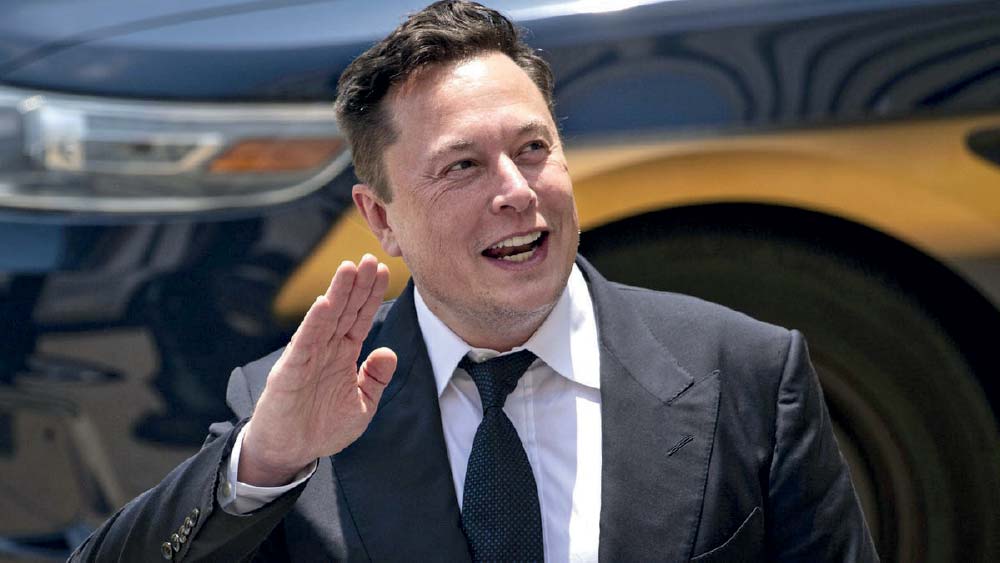
Elon Musk
 Contemporary frameworks of sustainable enterprise success, codified under the banner of stakeholder governance, view the corporation not as a machine to be driven to its thermal limits, but as an ecosystem to be cultivated. Human-centric leadership posits that long-term value creation is inextricably linked to the well-being, trust, and psychological safety of its workforce
 A few weeks ago, the world unveiled its first trillionaire, Elon Musk. Following the historic initial public offering (IPO) of SpaceX on Nasdaq, Elon Musk officially crossed the ‘billionaire’ boundaries to become the world’s first documented trillionaire. Musk’s personal net worth eclipsed $1.1 trillion. What drove such unprecedented value creation?
Musk’s ascendancy is primarily a triumph of “hard skills”; an uncompromising mastery of physics, engineering, ‘first-principles’ arithmetic, and aggressive capital allocation. These are the visible mechanisms of his empire, and they are heavily documented and easily quantified. Musk utilises a strict physics-based framework known as first-principles thinking. This involves boiling a problem down to its most fundamental truths: the reasoning and rationalising of the literal laws of physics and material costs. When founding SpaceX, aerospace experts told him that buying a rocket would cost upwards of $65 million. Musk calculated the raw material costs of aerospace-grade aluminum, titanium, copper, and carbon fiber. He discovered that the raw materials accounted for only about two% of the typical rocket’s price. By building the supply chain from scratch and manufacturing over 70% of the vehicle in-house, SpaceX significantly reduced the cost of rockets and spaceflights.
Musk’s operational hard skills are codified in a rigid, five-step engineering and manufacturing protocol that he affectionately calls “The Algorithm.” Applied across Tesla, SpaceX, and various tech ventures, it mandates a strict operational sequence. This operational blueprint is a brutal, uncompromising checklist designed to eliminate the bureaucratic bloat that naturally cripples scaling companies. It forces engineering and manufacturing teams to treat every design element not as a permanent fixture, but as a hypothesis waiting to be disproved. The efficacy of the protocol lies in its inflexible, linear sequence. You are strictly forbidden from moving to the next step until you have fully executed the previous one.
To understand its power, consider how it functions in practice:
Question every requirement
This step is a direct attack on corporate inertia. Musk demands that every restriction, specification, or safety buffer be traced back to a living, breathing human being rather than a faceless committee. If a requirement was born from a vague department, it is immediately discarded. You cannot accept a rule just because “it is industry standard.”
Delete any part or process you can
This is the most radical phase. Engineers are conditioned to add safeguards, but Musk pushes for aggressive subtraction. He argues that if you are not forced to add back at least ten% of what you cut, you are not being radical enough. The goal is simple: strip the system down to its absolute essentials.
Simplify or optimise
The core trap of clever engineers is spending months perfecting a complex bracket or software loop that should not even exist. Musk’s rule is absolute. You must never expend energy optimising a component that Step 2 should have deleted.
Accelerate cycle time
Only when a part has been aggressively simplified do you look at making it faster. Moving fast on a bloated design just manufactures junk at a higher velocity!
Automate
The absolute last step. Musk famously learned this the hard way during the Tesla Model 3 production ramp, where over-automating a flawed, complex assembly line resulted in massive bottlenecks. Automation is the crown jewel, but only when applied to a perfectly minimised process.
Musk was expected to apply his signature corporate ‘Algorithm’ to the USA federal Government when he was appointed by Donald Trump, in November 2024, to co-lead the Department of Government Efficiency (DOGE), an advisory initiative aimed at dismantling bureaucracy, cutting waste, and downsizing federal agencies. However, his aggressive, machine-like approach met massive resistance, leading to his premature exit from the role in May 2025. More specifically, there was widespread opposition to his leadership style.
This confirms that a national or corporate machine cannot run on cold mechanics alone. Hard skills can design a reusable rocket or optimise an assembly line, but they cannot compel thousands of elite engineers to work ‘eighty-hour +’ weeks under brutal pressure, nor can they rally a global base of retail investors and sovereign wealth funds to bet on a multiplanetary future. To truly comprehend the “Elon Premium,” this being the intangible valuation premium investors place on his direct involvement, we must scrutinise Musk’s operating model.
Musk possesses a formidable grasp of macroeconomic structures and venture financing. The 2026 SpaceX IPO is a masterclass in this domain. By positioning SpaceX not just as an aerospace hardware manufacturer, but as an integrated orbital infrastructure powerhouse, combining Starlink’s global telecommunications, deep-space logistics, and orbital AI data centers, he tapped into the massive valuation multiples typically reserved for hyper-growth software and artificial intelligence firms.
The fundamental chasm lies between motivation extracted through fear and commitment inspired through shared purpose. While fear can yield spectacular, short-term sprints, it inevitably corrodes the cognitive diversity and emotional bandwidth required for an enterprise to endure across generations. The modern boardroom increasingly operates under a mandate that extends far beyond the traditional, narrow focus on maximising shareholder wealth
Disruptive technical brilliance and effective leadership
The corporate world often confuses disruptive technical brilliance with effective leadership. In an era of rapid technological change, Elon Musk is widely regarded as a visionary; a driven innovator who has reshaped industries from aerospace to electric vehicles. Yet behind these engineering achievements lies a clear contradiction of widely accepted leadership traits and behaviours. While Musk’s technical ability is extraordinary, his authoritarian style sharply contrasts with the enduring principles of effective leadership.
Musk’s leadership style is in many ways like that of Lee Kwan Yew (LKY). LKY’s leadership was defined by hyper-pragmatism, meritocracy, and unyielding discipline. Rejecting populist dogma, he prioritised long-term national survival over short-term approval, famously stating that he preferred to be feared rather than loved. His style blended authoritarian state-building with absolute institutional integrity. By enforcing strict rules of law and anti-corruption measures, he earned authority, transforming Singapore from a vulnerable port into a global economic powerhouse through sheer strategic vision and execution.
Organisational stewardship cannot be measured just by market capitalisation or the audacity of engineering thinking. Conventional wisdom says that it must be anchored in the bedrock of emotional intelligence and interpersonal dynamics, where exemplary leaders utilise soft skills to construct bridges of trust. Musk frequently deploys a volatile management style characterised by unpredictable impulses and a highly publicised aversion to dissent. He makes little attempt to strengthen the traditional pillars of ‘earned authority, such as empathy, authenticity, humility, and transparency. His modus operandi pays scant regard for the concept of psychological safety. In stark contrast, Musk’s command-and-control paradigm has thrived on friction and the consequent cultural fragmentation. In this light, it must be concluded that the “Elon Premium” is driven by the technical brilliance of the product and process and not by the soft components of leadership. Is this sustainable?
This article does not seek to diminish Musk’s astounding accomplishments as an architect of the future but seeks to contrast his ‘soft’ traits and behaviours against the enduring mirror of human-centric leadership. By examining the vast chasm between a culture driven by fear and one rooted in mutual respect, the article brings to light a vital question. Can absolute technical genius, divorced from refined interpersonal grace, sustain long-term enterprise success in a backdrop that accepts that true leadership is not about forcing the world to bend to one’s vision, but inspiring people to build it together?
Quintessential archetype
Elon Musk stands as the quintessential archetype of the “founder-saviour”. A disruptor whose paradigm-shifting achievements in aerospace, electric vehicles, and neural interfaces are indisputable. Yet, his operational template relies heavily on an adversarial, top-down hierarchy. It is a methodology built on the premise that breakthrough innovation requires friction, extreme pressure, and an absolute submission to the mission. In this ecosystem, participative democracy is dismissed as an impediment to speed, and dissent is frequently conflated with disloyalty.
Contemporary frameworks of sustainable enterprise success, codified under the banner of stakeholder governance, view the corporation not as a machine to be driven to its thermal limits, but as an ecosystem to be cultivated. Human-centric leadership posits that long-term value creation is inextricably linked to the well-being, trust, and psychological safety of its workforce. Where Musk’s methodology leverages acute urgency and the systemic threat of obsolescence, or termination, to force compliance, stakeholder-oriented leaders build resilience through mutual respect. The fundamental chasm lies between motivation extracted through fear and commitment inspired through shared purpose. While fear can yield spectacular, short-term sprints, it inevitably corrodes the cognitive diversity and emotional bandwidth required for an enterprise to endure across generations. The modern boardroom increasingly operates under a mandate that extends far beyond the traditional, narrow focus on maximising shareholder wealth. The global consensus on corporate governance has shifted toward a stakeholder model; an acknowledgment that a company’s long-term viability depends on its relationship with employees, suppliers, customers, communities, and the environment. This governance model demands a leadership style rooted in empathy, active listening, and systemic collaboration.
Musk’s approach, characterised by unilateral decision-making and a highly publicised disdain for institutional guardrails, directly challenges this consensus. His leadership narrative often elevates the myth of the solitary genius whose vision supersedes the collective wisdom of boards, regulators, and teams. While this unyielding focus has shattered bureaucratic inertia and democratic gridlock, allowing SpaceX to land rockets and Tesla to scale production when critics deemed it impossible, it does create systemic risks under a stakeholder framework.
When a leader positions himself/herself as the sole arbiter of an enterprise’s destiny, the organisation develops an acute key-man dependency. More critically, it alienates vital stakeholder groups. Musk views external and internal stakeholders not as partners, but as variables to be managed or obstacles to be overcome. Musk’s approach of “delete first, ask questions later” and the deliberate creation of discomfort in accelerating the achievement of goals/outcomes did not sit well with the public sector during his co-leadership of DOGE. In attempting to treat the federal bureaucracy like a Tesla factory, his aggressive, top-down personnel cuts backfired legally and operationally. Bureaucrats, unwilling to be managed via unilateral mandates, forced DOGE to effect costly reversals, such as rehiring essential staff. The DOGE has ceased operations since.
The definitive template for sustainable, long-term enterprise success will remain anchored in the human-centric model. True leadership, in its highest and most enduring form, understands that the ultimate measure of a visionary’s greatness is not the compliance they command, but the community of inspired human beings they leave behind, standing together to sustain the vision long after the leader has stepped away from the podium
Kinetic leadership
To understand the operational realities of Musk’s methodology, we must examine the concept of “kinetic leadership”, a state of perpetual crisis management where the organisation is kept in a continuous cycle of high-stakes duress. Musk’s self-described “hardcore” work culture demands total personal sacrifice, routinely requiring eighty-hour+ workweeks and a blurred boundary between professional duty and personal life. It is noted that base salaries at Tesla and SpaceX are lower than the tech industry average. However, the long-term equity growth tied to company performance is lucrative. Employee turnover is notably high at both Tesla and SpaceX compared to broader corporate and traditional aerospace standards.
While this kinetic energy can catalyse historic engineering breakthroughs, the human cost is heavy. It creates an environment characterised by, > Systemic Burnout: High-stress environments naturally accelerate turnover, treating human capital as a consumable resource rather than an appreciating asset, > The Eradication of Psychological Safety: When the penalty for missing an aggressive, arbitrary deadline is public reprimand or termination, a culture of risk-aversion masquerading as compliance takes root. Employees stop flag-raising latent flaws, hiding systemic vulnerabilities out of fear of delivering bad news, > Loss of Institutional Memory: Continuous attrition drains organisations of the deep, quiet expertise required to sustain complex operations over decades, leaving the enterprise perpetually reliant on the next wave of disposable talent.
Human-centric governance, by comparison, argues that sustainable innovation is a marathon, not a series of near-fatal sprints. It values sustainable pacing, emotional intelligence, and cognitive preservation. Leaders who practice interpersonal grace understand that the human brain requires spaces of safety to engage in deep problem-solving and divergent thinking. By replacing fear with emotional security, these leaders unlock discretionary effort; the genuine desire of an employee to bring their best, most creative self to work, not because they are afraid of the consequences if they fail, but because they are inspired by the possibility of success.
The enduring flaw of absolute technical genius divorced from interpersonal grace is its inability to scale emotionally. A leader can force his/her will upon a company of a few hundred or even a few thousand tightly aligned zealots. However, as an enterprise scales into a global institution impacting millions of lives, the dictatorial model will fracture the very foundations required to sustain it.
Enterprise sustainability
True enterprise sustainability requires an alignment of incentives across the entire stakeholder spectrum. Employees must feel valued as whole human beings, ensuring their physical, mental, and economic well-being is safeguarded. Customers must trust that the organisation acts with integrity, anchoring its technological advancements in ethical responsibility. Communities and governance bodies must see the enterprise as a constructive civic partner, rather than an erratic entity that considers itself above censure!
The human-centric leader achieves this alignment through the cultivation of a shared vision. This is not a vision handed down from a mountain top as an immutable decree, but one that is co-authored, refined, and embraced by the collective. It relies on inspiration over coercion. When people are inspired to build a vision together, they take psychological ownership of the outcome. They become self-correct, highly collaborative, and deeply resilient. They do not look for a single leader to save them or tell them what to do next. They look to each other, stabilised by a culture of mutual respect and clear, empathetic communication.
For boards of directors navigating the complexities of the twenty-first century, the contrast between Musk’s autocratic style and human-centric governance offers critical insights. Technical brilliance and visionary execution are highly valuable assets, but can they survive without the stabilising ballast of collaboration, teamwork, and stakeholder alignment? Can the modern boardroom exchange toxic leadership behaviours for short-term operational and valuation gains? The risks, ranging from catastrophic reputational damage and regulatory backlash to the quiet, systemic erosion of internal talent, are simply too high. True leadership excellence requires dual competency: the raw intellectual capacity to chart the future of technology, paired with the emotional intelligence to shepherd the human spirits tasked with building it.
There is no denying Musk’s technical brilliance. The astronomical value of his companies has irrefutably cemented his place as the world’s first trillionaire. Yet, his hyper-pressurised, disruptive leadership model remains a volatile experiment. While this high-stakes choreography of raw engineering and psychological warfare has unlocked unprecedented innovation, it operates on a razor’s edge of human burnout and governance risk. Ultimately, only history will tell if this trillion-dollar playbook yields a sustainable corporate legacy or a cautionary tale.
History honours the innovators who reshape our physical reality, but it preserves the institutions that honour our shared humanity. Elon Musk’s legacy will undoubtedly be etched in stone, steel, and silicon. Yet, the definitive template for sustainable, long-term enterprise success will remain anchored in the human-centric model. True leadership, in its highest and most enduring form, understands that the ultimate measure of a visionary’s greatness is not the compliance they command, but the community of inspired human beings they leave behind, standing together to sustain the vision long after the leader has stepped away from the podium. Is Musk’s leadership style sustainable in an emancipated world? Or- is it the style of the future?
(The author is currently, a Leadership Coach, Mentor and Consultant and boasts over 50 years of experience in very senior positions in the Corporate World – local and overseas. Visit ww.ronniepeiris.com)




