Friday Mar 13, 2026
Friday Mar 13, 2026
Wednesday, 24 December 2025 00:48 - - {{hitsCtrl.values.hits}}
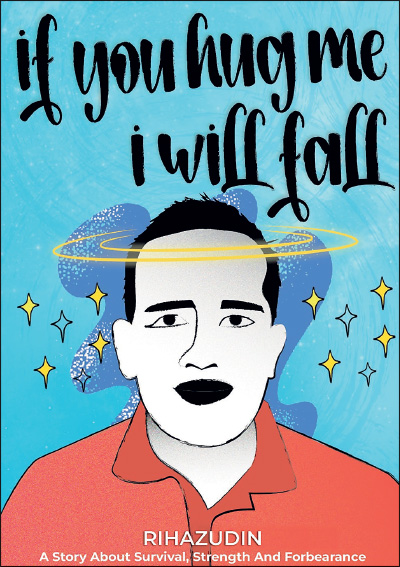
The author’s forthcoming memoir, If You Hug Me, I Will Fall, revolves around this central idea and is set to be launched online via Zoom on 28 December. This book has started to get a lot of attention because of how restrained and clear it is. It provides a viewpoint on hardship that is relatable and universal
 What if our eagerness to lend a hand really hinders progress at times?
At this point in Sri Lanka's history, the question strikes a chord. One reality is becoming more difficult to overlook: Not all assistance empowers. This is true as companies recover from long-term disruptions, leaders evaluate their management approaches, young professionals face uncertainty, and students challenge conventional success criteria.
When difficult circumstances rid you of your freedom
There is no heroic or tragic portrayal of disease in the book. Interruption is how it is presented.
The author tells the story of how his disease became a challenge not because it won, but because it took away his freedom and made him re-establish his life gradually. Learning to stand up again was more important than being carried during recovery.
That difference is important, especially in a society that values intervention, quick results, and haste above method and patience.
Struggle is not romanticised in the narrative. It instead delves into the consequences of taking one's time, being methodical, and earning one's way back up after a setback, a fact that any individual who has rebuilt a profession, an organisation, or even their sense of self can relate to.
 Lessons in silence for organisational heads and bodies
The narrative provides knowledge that is naturally applicable to leadership and organisational thinking, in addition to personal rehabilitation.
It resolves a tension that many institutions are currently facing by drawing a clear line between supportive actions that empower and those that undermine. Systems that rely on continual interference, excessive oversight, and reliance frequently fail to maintain progress. Over time, those who are moulded by reasonable direction, accountability, and trust are more likely to be resilient.
The protracted road to rehabilitation from burnout or professional failures is reflected in the story. It recasts patience, for young individuals venturing into an uncertain economic landscape, as readiness rather than delay or stagnation.
Just the title, "If You Hug Me, I Will Fall," perfectly conveys the point: Sometimes, having someone else's support can really make things worse.
A memoir crafted for the modern worker and reader
The concept and accessibility-first approach are what sets this narrative apart.
In contrast to more conventional author websites, the companion portal, Rihazudin.com, is designed as a memoir experience portal and is now undergoing launch preparations. Among the upcoming features is a reader Q&A area devoted exclusively to the memoir, as well as optimisation for smartphones, tablets, and Smart TVs, as well as large, dyslexia-friendly text. The goal is straightforward. In this age of short attention spans and screen weariness, make reading better for readers in every way.
Justification for the story's success
Heroism and quick riches are not the themes of this memoir.
Constraint is the key.
Focussing on stability that is earned, not forced.
With regard to standing unsupported.
If You Hug Me, I Will Fall provides a practical concept that can be applied to leadership, work, and personal development, which is relevant as Sri Lanka's corporate community, educators, and leaders reconsider recovery and long-term resilience.
For the simple reason that sometimes the correct kind of assistance is more important than any amount of support at all.
(Anyone interested in the memoir, the event, or wants further information can get in touch with the author at [email protected] or @Rihazudin website: www.Rihazudin.com)




