This is not a battle for the reasons cited by the duo. On the one hand, this is an economic war to retain US hegemony in world affairs. US superiority is collapsing; Dollar dominance is challenged; Centre of gravity is shifting towards the East i.e. Africa and Asia. China, Russia, Japan, India are looming large in economic, technology and military affairs. Duos cannot raise a finger against these nations. They chose a weaker party to vent their frustration.
The Middle East (Saudi Arabia, Iraq, UAE, Kuwait, Iran) is a "backbone" of the world's energy supply. Crucial key maritime choke points like the Strait of Hormuz, and the Suez Canal controlling global supply chains, affecting the movement of goods between East and West. Its geographical location connecting Asia, Europe, and Africa, along with significant financial investments and religious significance, makes it a central pillar of global security and energy stability. Gulf nations are massive investors, and their financial stability impacts global markets. The region lies at the crossroads of three continents, acting as a bridge for trade and aviation. It is the birthplace of three major world religions—Islam, Christianity, and Judaism—with holy sites in cities such as Mecca, Medina, and Jerusalem, making it religiously significant to billions worldwide. Any conflict or instability in the region often has immediate ripple effects on the global economy. Trump/Netanyahu duo waged a war against Iran prompting Iran to take the revenge on its Arab neighbours. They put the Gulf nations/Arab neighbours against each other; put a halt to rising Middle East.
On the other hand, and more importantly, war against Iran is a blow dealt by two uncivilised leaders on the "cradle of human civilisation." The Middle East (Iran and around), often called the "cradle of human civilisation," saw the rise of the earliest known complex human urban societies emerged between 4000 and 3500 B.C. It witnessed the rise of major empires and civilisations (Sumer, Akkad, Mesopotamian, Babylonia, Assyria, and Ancient Egypt, Levant, Persia, Islamic Golden Age, Ottoman Era, Roman). This is the birth place of Agriculture (wheat/barley), foundational technologies, urban planning, the wheel, writing systems, legal codes, mathematics, astronomy, and organised religion.
The war of the two maniacs has expanded beyond military targets to include Iran’s deep historical, pre-Islamic, and Islamic architectural heritage, UNESCO World Heritage sites and significant cultural landmarks, causing irreversible damage to a key part of the "cradle of civilisation".
US and Israel are not a part of that proud history and civilisation. In their view, nothing can exist in which they are not a part of. That proud history and civilisation should be wiped off the world map.
Our response to external shocks
With eruption of the war politicians, economists, chambers, policy makers, central bank, think tanks and assorted group of analysts and spokespersons started jumping up and down to analyse the impact of the war on Sri Lankan economy. Ah! It’s another ‘external shock.’ They concluded. All the concerns were around immediate impact on fuel, exports, tourism, and remittances. They were worried about negative impact on “successfully managed” inflation, hard earned stability, fiscal consolidation, monetary policy targets, import liberalisation and the so called “IMF led recovery process”. They touched the surface of the wound and prescribed plastering. External shocks are usual and unavoidable for them.
Transitioning to a production economy
Transitioning to a production economy to absorb future external shocks is the only viable solution. Some argue that there is no term called production economy in the terminology of economics. Yes, not in terminology but exists on ground. Production economy focuses on the supply-side (agriculture, manufacturing, creation of new products) whereas consumption economy focuses on the demand-side.
President delivering Budget Speech 2026 emphasised “As an economy heavily dependent on imports, Sri Lanka remains vulnerable to global shocks. Therefore, we expect to build a production economy. ….. to manufacture the goods locally that are currently imported. ……… in adding value to local products.”
The need is indisputable. But it should go beyond the slogan. As Sri Lanka navigates its economic recovery, the production economy model offers a promising pathway to sustain growth. The full potential of this approach will only be realised if there is a coordinated effort by the Government, private sector, and civil society to embrace the principles of a production economy and implement the necessary changes.
Challenges and perspectives for building a production economy
In building a production economy, it is essential to identify sectors with high value addition, and with backward and forward linkages and the role of each player. Leaving investment decisions to the entrepreneur, the Government can remove barriers enterprises faced with fast clearance, bridging information gaps, infrastructure gaps (adequate uninterrupted electricity, water, waste disposal and utilities), access to fiancé, technology, markets, sort out environmental issues and bringing the uncoordinated reluctant countless decision makers to a single table (One stop shop).
Pampering, subsidising, being merciful toward SMEs, peasants, smallholders will not deliver intended results. It is necessary to think big, entrepreneurial, challenging and forward looking. Potential risk-taking entrepreneurs should be identified, promoted and facilitated. Instead of subsidising inefficiency, performance should be rewarded.
AKD Government which is busy in digging the past can take a leaf from President Premadasa’s regional garment factory initiative to learn how the Government should facilitate, identify and sort out the challenges and promote production leaving the investment decision to the entrepreneur.
Our agriculture suffers from low productivity due to outdated farming practices, limited mechanisation, inability to adapt to climate variability (Rest of the world is concerned of ‘Climate Change’ whereas we stick to Yala/Maha), ineffective pest control, soil degradation, fragmented weak extension services, post-harvest losses, insufficient storage and transport logistics. There are 16 state universities, their affiliated institutions, Research Institutes for each crop and a host of scientific and technology institutes rich with knowledge, research capacity and facilities. We are simply sitting on these potentials but failed to put them on the right track. Arrangements should be in place to translate innovations and research products into commercial operations.
Exporters have highlighted infrastructure and logistics challenges, market access and trade barriers, financial constraints, policy and institutional gaps, lack of coordination and outdated policies, absence of incentives for value addition and technology adoption, preference of banks and lending agencies for low-risk, quick-return activities over manufacturing as some of the issues and constraints.
There are organisations such as IDB, EDB, BOI, and Enterprise Services Division established specifically for facilitating access to finance, technology, and market. Unfortunately, they have forgotten the purpose of their existence.
With its fertile soil, mostly sunny, fair and favourable weather, diversified terrain, scenic beauty, warm long stretched beaches, rich cultural heritage, and well-developed human capital, talents, skills, potentials, strategic location, Sri Lanka was expected to have a better chance than most other Asian neighbours to register a rapid economic growth. But, sitting pretty on the potential and resources and boasting would not deliver. With dedication, interest, coordination, change of mind, change of working patterns, removal of bureaucratic hurdles, bringing necessary amendments to old aged archaic regulations, decentralisation of services to the periphery Sri Lanka can build up a strong production economy that can resist and absorb recurring external shocks.
Mitigating the dependence on fossil fuels
Electricity generation of the country relies primarily on non-renewable imported fossil fuels. We are a country located right on the equator but has failed to convert this free natural resource to energy due to absence of clear policy directives, inflexible mind sets, lack of coordination. With pledges, policies, Acts and institutional arrangements of successive Governments, we were not able to jump the bureaucratic hurdles and bypass age old enactments. We blame hot sun and generate energy with imported fossil fuel. If we lack knowledge and experience, a team of electrical engineers can be sent to Denmark or Finland to learn how the solar power is generated in the north pole. Denmark is a leader in Nordic solar deployment, targeting 9 GW of new solar by 2030, while Finland, despite limited winter sunlight, is growing its solar capacity often utilising solar-wind hybrids.
We have conveniently left the public transport system to collapse. As a result, private transport in Sri Lanka has grown to a dominant share. To make matters worse Government provides vehicles to senior officials. plying private vehicles with a single occupant on the road is not a rare sight. This escalates the demand for imported fuel in addition to traffic congestion, high number road accidents and pollution. Transport sector is the largest consumer of imported fossil fuels that accounts for roughly 24% of the country’s total import expenditure.
Sri Lanka being a tiny island (Hunduwa) and with good road and rail network, every individual need not own his own mode of transport. Any destination can be reached within a fairly relative short period of time. The Government can program a comfortable, safe, reliable public transport system for the convenience of different strata of the society.
Both energy generation and private transport depend on imported fuel. In 2024, Crude Petroleum was the 2nd most imported product. The fuel import bill reached approximately $ 4 billion.
The Government can seize the challenge paused by oil shortage caused by the war and reinvigorate its machinery to make a big hard push for renewable energy generation and improve the public transport system.
The ‘external shock’ (escalated tension in the Middle-east) is yet another challenge paused. The Government, policy makers and the Central Bank can use it to excuse and explain their policy failures and mismanagement as a sting pierced the eye just as tears were about to fall. In the alternative, we can seize the opportunity in the challenge and move towards building up a strong production economy that can resilient to absorb external shocks.
The moment has arrived for the leadership to move away from “hundu” mentality and bring back the past glory to this tiny island to make it the "Pearl of the Indian Ocean."
(The author is the former Secretary, Plan Implementation Ministry. He can be reached at
[email protected])
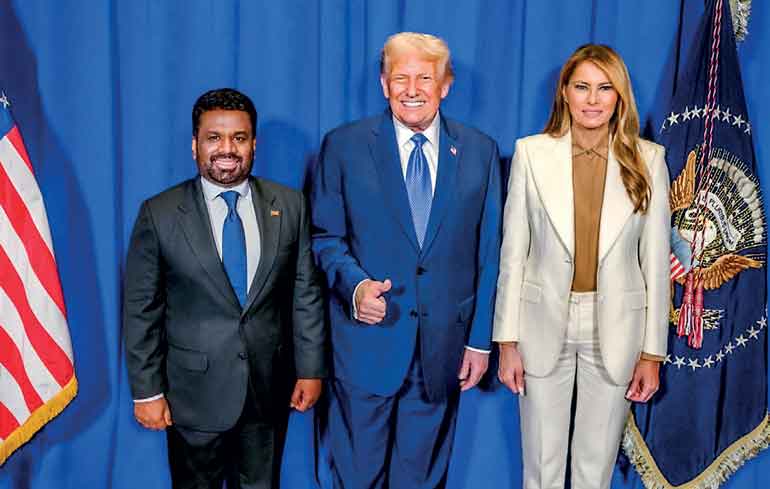
 When we were studying Economics at the University of Ceylon, Prof. Buddhadasa Hewavitharana told us ‘When America sneezes, Sri Lanka catches a cold’. Sixty years later on 2 April 2025, American President Trump announced a broad package of import duties across the world. Trump sneezed. Sri Lanka caught Bronchitis. Now, Trump together with Netanyahu waged war against Iran. America sneezed; Sri Lanka caught Pneumonia. We have been sneezing, shivering running from one economic doctor to another. They diagnosed that Sri Lankan economy is confronted with yet another “external shock”.




