Thursday Sep 03, 2026
Thursday Sep 03, 2026
Thursday, 3 September 2026 00:21 - - {{hitsCtrl.values.hits}}
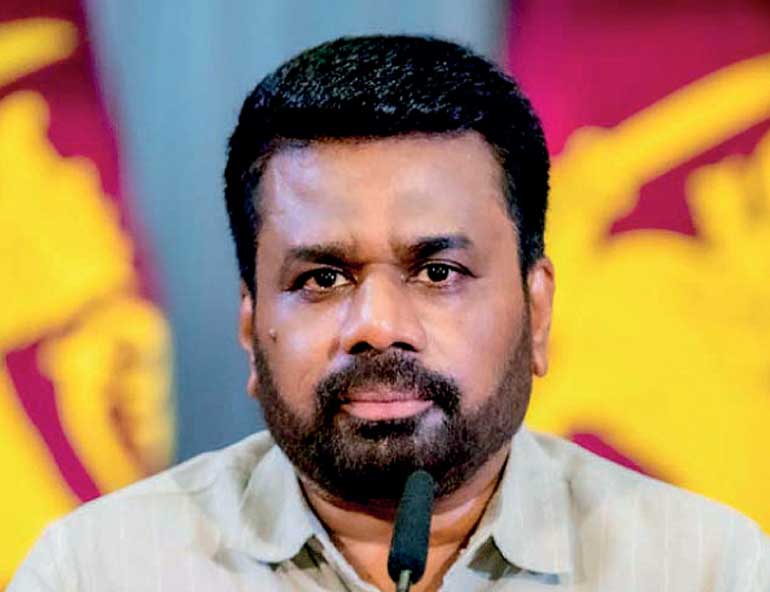
President Anura Kumara Dissanayake
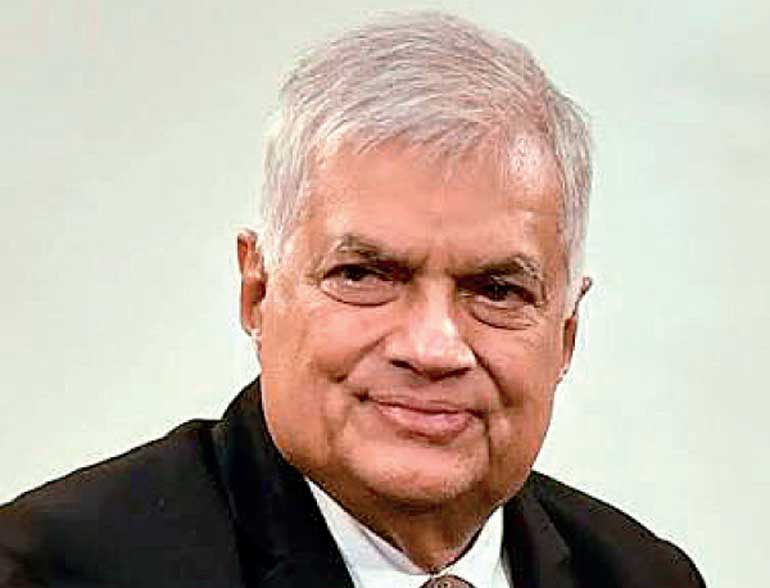
Former President Ranil Wickremesinghe
 Nearly two years into the Anura Kumara Dissanayake Presidency, Sri Lanka’s economic recovery remains shrouded in uncertainty. On the back of indecision and a lack of a cohesive policy, we are facing the possibility of seeing the hard-fought gains post-bankruptcy being reversed.
The recent comments in the media regarding the state of the country’s economy has suggested that neither the Government nor the Opposition have taken the warning signs seriously. Two weeks ago, during a public event, former President Ranil Wickremesinghe highlighted the concerns that adequate measures had not been taken by the Government to prepare the economy to resume its debt repayments in 2028.
Commenting on the situation, the former President drew attention to the fact that the country’s reserves have not been sufficiently expanded to provide the economy with the necessary buffer ahead of the resumption of debt servicing. Finance and Planning Deputy Minister Dr. Anil Jayantha swiftly rejected the assertion, presenting future projections by the Government as an answer to the concerns.
Responding to former President Wickremesinghe’s warning, the Government resorted to defending their economic policies by drawing attention to anticipated foreign earnings from sectors such as tourism, foreign worker remittances and export earnings. However, the figures paint a bleak picture. The tourism sector has seen earnings decline by 11% from January-July in 2026 compared to 2025. While export earnings have recorded an increase of 5% in the first seven months of 2026, the country’s import expenditure rose by nearly 26% during the same period.
While the Government’s rejection was an expected response, it was surprising that Member of the Opposition, and Chairman of the Committee on Public Finance, Dr. Harsha de Silva, chose to downplay the current economic fragility, simply rejecting both statements as “incorrect”.
Under the economic recovery strategy designed by former President Wickremesinghe, and his economic team, it was envisaged that the country would obtain a foreign exchange reserve buffer of $ 13 billion by the end of 2027. This target was agreed upon after establishing that the country would pursue a GDP growth rate exceeding 5%. In 2024, during the former President’s tenure, the country recorded a GDP growth rate of 5%, which was a reversal of two consecutive years of economic contraction.
While the country is already servicing institutional debt, by the end of the 2027 Sri Lanka will resume repayments for commercial and sovereign debt.
For the Public Debt Management Office (PMDO) to initiate debt repayments, they would be required to offer rupees on the open market in exchange for dollars. The cost of purchasing the dollars from the open market would be determined by the growth rate of the country, the interest rates and the exchange rate.
Currently the country’s foreign reserves stand at $ 6.5 billion, a simple $ 500 million increase from when the former President handed over the Government in 2024. It does appear unlikely that the Government will be able to achieve the pre-established foreign reserve target of $ 13 billion by the end of next year. However, it has not been suggested that the ability to service debt and avoid a repeat of an economic collapse was simply reliant on the country achieving this foreign reserve target.
Rather it has been stated that the cost of servicing debt would determine whether the country’s economy is adequately prepared to ensure there is no repeat of 2022. The national foreign reserves are simply a buffer that will act as a confidence booster for the open markets, allowing the Government to purchase the necessary dollars to ensure sustainable debt repayment.
The IMF has forecast that the Sri Lanka’s GDP growth rate will drop to 3.1% by the end of 2026. With a slow-down in the growth rate, it has been predicted that Sri Lanka’s economy will face significant hardship when it resumes debt repayment at the end of next year.
However, it is a worrying sign that the Government is continuing to ignore the warnings and are failing to adopt a course correction. There are several signals that have emerged in the recent months pointing towards upcoming economic upheaval.
Inflation is on an upward trend, with it being recorded at 8% for August (up from 7.3% in July). This has a direct impact on the consumers with the cost of living increasing, which will result in a reduction in purchasing that will further impact businesses in the country. As inflation goes up, it is likely that the interest rates will also go up to try and counter the rising cost of living. With a hike in interest rates borrowings will increase which will impact investors, potentially seeing a reduction in investments in the local economy. This will also impact the cost of dollar purchases by the government. In a further shock to the economy, Sri Lanka has seen its cumulative trade deficit expand to $ 6.5 billion during the first seven months of 2026, compared to $ 3.9 billion in the same period last year.
The increased demand for foreign currency, to finance the country’s expanding import bill, will certainly place increased pressure on the exchange rate. No doubt resulting in a further knock-on effect to the country’s overall economic growth.
As the growth performances of the country fluctuates under a shadow of ambiguity, such as stagnation in the foreign reserves, financial sectors will also adopt a more defensive posture. Foreign exchange dealers may either increase the price or withhold their dollar sales in anticipation of potential shortages in the future.
By 2030 Sri Lanka will have to service around $5 billion a year in debt. Taking account of the growing warning signs, the Government must re-evaluate their current approach to economic management.
Former IMF First Deputy Managing Director Gita Gopinath while visiting Sri Lanka in 2025, drew attention to the reform program that had been introduced by the former Government. Speaking at a public event in Colombo, she outlined “how essential it is to sustain the reform momentum”, while emphasising that such measures are “the foundation of a more resilient future.”
The achievements in turning the economy around in 2022 by the former Government had been considered, at the time, an impossible task. Which explains why many members of the then Opposition chose to remain in the Opposition benches. However, in 2024 US Assistant Secretary of State for South and Central Asian Affairs Donald Lu praised the efforts of the former President’s efforts claiming that “there is no greater comeback story than the story of Sri Lanka”.
With international recognition and appreciation of the economic strategy undertaken by the former administration, it would bode well for President Dissanayake to take note of the existing plans in place, such as the Economic Transformation Act. If they choose to continue to reject these roadmaps, then an alternative must be presented to the public. Failure to act in regard the economy will most certainly place the country back on the path towards economic hardship and a potential return to bankruptcy.
(The author previously served as the Director of International Affairs to Former President Ranil Wickremesinghe)



