Monday Sep 14, 2026
Monday Sep 14, 2026
Monday, 16 March 2026 03:05 - - {{hitsCtrl.values.hits}}
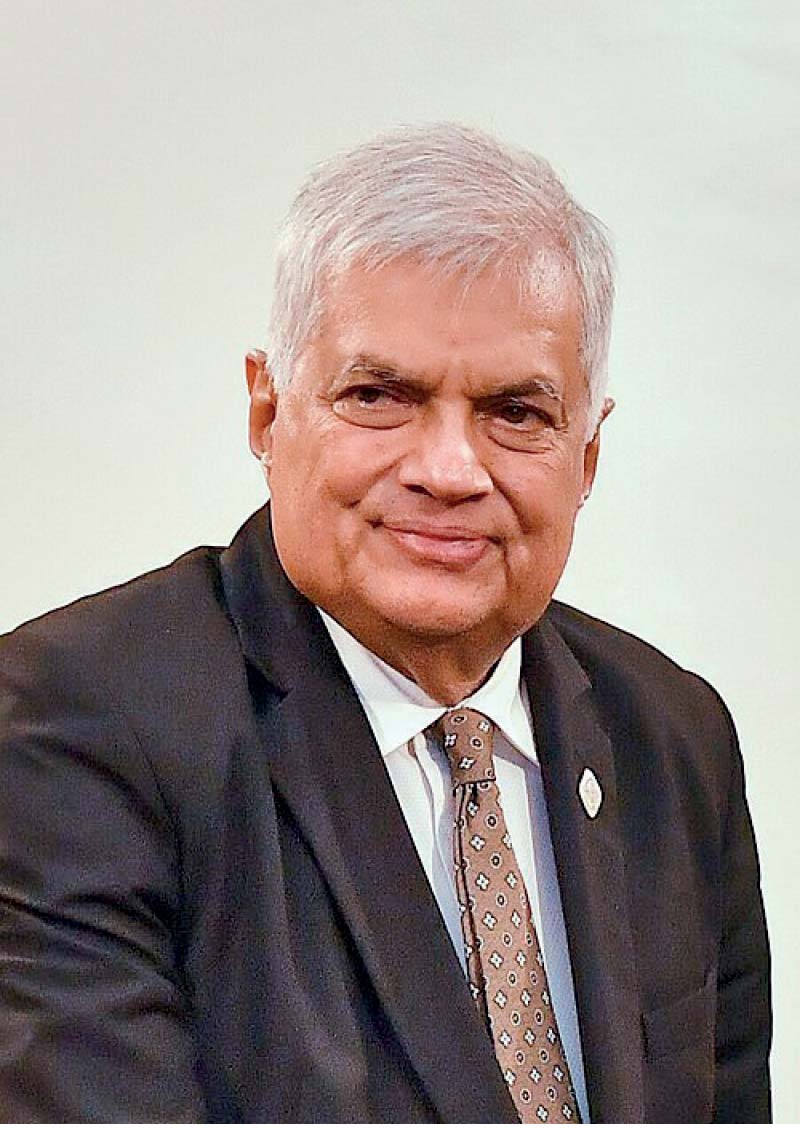
 UNP Leader, the VIII Executive President Ranil Wickremesinghe has been a staunch defender of the right to worship of all religions
From the time of D.S. Senanayake our first leader of the UNP has stood for treating Buddhists, Hindus, Muslims, Christians and the smaller religions as Ceylonese/Sri Lankans
|
Ranil Wickremesinghe
|
The General Secretary of the United National Party has sent the following statement in response to the Daily FT Editorial published on 10 March
(https://www.ft.lk/ft_view__editorial/Separation-of-Temple-and-State-a-must-going- forward/58-789342):
In its campaign to repeal Article 9 of the Constitution, the Financial Times Editorial “Separation of Temple and State a must going forward” of 10 March states “The tragedy is compounded today by political opportunism. Leaders such as Ranil Wickremesinghe and Sajith Premadasa appear willing to engage with or echo these nationalist currents in the hope of electoral revival. These nationalist currents being that “the loudest clerical voices not advocating, reconciliation, peace, non-violence or justice. Instead they have frequently promoted division and exclusion.”
For the first time, the Financial Times have given this campaign its editorial approval. As a newspaper you have the right to propagate your views to cater to a minority who want Buddhism be deprived of this status. But it does not give you the right to defame two leaders who have upheld the rights under Article 11 including the freedom of worship and the non-discrimination of religions.
Constitutional status of a Religion is nothing new. Eg.
Norway Article 2 : Our values will remain our Christian and humanist heritage.
Article 16 : The Church of Norway, an Evangelical – Lutheran Church will remain the established church of Norway and will as such be supported by the State.
Papua New Guinea : Constitution made the Bible the national symbol.
Greece : “In the name of the Father, Son and the Holy Spirit”. Nicaragua : Christians who inspired their belief in God have joined – the struggle for liberation.
Ireland : “In the name of Most Holy Trinity, from whom is all authority and to whom as our final end, all actions both of men and states must be referred.
Denmark : Article 4: The Evangelical Lutheran Church shall be the established Church of Denmark and as such shall be supported by the State.
Article 6: The King shall be a member of the Evangelical Church.
UK: Though there is no written Constitution in the UK, a series of Acts of Parliament passed by the English Parliament in the 16th and 18th Centuries known as the Break with Rome Laws transferred legal and spiritual authority from the Pope to the English Crown and made the King the Supreme Head of the Church of England. The Act of Settlement 1700 requires the Monarch to be a Protestant.
Other countries referring to Christianity in the Constitutions are Liechtenstein, Malta, Monaco, San Marino, Costa Rica, Iceland, Finland. In Vatican the Catholic religion and the State are one. The sovereign power is vested in the Pope.
Islam is given prominence in the Constitutions of Saudi Arabia, Iran, Pakistan, Afghanistan, Maldives, Mauritania, Oman, Yemen, Algeria, Libya, Malaysia, Bahrain, Qatar, United Arab Emirates, Morocco, Algeria, Tunisia.
Judaism is mentioned in the laws of the state of Israel which has no written Constitution. In addition to Sri Lanka, Buddhism is mentioned in the Constitution of Thailand, Myanmar, Cambodia and Bhutan.
In Sri Lanka, Article 9’s reference to Articles 11 and 14 (1)(e) ensures the Freedom of Religion. Buddhism is given the foremost place amongst all religions which are equal. It is not a state religion. The protection given by the state is to the Buddha sasana, a historical tradition. I do not think the Financial Times is aware of the fact that Theravada Buddhism originated from Sri Lanka. The doctrine was preserved in Sri Lanka when it disappeared from India and subsequently written down in ola leaf in the Theravada Tripitakaya. From that time onwards the kings were called on to protect the Theravada Sangha who were at times persecuted by the rival non Theravada Jetavaranarama Sect and subsequently by the Portuguese. The kings and queens of the UK when we were a colony had no issue in executing their responsibilities under Article 3 of the Kandyan Convention to protect and maintain the rights of the Buddhists in addition to being the Defender of Faith of the Church of England.
From the time of D.S. Senanayake our first leader of the UNP has stood for treating Buddhists, Hindus, Muslims, Christians and the smaller religions as Ceylonese/Sri Lankans. We have been guided at all times by the Emperor Ashoka’s Major Rock Edict XII “For he who does reverence to his own sect while disparaging the sects of others … in reality inflicts the severest of injury on his own sect.” and Major Rock Edict VII – “All religions should reside everywhere”. President J R Jayewardene made available state funding for all religions.
UNP Leader, the VIII Executive President Ranil Wickremesinghe has been a staunch defender of the right to worship of all religions. He came out against the ban on hijab worn by on Muslim women. He has been criticised and opposed politically many times by those with extreme Buddhist views. The Cabinet of Ministers during his tenure as President issued an apology to the Muslim for the forced cremations. He comes from a Buddhist family with a strong Christian background. His grandfather D.R. Wijewardene was a benefactor of Buddhism while upholding the freedom of worship. It is apparent that the Financial Times does not adhere to the principles of D.R. Wijewardene but instead supports the NPP-JVP line also held by a section of civil activists and some of your writers that Article 9 should be repealed. That is your choice.
We have never called you names because of your view on Buddhism. We uphold freedom of Worship, Equality of all religions and within that framework the foremost place for Buddhism.
We ask you to kindly respect our views too and not to call our Leader rabel rouser in your Buddhist Doctrine which you are committed to downgrade.