Monday Feb 23, 2026
Monday Feb 23, 2026
Thursday, 22 January 2026 02:59 - - {{hitsCtrl.values.hits}}
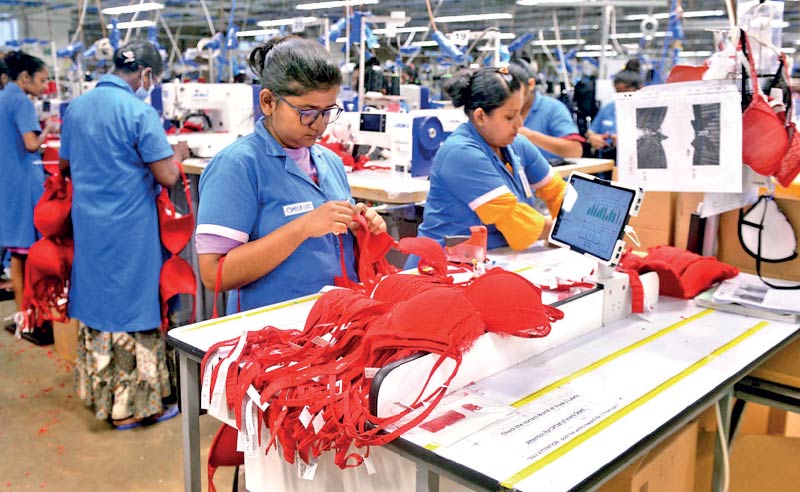
 Sri Lanka’s apparel sector has entered a new phase of opportunity following sweeping reforms to the United Kingdom’s Developing Countries Trading Scheme (DCTS), which came into effect on 1 January 2026. The revised framework grants Sri Lankan garment exporters tariff-free access to the UK market under significantly more liberal rules of origin, fundamentally reshaping the country’s export competitiveness. Under the new rules, Sri Lankan manufacturers can now source up to 100% of their raw materials from anywhere in the world while retaining zero-tariff entry to the UK. This marks a major departure from the previous system, which required regional sourcing and multiple manufacturing processes to be carried out locally. For an industry that accounts for over 60% of Sri Lanka’s exports to the UK, valued at approximately USD 675 million, and supports nearly one million livelihoods, this reform represents both an immediate commercial boost and a long-term strategic opportunity.
British High Commissioner to Sri Lanka, Andrew Patrick, welcomed the reforms:
“By simplifying rules of origin, we are supporting Sri Lanka’s economic growth and helping diversify exports. I invite exporters to explore these reforms and access the zero tariffs offered under the DCTS.”
A stronger competitive position in global markets
The relaxation of rules of origin removes long-standing supply-chain constraints that previously increased production costs and limited operational flexibility. Sri Lankan apparel firms can now source fabrics, yarn, and accessories from the most cost-effective global suppliers without risking tariff penalties. This will help reduce input costs, improve price competitiveness, shorten production lead times, and enable faster responses to fashion trends. At a time when global buyers are increasingly price-sensitive, Sri Lanka’s ability to deliver quality garments at competitive prices enhances its appeal as a sourcing destination. Major exporters such as MAS Holdings, Brandix, Hirdaramani, Teejay Lanka, and Hela Apparel Holdings are well positioned to benefit from these changes, given their scale, international client base, and compliance-driven operations.
Beyond cost: Moving up the value chain
While improved cost efficiency is important, the real long-term opportunity for Sri Lanka’s apparel sector lies in value addition. With greater sourcing freedom, manufacturers can focus on faster design-to-delivery cycles, the use of advanced and performance fabrics, expansion into high-value fashion segments, product innovation, and sustainability-led differentiation. Trade access creates room for growth, but long-term resilience will depend on productivity, skills, and innovation. Countries that rely solely on low-cost manufacturing often face margin pressure, whereas Sri Lanka has the opportunity to position itself as a premium, ethical, and sustainable apparel producer.
Sustainability as a strategic advantage
Sri Lanka has already earned a global reputation for ethical labour standards and compliance. The new DCTS framework provides a timely opportunity to strengthen this advantage through sustainability-led growth. Rather than becoming another fast-fashion hub, the industry should focus on low-environmental-impact fabrics, water-efficient dyeing processes, waste-reduction and recycling systems, renewable energy adoption, and transparent, traceable supply chains. If Sri Lanka positions itself as a sustainable, high-quality apparel producer, the benefits will extend far beyond temporary tariff advantages.
How MSMEs can benefit from DCTS reforms
The DCTS reforms are not just for large corporations. Micro, Small, and Medium Enterprises (MSMEs) also stand to gain significantly from the new framework. Previously, many smaller firms struggled to meet complex rules of origin and compliance requirements. The revised system simplifies market entry by allowing global sourcing of raw materials, enabling MSMEs to reduce production costs, compete in price-sensitive UK segments, enter the export market more easily, and focus on niche products such as ethical fashion, uniforms, and boutique apparel. Increased export demand will also strengthen local supply chains in areas such as fabric processing, trimming and accessories, packaging, and logistics and compliance services. Since many MSMEs operate in semi-urban and rural areas, export growth can further drive regional development, job creation, and female employment.
Opportunities for new entrants and startups
The revised UK trade rules have significantly lowered entry barriers for newcomers to Sri Lanka’s apparel industry. Instead of competing purely on price, new entrants can focus on high-potential niches such as sustainable fashion, ethical and fair-trade garments, designer and boutique collections, sportswear and activewear, workwear and uniforms, as well as cultural and modest fashion. The ability to source materials globally allows startups to test small production runs without heavy capital investment. Newcomers can also adopt asset-light business models by partnering with existing manufacturers for production while concentrating on design, branding, and marketing. In addition, digital platforms, virtual trade shows, and direct buyer outreach provide low-cost access to UK markets, provided compliance and quality standards are met.
Learning from Vietnam and Bangladesh
Vietnam and Bangladesh have demonstrated how strategic policy alignment, infrastructure investment, and market diversification can drive sustained export growth. Sri Lanka once led South Asia’s apparel sector but gradually lost momentum due to policy uncertainty, higher operating costs, and limited market diversification. The DCTS reforms now offer a valuable second chance. However, success will require productivity improvements, greater logistics efficiency, increased investment in technology, and proactive market expansion—especially into India. With its rapidly growing middle class, India presents a major opportunity for Sri Lankan apparel exporters to diversify beyond traditional Western markets and strengthen long-term export resilience.
The skilled workforce:
Sri Lanka’s competitive edge
Beyond cost factors, Sri Lanka’s greatest strength lies in its skilled workforce and experienced management. The apparel industry is known for its high workmanship standards, strong compliance systems, low defect rates, ethical labour practices, and efficient production management. These strengths enable manufacturers to deliver consistent quality, reduce wastage, and build long-term partnerships with global brands. The result is a win-win ecosystem that delivers lower inefficiencies, higher product value, and mutually beneficial buyer relationships.
How policymakers can maximise DCTS opportunity
Trade access alone is not enough. To extract the maximum national benefit, Sri Lankan policymakers must align industrial policy, export strategy, sustainability goals, and workforce development with the DCTS reforms.
Key priorities include:
1.A National apparel export growth strategy
Focused on export growth, value-added products, sustainability leadership, MSME participation, and market diversification.
2. MSME and Startup support
Through low-interest export financing, credit guarantees, startup grants, shared manufacturing facilities, and subsidised compliance certifications.
3. Green manufacturing incentives
Tax incentives for renewable energy, funding for water-treatment systems, circular economy support, and green certification programmes.
4. Trade promotion and market access
UK trade missions, international apparel fairs, digital buyer-matching platforms, and global branding of Sri Lanka’s ethical manufacturing image.
5. Simplified export procedures
Faster customs clearance, digital documentation, one-stop export facilitation centres, and reduced regulatory duplication.
6. Skills, technology and innovation
Investment in advanced garment technology training, design hubs, textile RandD, and university–industry collaboration.
7. Market diversification
Stronger trade links with India and regional markets to reduce over-dependence on Western economies.
8. National branding
A unified “Sri Lanka Apparel” brand highlighting ethics, sustainability, quality, reliability, and workforce skills.
Safeguarding livelihoods and national growth
The apparel sector is not just an export engine for Sri Lanka — it is also a vital social stabiliser. Nearly one million Sri Lankans depend on the industry directly or indirectly for their livelihoods. Strengthening the sector’s global competitiveness helps safeguard employment, improve household incomes, support regional development, and boost foreign exchange earnings. At a time when Sri Lanka is rebuilding economic confidence and economic resilience, this reform could not have come at a better moment.
Leveraging global trade shifts to strengthen Sri Lanka–UK apparel ties
The latest US tariff measures on imports from India, China, and other affected countries are prompting global apparel manufacturers to rethink their sourcing and production strategies. When combined with the United Kingdom’s liberalised Developing Countries Trading Scheme (DCTS), which offers Sri Lanka tariff-free access under flexible rules of origin, this creates a powerful dual advantage for the country. Sri Lanka can position itself as a tariff-efficient, compliant, and reliable manufacturing base for UK-focused apparel exports, while also attracting foreign investors seeking to diversify away from tariff-affected markets. With strong Sri Lanka–UK garment industry ties, a skilled workforce, and a reputation for ethical and sustainable manufacturing, the country is well placed to convert global trade disruptions into long-term export growth and foreign direct investment in the apparel sector.
Timely and progressive reform
The UK’s DCTS reforms represent one of the most progressive trade moves for Sri Lanka in recent years. They strengthen the apparel sector, enhance global competitiveness, and reinforce the country’s position as a trusted manufacturing partner. However, opportunity alone does not guarantee success. Sri Lanka must use this window to modernise its industry, innovate continuously, adopt sustainable practices, diversify its markets, and compete smarter on the global stage. If executed well, this reform could mark the beginning of a new era for Sri Lanka’s garment industry — built on quality, sustainability, and long-term value creation.
(The author is a chartered accountant)




