Saturday Apr 11, 2026
Saturday Apr 11, 2026
Saturday, 11 April 2026 01:43 - - {{hitsCtrl.values.hits}}
The ceasefire should not be understood as the end of confrontation. It is the beginning of a more complex and uncertain phase—one in which diplomacy must contend not only with competing interests, but with competing realities
 Parallel announcements, divergent realities
Two ceasefire announcements were issued within hours of each other on the same night—one from Washington, the other from Tehran. They appeared, at first glance, to signal a pause in a rapidly escalating confrontation. Yet a closer reading reveals something far more complex: not a shared agreement, but two distinct and competing interpretations of what that agreement entails.
From the perspective of Donald J. Trump, the ceasefire represents a conditional tactical pause. In his public remarks, he framed the suspension of military operations as contingent upon the immediate reopening of the Strait of Hormuz—a critical artery through which nearly one-fifth of global oil consumption passes daily, estimated at approximately 20–21 million barrels per day.¹ The emphasis was clear: military pressure had created leverage, and that leverage would now be translated into negotiation.
The White House messaging reinforced this position, underscoring that decades of Iranian regional activity would no longer proceed without consequence. Even where Iranian proposals were acknowledged, they were framed as preliminary and insufficient—useful as a starting point, but far from constituting a final agreement.
In Tehran, however, a markedly different narrative emerged.
Statements disseminated through Tasnim News Agency, reflecting positions attributed to Iran’s Supreme National Security Council of Iran, presented the ceasefire as a strategic victory. According to this version, the United States had effectively accepted a comprehensive set of Iranian conditions: guarantees of non-aggression, recognition of uranium enrichment rights, lifting of sanctions, and even broader structural concessions relating to international oversight mechanisms.
The domestic messaging in Iran thus framed the ceasefire not as a pause under pressure, but as the outcome of resistance—an assertion that Washington had been compelled to step back from maximalist demands.
Neither account fully aligns with independently verifiable facts. Yet both serve an essential political function.
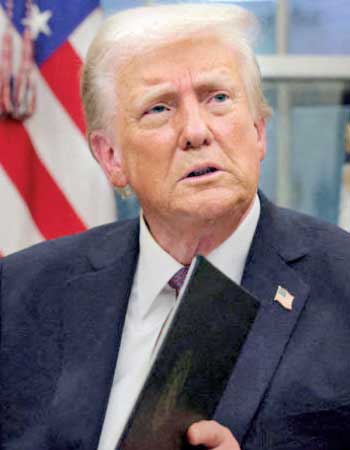 |
| US President Donald Trump |
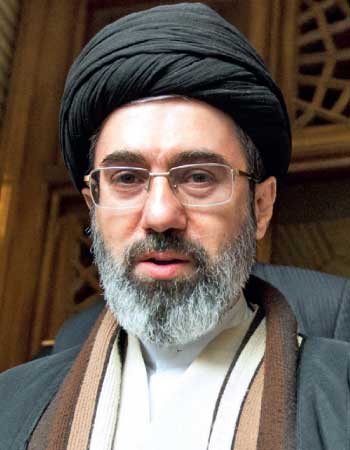 |
| Iran Supreme Leader Mojtaba Khamenei |
The politics of parallel truths
What is unfolding is not simply a dispute over facts, but a deliberate construction of parallel narratives—each tailored to domestic political audiences.
In Washington, the administration must demonstrate that military action has produced tangible strategic gains. In Tehran, the leadership must show that it has not conceded under pressure, preserving both ideological consistency and internal legitimacy.
This dual narrative structure is not new in international diplomacy. During the Cold War, arms control agreements were often presented differently in Washington and Moscow, allowing both sides to claim success while maintaining strategic ambiguity.² What distinguishes the present moment is the degree of divergence—and the speed with which these competing narratives are being disseminated. The result is a ceasefire that exists simultaneously in two incompatible forms and it is precisely this incompatibility that introduces systemic risk.
Hormuz and the economics of control
Complicating the situation further is a development that lies outside both official narratives but carries significant long-term implications.
Reporting by Associated Press indicates that Iran, in coordination with Oman, has moved to operationalise a transit fee mechanism for vessels passing through the Strait of Hormuz.³ This measure is linked to a legislative framework reportedly approved prior to the current escalation.
The Strait itself is not merely a regional chokepoint; it is one of the most strategically vital corridors in the global energy system. Roughly 30 percent of the world’s seaborne oil trade transits through it, alongside a significant share of liquefied natural gas exports, particularly from Qatar.⁴ Any structural change in how access to this passage is managed carries immediate global implications.
The introduction of transit fees—whether temporary or enduring—signals an attempt to convert geographic leverage into institutionalised economic control. Importantly, this development is not contingent on the ceasefire. It precedes it and is likely to outlast it.
In effect, while the international community focuses on the reopening of Hormuz as a sign of de-escalation, a parallel process may be underway—one that redefines the terms of access to one of the world’s most critical maritime routes.
Military leverage and strategic asymmetry
Despite the divergence in narratives, certain underlying realities can be assessed with greater clarity.
From a military standpoint, the United States appears to have achieved significant operational effects. Strikes targeting infrastructure associated with Iran’s defence and logistics networks have reportedly degraded key capabilities, including air defence systems and elements of weapons-related industrial capacity. The targeting of strategic nodes—such as facilities linked to export infrastructure—suggests an effort to impose long-term constraints rather than merely immediate disruption.
Such effects are not easily reversible. The reconstruction of specialised industrial components, particularly in sectors requiring advanced engineering inputs, can take years rather than months.
However, this does not translate into unilateral strategic advantage.
Iran’s strength lies not in conventional parity, but in asymmetry. Its regional posture is built around distributed networks, proxy relationships, and adaptive economic mechanisms designed to function under sustained pressure. The continuation of sanctions-resistant trade practices, including the use of alternative shipping and financial channels, reflects a system that has evolved over time to absorb external shocks.⁵
Moreover, the articulation of a comprehensive negotiating framework—whether formally accepted or not—serves a political purpose. It establishes expectations domestically and signals red lines internationally. Once publicly advanced, such positions become difficult to retreat from without reputational cost.
The result is a balance that is neither stable nor symmetrical: one side holds superior immediate military capability; the other retains depth, resilience, and strategic patience.
Negotiating without a shared agreement
The implications of these dynamics become particularly acute as attention turns to the next phase of engagement.
Reports suggest that follow-up discussions may take place in a neutral venue, with Islamabad emerging as a possible location. Should such talks proceed, they will do so under unusual conditions: two parties entering negotiations without a shared understanding of the terms that have already been agreed.
This is more than a procedural complication. It goes to the heart of the diplomatic process. Negotiations typically begin with a mutually recognised baseline—an agreed text, framework, or set of principles. Here, that baseline is contested. Each side arrives not only with different expectations for the future, but with different interpretations of the present.
When these interpretations collide, the process can move in one of two directions.
In the more optimistic scenario, the tension forces clarification. Ambiguities are resolved, expectations aligned, and a coherent framework emerges. Under such conditions, the current pause could evolve into a broader settlement—potentially comparable in significance to the Camp David Accords, which redefined regional alignments through sustained negotiation.
In the more pessimistic scenario, however, the absence of a shared baseline leads to rapid breakdown. Each side interprets the other’s position as a violation of commitments that, in reality, were never jointly defined. The ceasefire collapses—not necessarily because of deliberate escalation, but because of incompatible assumptions.
The limits of narrative control
Beyond the political and strategic dimensions lies a more fundamental constraint: the material reality of the conflict.
Infrastructure once damaged cannot be restored through narrative. Industrial systems, particularly those involving complex engineering processes, require time, capital, and technical capacity to rebuild. The effects of disruption—whether in energy production, logistics, or specialised manufacturing—extend beyond the immediate period of hostilities.
Similarly, structural shifts in economic behaviour—such as the diversification of financial channels or the emergence of alternative trade mechanisms—tend to persist even when formal conditions change.
In this sense, the crisis has already entered a phase where perception and reality are diverging. Political narratives may shape public understanding in the short term, but they cannot fully override the constraints imposed by physical and economic systems.
Conclusion: Crisis within the ceasefire
The current ceasefire is not a singular, coherent agreement. It is a convergence of narratives—each internally consistent, yet collectively incompatible.
Both Washington and Tehran are, in effect, using the pause to stabilise their respective domestic positions. Each presents a version of events that sustains political legitimacy while preserving room for maneuver in the next phase. The danger lies not in the existence of these narratives, but in the gap between them.It is within this gap that the next crisis is already forming.
If the forthcoming negotiations succeed in bridging it, the result could be a significant recalibration of regional dynamics. If they fail, the collapse of the ceasefire may lead not simply to a resumption of conflict, but to an escalation shaped by the unresolved contradictions of the present moment. The ceasefire, therefore, should not be understood as the end of confrontation. It is the beginning of a more complex and uncertain phase—one in which diplomacy must contend not only with competing interests, but with competing realities.
(The author is former Sri Lankan Ambassador to EU, Belgium, Turkey, Ukraine and Saudi Arabia and former Additional Secretary, Ministry of Foreign Affairs)
Endnotes
U.S. Energy Information Administration (EIA), World Oil Transit Chokepoints, updated 2024.
Raymond Garthoff, Détente and Confrontation: American–Soviet Relations from Nixon to Reagan (Washington, DC: Brookings Institution, 1994).
Associated Press, “Iran, Oman Discuss Maritime Transit Measures in Hormuz,” April 2026.
International Energy Agency (IEA), Oil Market Report, 2025; BP Statistical Review of World Energy, 2024.
Henry Rome, “Iran’s Sanctions Evasion and Economic Adaptation,” Washington Institute for Near East Policy, 2023.



