Saturday Jul 04, 2026
Saturday Jul 04, 2026
Saturday, 4 July 2026 04:20 - - {{hitsCtrl.values.hits}}
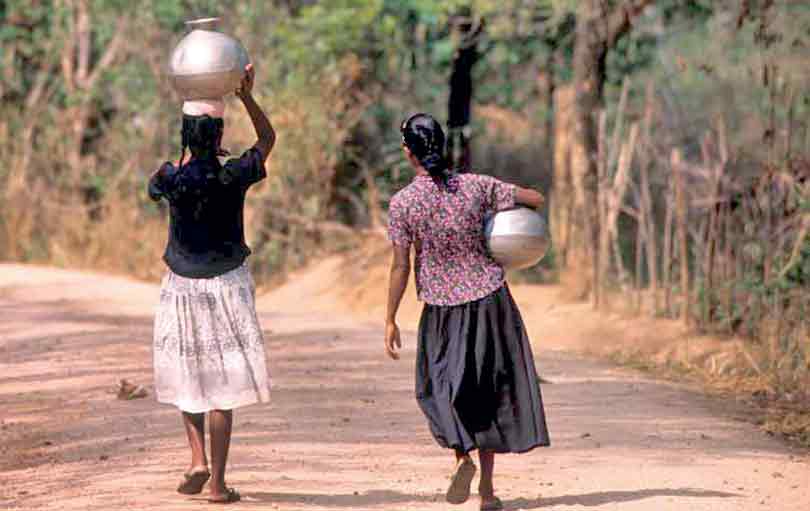
Even if nominal wages have increased to some extent, their real value has not fully returned to pre-2022 levels for many families. As a result, the common feeling among people is clear: “They say the economy is recovering, but we still do not feel it in our lives”
 The news that Sri Lanka has once again been classified as a middle-income country is undoubtedly one of the more encouraging developments after the severe economic crisis the country has experienced over the past few years. For a nation that went through foreign exchange shortages, debt default, high inflation, fuel queues and shortages of essential goods, such international recognition naturally creates a sense of hope.
It can be seen as a positive signal that Sri Lanka’s macroeconomy is gradually moving towards a degree of stability. However, as with any important statistical achievement, there is a deeper question we must ask before celebrating too quickly.
If Sri Lanka has once again become a middle-income country, have the lives of Sri Lankans also returned to a middle-income standard of living?
Look beyond statistics
To answer this question honestly, we must look beyond statistics and examine the daily realities of ordinary people.
Even today, many families struggle to manage their monthly income. Within a few days of receiving their salaries, they have to pay for food, rent, electricity, water, transport, school expenses and loan instalments. Once these obligations are met, the rest of the month is often spent under severe financial pressure. This reality shows that there is still a significant gap between Sri Lanka’s official recognition as a middle-income country and the lived experience of a middle-income life.
To understand this gap, we must first recognise that a “country” and a “society” are not the same thing.
A country is often described through economic data, financial indicators and international comparisons. A society, however, is a living collection of human experiences that cannot be measured by numbers alone. It includes not only people’s income, but also their health, education, job security, social justice, confidence in the future and ability to live with dignity.
 Amartya Sen, one of the most influential thinkers in economics and development studies, defines development not merely as an increase in income, but as the expansion of people’s capabilities to live the kind of life they value. This idea is especially relevant to Sri Lanka today. Real development is not only about improving the figures in Government accounts. It is also about expanding the opportunities available to ordinary citizens
Therefore, a “middle-income country” is an economic classification. A “middle-income society” is a qualitative condition of development. When we fail to understand this difference, our interpretation of economic news becomes too narrow.
The World Bank classifies countries mainly according to Gross National Income per capita, or GNI per capita. This indicator divides a country’s total national income by its population and provides a useful basis for comparison between countries. It is an important and widely accepted method. But it measures an average. It does not tell us how income is distributed.
That is the central problem.
A country’s income may increase, but that income may not reach all sections of society equally. The economy may grow, but the living standards of many families may remain largely unchanged. The numbers may improve, while people’s hopes continue to decline.
This is why Amartya Sen, one of the most influential thinkers in economics and development studies, defines development not merely as an increase in income, but as the expansion of people’s capabilities to live the kind of life they value. This idea is especially relevant to Sri Lanka today. Real development is not only about improving the figures in Government accounts. It is also about expanding the opportunities available to ordinary citizens.
Similarly, economists such as Joseph Stiglitz have long argued that national income and Gross Domestic Product are useful indicators of economic activity, but they do not fully reflect people’s well-being, social justice or quality of life. Therefore, treating statistical success and human development as the same thing is a serious policy mistake. Sri Lanka now stands at such a crossroads.
 Economists such as Joseph Stiglitz have long argued that national income and Gross Domestic Product are useful indicators of economic activity, but they do not fully reflect people’s well-being, social justice or quality of life. Therefore, treating statistical success and human development as the same thing is a serious policy mistake
On the one hand, macroeconomic indicators are improving. Inflation has been brought under control. Foreign reserves have strengthened to some extent. Tourism is recovering. Exports are showing signs of progress. These are important achievements, and they must be acknowledged.
On the other hand, the household economy remains under pressure. The cost of living is high. Real wage growth is limited. Debt burdens are heavy. Many young people see migration as their main hope. Many small businesses have not yet fully recovered. Therefore, we must clearly understand that macroeconomic stability and household economic recovery are not the same thing.
That is the central argument of this article.
Sri Lanka’s return to middle-income status is certainly an important achievement. But it is not the final destination. The real challenge is to transform this statistical achievement into a middle-income society where every citizen can live with dignity, security and hope.
Have the numbers recovered, even though households have not?
When we speak about Sri Lanka’s economy today, we hear two different stories. The first is the story of the macroeconomy. Inflation has come down. Foreign exchange reserves are improving. Tourism is recovering. Exports show some progress. A measure of fiscal discipline is also being restored. From this perspective, it can be said that Sri Lanka is gradually emerging from the depths of the economic crisis.
But the second story is heard inside the homes of ordinary people. It is the story of daily life, which is not always visible in macroeconomic reports.
Many families today manage their monthly expenses not because their income has increased, but because they have reduced their needs. They change their food habits. They reduce nutrition. They give up leisure. They limit children’s tuition classes. They postpone medical tests. They delay repairs to their homes. Instead of thinking about new investments, their main goal has become simply to maintain their present way of life.
This is not only a story of insufficient income. It is also a story of weakened purchasing power. Even if nominal wages have increased to some extent, their real value has not fully returned to pre-2022 levels for many families. As a result, the common feeling among people is clear: “They say the economy is recovering, but we still do not feel it in our lives.”
The condition of the middle class is particularly important. In any country, the middle class is a key pillar of economic stability. It pays taxes, invests in children’s education, buys homes, starts small businesses and contributes significantly to domestic consumption. But over the past few years, a large section of Sri Lanka’s middle class has moved backwards economically.
Their wages increased more slowly than the cost of living. Income tax burdens rose. Electricity, water and service charges increased. Housing loans and vehicle loans absorbed a significant part of monthly income. As a result, their capacity to save for the future declined, and their ability to face unexpected economic shocks weakened.
In economics, this is often described as “the squeezed middle.” It refers to a group that is not poor, but not secure either. This is the reality of many Sri Lankan families today.
The aspirations of the younger generation make this situation even clearer. A few decades ago, many young people dreamed of finding a good job and building their future in Sri Lanka. Today, for many, the dream is to leave the country. Doctors, engineers, IT professionals, accountants, nurses and skilled technicians are migrating in large numbers. This is more than a personal decision. It is a measure of the confidence a society has in its own future.
The most valuable resource of a country is not its natural resources, but its human capital. If that human capital begins to leave the country, it is a silent warning for development. This issue requires urgent national attention.
Small and medium-sized enterprises also deserve serious attention. SMEs create a significant share of employment in Sri Lanka. However, high interest rates, limited access to finance, rising input costs and weak domestic demand have prevented many businesses from fully recovering. Some businesses are not operating to make profits, but simply to avoid closure. In such an environment, the creation of new employment opportunities remains limited.
The situation in rural Sri Lanka is no different. Farmers face the triple challenge of rising production costs, market uncertainty and climate risks. Fishermen struggle with fuel and operational costs. Small traders suffer from declining consumer demand. These groups do not speak in the language of macroeconomic indicators. They speak about daily income and the cost of living.
This brings us to another important point. Economic growth and inclusive development are not the same thing. National income can rise. But if the benefits of that growth reach only a limited section of society, such growth is not socially sustainable. The real question of development is not only how much a country earns, but who receives the benefits, how they receive them and how widely those benefits are shared.
Therefore, Sri Lanka’s main challenge today is not only to build macroeconomic stability. It is to convert that stability into a visible improvement in the life of the ordinary family. The numbers seen in economic reports must become purchasing power in the marketplace. Investments must become decent jobs. Growth must become shared prosperity.
 Sri Lanka’s policy conversation must now move in a new direction. It should not end with the question, “Are we a middle-income country?” The more important question is, “What kind of society are we building?” Are we building a society with fair opportunities? A society where labour is respected? A society where talent can move forward? A society where poverty is not inherited? A society where migration is not the only hope for young people?
If this does not happen, Sri Lanka may be a middle-income country statistically, but it would still be difficult to call it a middle-income society in any meaningful social sense.
How can a real middle-income society be built?
Sri Lanka’s return to middle-income status is an international recognition that should be appreciated. But it should be seen not as the end of the journey, but as the beginning of a new phase. The real challenge before us is to transform statistical progress into social progress. This cannot happen through income growth alone. It happens when the quality of people’s lives improves.
In this context, Amartya Sen’s view of development offers an important lesson. According to him, development is not simply the expansion of national income. It is the expansion of people’s capabilities to live lives they value. If people do not have access to good education, quality healthcare, decent employment, personal security and the ability to build a better future for their children, then development remains incomplete, even if income rises.
Similarly, Joseph Stiglitz has repeatedly reminded us that GDP and national income may show a country’s production capacity, but they do not adequately measure well-being, income distribution or social justice. Therefore, policymakers must focus not only on increasing numbers, but also on sharing prosperity.
Michael Porter also reminds us that a country’s competitiveness is not built on low wages. It is built on higher productivity, innovation, strong institutions and skilled human capital. This message is highly relevant to Sri Lanka. If we are to escape the middle-income trap, we must move away from an economy that competes mainly on low cost and move towards an economy that creates knowledge, technology and higher value addition.
Countries that have successfully followed this path offer useful lessons. South Korea did not move from a war-torn poor country to a high-income economy merely through industrialisation. Its success was the result of long-term coordination between education, research, technology, industrial policy and strong state institutions. Vietnam has achieved rapid development by connecting itself to global value chains, strengthening exports, attracting investment and investing in human capital. Malaysia also gradually moved from a manufacturing-based economy towards a knowledge-based services economy.
These countries are different in many ways. But they teach us one common lesson. They did not simply chase numbers. They built institutions. They did not merely increase income. They strengthened productive capacity. They did not only grow the economy. They expanded the capabilities of their people.
Sri Lanka also needs such a long-term development framework. It should not be a collection of short-term programs that change whenever governments change. It must be a national development compact that goes beyond party politics and looks ahead over the next two or three decades.
Such a framework must place productivity at the centre of national economic policy. Wages can rise sustainably only when productive capacity rises. Investment in education, vocational training and digital skills must be significantly increased. SMEs must be developed as engines of employment by expanding access to finance, technical support and new markets. Strong, transparent and accountable public institutions must be built to create trust among both investors and citizens. Development benefits must also reach rural communities, women, youth and vulnerable groups through an inclusive development model.
From middle-income classification to a middle-income society
In the end, Sri Lanka’s return to middle-income status reminds us of a simple but profound truth. The development of a country is not merely the beauty of numbers in public accounts. It is the quality of people’s lives. Does a child have access to a good school? Can a patient receive quality healthcare? Can a young person find decent employment? Does an entrepreneur have a fair opportunity? Can a retired person live without fear and insecurity? The answers to these questions are the true measure of a country’s development.
Therefore, we should not reject the international recognition that comes with being classified as a middle-income country. It is an important signal that Sri Lanka is moving towards some degree of stability after the economic crisis. But it would be a serious mistake to treat it as the end of the achievement. It must be seen as the beginning of a new development responsibility. A country being called middle-income and its people actually experiencing a middle-income quality of life are not the same thing.
Sri Lanka’s real challenge is not to obtain an income classification, but to strengthen the foundations that create income. If institutions are not strong, if human capital is not developed, if productivity does not rise, if competitiveness does not expand and if opportunities are not fairly distributed, the name “middle-income country” will not translate into a real improvement in people’s lives. It will remain a statistical label in an international report, without meaningful impact on the kitchen of an ordinary family, the classroom of a child, the job hopes of a young person or the daily struggle of an entrepreneur.
For this reason, Sri Lanka’s policy conversation must now move in a new direction. It should not end with the question, “Are we a middle-income country?” The more important question is, “What kind of society are we building?” Are we building a society with fair opportunities? A society where labour is respected? A society where talent can move forward? A society where poverty is not inherited? A society where migration is not the only hope for young people?
The policy answer is clear. First, macroeconomic stability must be maintained. But it should be treated not as the final goal, but as the foundation for broader human development. Second, productivity must be placed at the centre of national economic policy. Wages can rise in the long term not by command, but by increasing the value of labour, productive capacity and innovation. Third, education, vocational training, digital skills and lifelong learning must become the main investment areas of the future economy.
Fourth, small and medium-sized enterprises must be made the engines of job creation in Sri Lanka. This requires better access to finance, technical assistance, market access and a simpler regulatory environment. Fifth, Sri Lanka must build a public institutional system that both investors and citizens can trust. Policy stability, the rule of law, transparency, accountability and an efficient public service are essential for sustainable development. Sixth, the benefits of development must not be limited to Colombo and major urban centres. They must reach rural areas, women, youth, farmers, small entrepreneurs and vulnerable social groups in a fair and meaningful way.
For all this to succeed, Sri Lanka does not need another short-term programme. It needs a long-term national development compact that rises above party politics. It must not be confined to a five-year electoral cycle. It should be built on a national vision for at least the next twenty or thirty years. Without a development framework that connects institutions, education, skills, industry, exports, technology, social protection and regional development, it will be difficult to move from a middle-income country to a society with a higher quality of life.
Finally, we must remember that a country’s income level is an outcome, not a cause. The real causes are strong institutions, skilled people, higher productivity, innovation, fair opportunities and trustworthy governance. If these foundations are built, the journey from a middle-income country to a middle-income society, and eventually to a country with a high standard of living, will become a natural progression.
Sri Lanka’s return to middle-income status is therefore a development we can welcome. But it should not be used to comfort us. It should be used to awaken us. The final purpose of development is not to make numbers look beautiful. It is to make people’s lives better. Only then will the statement “Sri Lanka is a middle-income country” become not merely an international classification, but a reality felt in the life of every family.




