Monday Oct 12, 2026
Monday Oct 12, 2026
Tuesday, 30 June 2026 06:09 - - {{hitsCtrl.values.hits}}
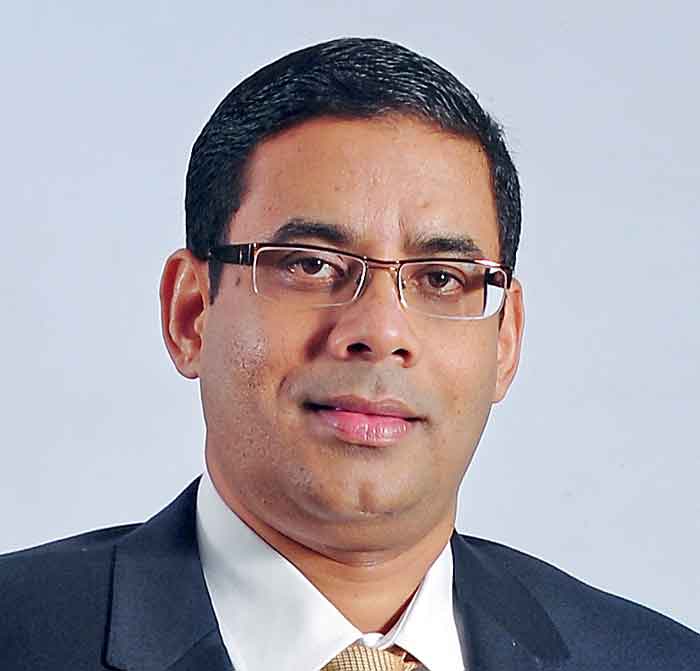
Dinesh Weerakkody
The Sri Lanka Institute of Directors Chairman and outgoing Chairman of the Employers’ Federation Ceylon Dinesh Weerakkody in this interview shares his views on the changing role of boards, corporate governance, leadership, and labour market reforms. He notes that several of these issues will be explored further at the Sri Lanka National Directors’ Summit on 22 July, where board leaders and governance professionals from Sri Lanka and abroad will discuss the future of corporate leadership.
By Ashan Fernando
Q: How is the role of boards, especially in banks given your long experience as a Chairman, evolving as talent, culture, and leadership become as important as financial performance?
A: Boards can no longer focus solely on financial oversight. Talent, culture, and leadership are now central to long-term value creation. Their responsibility is to ensure organisations have a strong leadership pipeline, an ethical culture, and the capabilities required for future growth. Culture should be monitored with the same discipline as financial performance because organisations that neglect leadership and culture will struggle to sustain success.
Q: What are the biggest governance challenges facing Sri Lankan companies today?
A: Short-term decision-making, weak succession planning, inadequate risk oversight, and limited board diversity remain key challenges. Boards must become more forward-looking by focusing on long-term strategy, emerging risks, technology, talent, and sustainability. Regular Board evaluations, stronger governance practices, ethical leadership, and greater transparency will strengthen accountability and investor confidence.
Board’s responsibility is to ensure organisations have a strong leadership pipeline, an ethical culture, and the capabilities required for future growth. Boards must become more forward-looking by focusing on long-term strategy, emerging risks, technology, talent, and sustainability
Q: How should employers and Boards prepare for AI while maintaining productivity?
A: AI should be viewed as an enabler, not a threat. Boards must ensure continuous investment in reskilling and upskilling so employees can work alongside technology. This is particularly important as nearly one million young Sri Lankans are expected to enter the workforce over the next decade, while job creation remains limited. Business, Government, and educational institutions must work together to align skills with future labour market needs while encouraging responsible AI adoption.
Q: What practical steps should Boards take to improve leadership succession?
A: Succession planning must become a continuous Board priority rather than an annual exercise. Boards should identify high-potential leaders early and invest in mentoring, executive coaching, cross-functional exposure, and structured leadership development. Leadership continuity is fundamental to long-term business success. These issues will also be discussed at the Sri Lanka National Directors’ Summit on 22 July, where Board leaders and governance professionals will examine the future of corporate leadership.
Investors look for policy consistency, regulatory transparency, good governance, and confidence in institutions. Sri Lanka must continue strengthening these fundamentals while addressing two structural constraints: limited access to growth capital for expanding businesses and labour market regulations that discourage formal employment
Q: What labour reforms would make Sri Lanka more attractive to investors?
A: Investors look for policy consistency, regulatory transparency, good governance, and confidence in institutions. Sri Lanka must continue strengthening these fundamentals while addressing two structural constraints: limited access to growth capital for expanding businesses and labour market regulations that discourage formal employment. The objective should be to make it safe to hire—not simply easier to fire. Continued investment in skills, digital infrastructure, and public-private partnerships will also be essential. The Employers’ Federation of Ceylon is actively engaging with government and other stakeholders to support labour market reforms that enhance competitiveness.
Q: What is the one issue Boards cannot afford to ignore over the next five years?
A: Talent. Every strategy depends on people for execution. In a world shaped by AI, demographic change, and global competition, organisations that attract, develop, and retain outstanding talent will consistently outperform others. Boards must treat talent as a strategic asset for business sustainability, not simply an HR responsibility.
Succession planning must become a continuous Board priority rather than an annual exercise. Boards should identify high-potential leaders early and invest in mentoring, executive coaching, cross-functional exposure, and structured leadership development
Q: How is the Employers’ Federation helping to make Sri Lanka’s labour market more competitive?
A: Sri Lanka faces several interconnected challenges: creating sufficient jobs for nearly one million new workforce entrants, increasing female labour force participation, improving access to growth capital, and modernising labour market regulations. The Employers’ Federation continues to advocate policies that encourage investment, improve labour market flexibility while protecting workers, promote workforce upskilling, and strengthen employer–employee collaboration. Our goal is to make it safe to hire, encourage businesses to formalise and grow, and support reforms that improve productivity and create sustainable, quality employment. By working closely with government, business, and educational institutions, Sri Lanka can build a more competitive, inclusive, and resilient economy.




