Friday Mar 13, 2026
Friday Mar 13, 2026
Wednesday, 28 January 2026 00:22 - - {{hitsCtrl.values.hits}}
 “Strength does not come from physical capacity. It comes from an indomitable will” - Mohandas Gandhi. These perceptive words articulated nearly a century ago are still true be it a person, corporate or a nation.
Impact of Ditwah
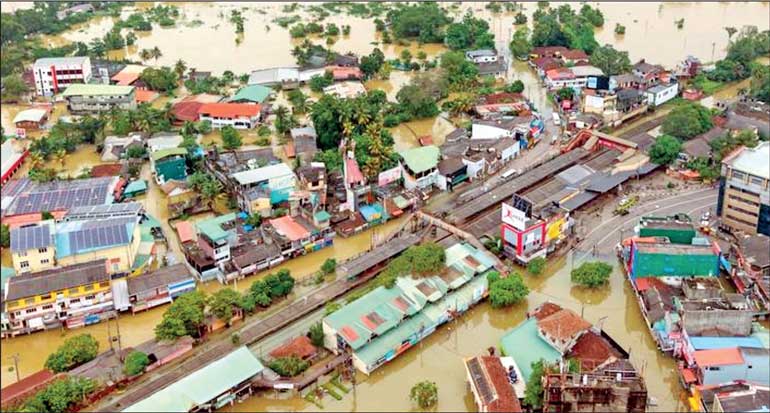
The last week of November 2025 would be etched in both the psyche of the populace and in the history of the country as one of the darkest and catastrophic days since over 600 innocent lives were lost and incurred a tangible loss of around $4 billion without accounting the intangible losses. It may be noted and acknowledged that the populous of Sri Lanka is exceptionally resilient given the cataclysmic calamities and ruinations the country confronted during a period of a little more than a half a decade since 2019. As all of us are well aware that they were the Easter bombing, COVID, economic challenges of 2022 ensued by political crisis and now Cyclone Ditwah. Not to mention the geo-political, geo-economic and geo-strategic inflammatory challenges and unparalleled volatility in the world today, which directly or indirectly impinge on the country, mostly economically. It could be stated that these challenges could affect, even the so-called advanced economies, leading to disruptions and debilitation of the political and economic fabric and trajectory. It is most commendable and meritorious that Sri Lanka and her populace manifestly demonstrated and exhibited the resilience and resolve to overcome these unprecedented challenges reasonably well with manageable cost, to the country.
This is accentuated in the context that the country recorded a healthy GDP growth between 4.8% and 5.4% during the first three quarters of 2025, recorded one of the highest numbers of tourist arrivals numbering over 2.3 million, foreign reserves hovering around $6.8 billion, foreign remittances reached all-time high of around $8 billion and the equity market (Colombo Stock Exchange) ASPI has peaked to its highest ever since the formation of the exchange. It is often being stated by economists and political strategists that the stock market is one of the most patentable and most convincing barometers of the performance of a given economy. Further, a well-controlled and tamed unemployment, inflation, interest rates and currency stability as well as recorded the highest ever amount earned from exports amounting to approximately $17 billion with a relatively lesser trade deficit compared to previous years. These numbers do not lie or beguile and do enunciate the efficacy and competency of micro and macro-economic policies of the country.
Focus on Asia economies
Having articulated the positive attributes of the economy, let’s focus on the Ditwah Cyclone and how to raise the cost of approximately 4% of the GDP, given that the country has to commence the debt-repayments by 2028. As most of us are well aware that the total debt of Sri Lanka exceeds well over 110% of GDP and is now dependent on IMF stipulated programs. It may be pertinent to compare the economic trajectory and growth of some of the nations similar to Sri Lanka, with focus on Asia, during the last five decades. The GDP per capita, which is far more applicable and judicious metric to determine the well-being of people and country opposed to the overall GDP, which the writer would focus on similar nations and their rise and aggrandisement to become regional economic players.
In 1980, the GDP per capita of China was around $310, supposedly less than that of Haiti, which had close to $400, according to IMF – World Economic Outlook (WEO). In the same year, India was only $275 and Sri Lanka was around $335 in terms of GDP per capita, whilst Uganda boasted twice the GDP per capita of both China and India with an impressive number of $665. (Today, the GDP per Capita of Uganda is a meager $1,200, after 45 years, due to civil war, severe economic mismanagement including expulsion of Asians and of course ubiquitous corruption.) In 1990, Sri Lanka had a GDP per capita of $550, much higher than both China and India as they were hovering around $380, whilst Vietnam was a mere $120 GDP per capita.
In 2010, China became the second largest economy surpassing Japan, in terms of GDP and per capita of $4,500. In other words, GDP per capita of China had risen by nearly 15 times or 1500% between 1990 and 2010. Of course, China was one of the few countries in the world, which recorded double digit growth for nearly a period of three decades. Sri Lanka had a GDP per capita of $2,500 in 2010, which should have doubled based on “RULE of 72” within the next decade (by 2020) if it recorded 6-7% growth, since the grievous and insidious terrorist conflict was over in 2009. In other words, based on conservative calibration of growth of plus or minus 5%, GDP per capita of Sri Lanka, today, should be around $6,000 to $6,500, a little less than Thailand and Azerbaijan and similar to the BRICS member state South Africa. Mathematically and pragmatically, with astute and efficacious policies, Sri Lanka could have reached the said milestone, thus uplifting the standard of living of the populace with a GDP per capita of over $6,500 by 2025. This is stated in the context, Vietnam had a GDP per capita of $1,500 in 2010 and by 2025, it cracked the GDP per capita of $5,000. According to the Nobel Laureate Joseph Stiglitz, the success of China, amongst others, was “investing in people” as well as consistent and competitive policies and unprecedented reforms maximising economic output and growth.
 The success and miracle of Singapore was the most unique as it had a GDP per capita of $500 in 1965, when Singapore gained the Independence from the British Raj. It had absolutely no natural resources, no endowments, no land mass which is about 1/90th the geographic size of Sri Lanka and no tangible assets except human resources, strategic location and unwavering determination and fortitude to succeed. The founding father of Singapore, Lee Kuan Yew famously abbreviated the transmogrification of Singapore in a single generation from a desolate unproductive land infested with “slums” and poverty to one of the most advanced and most prosperous nations in the world. He used to state that it was the execution and implementation of so called “MPH” denoting “Meritocracy, Pragmatism and Honesty”. Today, it boasts a GDP per capita ($90,000) of over twice that of Japan and over 50% higher than all G-7 countries except the US. This was a country which perspicaciously unleashed and leveraged its strategic location to fullest, thus often being ranked as amongst the busiest and best ports as well as the second biggest container port in the world behind Shanghai, amongst others.
With regards to Japan, which maintained the status as the second largest economy in terms of GDP from 1968 to 2010, was literally and metaphorically devastated and ravaged in 1945, bringing WWII to an end. Same could be stated of the then West Germany, which after WWII similar to Japan, was literally destroyed. Of course, the Marshall Plan assisted and by early 1970s, the then West Germany clocked the status of being the third largest economy in the world surpassing both the UK and France. This is often being referred to as the “Economic Miracle” or “Wirtschaftswunder” fuelled by reforms including currency, aggressive deregulations, Erhard’s policies, embracement of industrial revolution and global trade, amongst others.
With regard to Vietnam and South Korea, after the bloody military conflicts in 1970s and 1950s, both these countries earned the “obsequious” status of being amongst the poorest nations in the world. Of course, South Korea focused intensely on industrialisation with Government assistance and facilitation to form globally renowned Chaebols as
well as global trade with unwavering patriotism and nationalism. Today, South Korea is often listed amongst the ten largest economies based on GDP and GDP per capita of $36,000. This is equivalent to Japan. The transformation of South Korea is often referred as “Miracle of Han River”.
Vietnam focused on attracting and wooing FDI, tourism, regional and global trade and maintaining most consistent and predictable policies as well as “Doi Moi” reforms of 1986. As a matter of fact, since 1980 the total FDI stock of Vietnam accounts to around $485 billion and attracts FDI amounting to over $35 billion annually or nearly 8% of total GDP. Vietnam, in 1980, had total exports of less than $350 million whilst the exports of Sri Lanka recorded well over $1 billion similar to what South Korea exported in 1970. In 2025, South Korea exported goods and services in excess of $710 billion and Vietnam $475 billion respectively. Interestingly, during the last 45 years since 1980, exports of Vietnam’s have risen by over 1,300 times or 130,000%. Few countries in recorded history have attained such a meteoric feat similar to Singapore, Taiwan and South Korea in the region. Sri Lanka managed to increase its exports only by 18 times over the last 45 years to close to $18 billion in 2025. Further, the total FDI stock of Sri Lanka since 1980 would be around $23 billion. For all record purposes, these listed three countries i.e. Japan, South Korea and Vietnam, had suffered and were devastated due to bloody military conflicts far worse than Sri Lanka in the context of LTTE terrorism.
Vital transformation
What is critically vital and seminal in the transformation of the stated countries within a space of a little over a generation was that these countries implemented and employed consistent and competitive policies, rule of law to the letter and spirit, accountability and transparency, investment in human resource advancement to ably compete and vie not only with the region but globally, gradually enhanced the existing infrastructure in all aspects mainly physical, social and digital to match with world class standards, investments in R and D and high-tech manufacturing and most importantly, changed the image and perception of the country. It may further be noted that the key words are “Consistent and Competitive”. Economically speaking, if these attributes were executed and employed, with consistency, for a period of a couple of decades, any country could uplift its standard of living and economy and could be developed.
The possible strategies to overcome as well as to succeed the Post Ditwah Cyclone disaster are as follows:
i) May request the approximately 3 million Sri Lankan migrant/expatriate community to contribute to the recovery of the aforesaid disaster. In this context, if 2 million expatriate communities of Sri Lanka pledged $100 per month for 12 months to a highly transparent, accountable and explicable Fund, as the Government has already established, would translate to 2 million x $100 x 12 months = $2.4 billion. It may further be added that the Government has earned the confidence, credibility and credence from the populace that the pledged funds for the said cause would be expended, as stated, without any misappropriation or corruption.
ii) On the same note, if Sri Lanka could secure approximately 500,000 new high-skilled and professional employment abroad, it would increase the foreign remittances from $8 billion in 2025 to $14 billion. This is stated on the calibration of a single high skilled/professional remittance of $1,000 per month, which would translate to $6 billion annually.
iii) May consider raising tax revenue, which is now around 15.4% of GDP to about 19% on a gradual basis. Of course, the Government should pay meticulous cognisance to the “Laffer Curve”, otherwise economic growth and output would diminish significantly.
iv) Government and corporate sector (hospitality) should aggressively promote tourism as Sri Lanka is well positioned and well poised to attract 6 million tourists in 2026. If a tourist spends a conservative amount of $1,200 during the stay in Sri Lanka, it would translate to $7.2 billion not to mention creation of significant employment opportunities and commercial development. Of course, in order to attract and woo tourists of this scale and magnitude, it may be most pertinent to relax visa restrictions, similar to Singapore or Maldives in the region, and address the touristic infrastructure in all realms.
v) Increase exports, FDI/FII, foreign remittances, privatisation of loss making SOEs and establish well calibrated KPIs, amongst others. With regard to FDI/FII, endeavor to attract and woo global corporates and large money managers having Assets Under Management (AUM) of around $trillion or more, which in turn would encourage and entice other foreign corporates and manufacturers to commit investments and FDIs in Sri Lanka quite similar to Vietnam in mid 2000s when Intel and POSCO (South Korea) began investing in excess of billons. With regard to increase of exports, Sri Lanka should engage, aggressively and strategically, with the rest of the world with RTAs and FTAs as well as join mega trading blocs such as RCEP and CPTPP including observer status of the BRICS, amongst others. It may be judicious for Sri Lanka to focus on other regions of the world since only 12% of the population lives in the West and the 88% in the rest of the world. If Sri Lanka focuses on what is abbreviated as “CIA” denoting China, India and ASEAN, which would consist over 3.6 billion, or 40% of global population, including over 1.6 billion in the middle income category and a massive unprecedented market, particularly, vis-à-vis exports and tourism.
vi) It is unfortunate that Sri Lanka could not leverage or exploit the 2nd and 3rd Industrial Revolutions and now the 4th Industrial Revolution (4th IR) has commenced in 2010 characterised by fusion of technology, IoT, robotics, Big Data, AI and proliferation of smart devices, thus increasing productivity exponentially. It is of pivotal and critical necessity for Sri Lankan corporates to embrace and espouse the 4th IR since now it is called “4th IR plus”. This would elevate and transform scientific, digital and technological breakthroughs thus, fuelling data revolution amongst others. It is encouraging to note that today Sri Lanka has a separate and dedicated Ministry of Digitalisation, which very few countries have.
vii) Sri Lankan corporates, with the assistance and facilitation of the Government, should traverse the economy and industries from raw material and less sophisticated products driven to high value and high tech driven economy. No country during the last half a century has developed without elevating to an advanced service driven robust economy.
viii) It is seminal to foster and nurture creativity, innovation and invention as well as the higher percentage of GDP might need to be allocated for RandD, mostly to universities, start-ups and large scale industries. In other words, creating an entrepreneurial culture, which High Net Worth Individuals (HNIs) and Ultra HNIs (UHNIs) both in the country and out of the country to commit investments to promising start-up ecosystem. This is stated in the context that all, so called, “Magnificent - 7” or known as ‘Mag-7’ companies began not as SMEs but as Micro Small and Medium Enterprises (MSMEs) in college dorms, garages and rented rooms. Today, these seven corporates, each have a market cap. of well over $one trillion, have a combined market cap. of $22 trillion and the average age is only 30.8 years or 3 decades. It is most encouraging noting that the Government is extending generous facilities to nurture and accommodate the SME sector, in particular, after the Ditwah. The primary objective of the Government vis-à-vis the SMEs should be to elevate and aggrandise MSMEs to SMEs to mid-size corporates to large corporates, thus becoming regional and global players. This course of action would create an entrepreneurial culture and ecosystem similar to advanced economies in the region.
ix) Intensely focus on Good Governance including stability, legal system, rule of law, transparency, predictable policies including taxation, accountability, minimise and streamline bureaucracy and technocracy, robust media with no hindrances with responsibility and reduce corruption and illicit activities. If these were attained, FDI/FIIs, tourism and exports as well as the image of the country could markedly boost and enhance.
x) Sri Lanka, needless to state, has one of the best and most strategic locations in the world. Needs to exploit and unleash this potential and unique as well as natural utility, which the country has not leveraged yet, unlike Singapore or UAE (Dubai).
xi) Sri Lanka is well endowed and gifted with natural resources as highly valuable minerals such as high – purity Graphite and Graphene needed for EVs, Ilmenite and mineral sands amongst others. These are Rare Earth Elements (REE), which the world needs. Also, Sri Lanka has proven off-shore oil and gas and according to USGS, have over a billion barrels of oil and over 50 trillion cubic feet of gas. If Sri Lanka does not have the capacity and technology, source global corporates to discover and mine through global transparent tenders, thus attracting them. It is estimated the value of these resources is in excess of $250 billion or 2 ½ times the GDP of Sri Lanka.
xii) Encourage and extend competitive incentives to corporates and HNIs of Sri Lanka to commit investments in overseas corporates as well as to purchase, engage in mergers and acquisitions, Buyouts including management (MBO), leverage (LBO) and strategic, and high potential Private Equity (PE) firms including Venture Capital firms. These would markedly enhance and boost the image, perception and profile of the country, globally, as well as would be economically beneficial. This is similar to the acquisition of Jaguar Land Rover (JLR) of UK by Tata Motors of India in 2008 and Tata Steel acquisition of Corus Steel in 2007, thus becoming one of the largest steel makers in the world. These acquisitions and buyouts, seismically, shifted the perception and image of India from a modest product manufacturing nation to a global industrial contender with increasing corporate capability and prowess.
Future of Sri Lanka
The future of Sri Lanka is brighter and greater days of the country are not in the past but in the future. This could be transmuted into an actuality and reality only if the populace and the country adhered to the listed possible strategies to recover and bounce back much stronger with economic robustness. Let this article be concluded on optimistic and sanguine words of one of the senior most officials of Clinton and Obama Administration and former Ambassador of the US to Japan, Rahm Emanuel, quote “you never let a serious crisis or disaster go to waste. What I mean is that it is an opportunity to do things you thought you could not do before” close quote. The author wishes to close with the sagacious words of Martin Luther King Jr., the then the youngest recipient of Nobel Peace Prize, which would be most apposite and fitting and thus articulated over six decades ago, quote “If you can’t fly, then run. If you can’t run, then walk. If you can’t walk, then crawl, but whatever you do, you have to keep moving forward” close quote.
(The author is a former career Ambassador, Visiting Professor and Examiner on International Economics and Strategic Advisor. He earned the MBA from San Francisco State/University of California and PhD from Indian Institute of Technology (IIT) Delhi and is a Senior Fellow at Harvard)




