Thursday Oct 22, 2026
Thursday Oct 22, 2026
Wednesday, 1 July 2026 00:26 - - {{hitsCtrl.values.hits}}
“Psst…Wanna buy a law?”
Brenden Greeley and Alison Fitzgerald (Bloomberg Businessweek – 1.12.2011)
By Tisaranee Gunasekara
Justice was a keyword and a foundational pledge of Maithripala Sirisena’s 2015 presidential campaign. Candidate Sirisena, Ranil Wickremesinghe, and a bunch of oppositional politicians promised to end the repression and the corruption that had become bywords for Rajapaksa governance, and to bring the perpetrators before the law.
Amongst the high profile corruption cases often touted on campaign platforms was that of Avant Garde Maritime Services. This private military contractor (dubbed Sri Lanka’s Blackwater by some) was registered in 2011 as a subsidiary of Avant Garde Security Services, owned by Nissanka Senadhipathi, a retired army major. Around September 2009, the Lankan Navy had commenced providing security to international vessels. In June 2012, the regime abruptly gifted this lucrative task to the new Avant Garde Maritime Services sans cabinet sanctions or parliamentary oversight. 
The most favoured status enjoyed by Avant Garde Ltd under the Rajapaksas came to an end with their defeat at the 2015 presidential election. Investigations of the floating armouries owned by the company began soon after. In mid-January, MV Mahanuwara, a floating armoury belonging to the company, was detained by the police at the Galle Harbour. On 23 January, the passport of Nissanka Senadhipathi was impounded.
In April 2015, the then Deputy Solicitor General (DSG) wrote to the Attorney General a letter titled The Case against Avant Garde Maritime Services and others pertaining to the – Floating Armoury (outed by the website The Colombo Telegraph). The letter itemised three legally actionable offenses: unauthorised importation of fire arms to Sri Lanka, possession of fire arms and ammunitions without valid licence, and conspiracy aiding and abetting to commit the above offenses.
Five suspects were identified, including Nissanka Senadhipathi and Gotabaya Rajapaksa. The DSG’s conclusion was unequivocal: “I’m of the view that a strong prima facie case has been established against the said five suspects and that they should be indicted under the above discussed provisions of the law. If you agree with my recommendation, as the first step I recommend that the CID be directed to arrest and produce before the magistrate the five suspects…” (https://www.colombotelegraph.com/index.php/wijeyadasa-lies-ag-wanted-criminal-prosecution-of-avant-garde/). But no case was filed and no arrests made.
The UNP won the parliamentary election in August 2015. Tilak Marapana was appointed minister of law and order in the new Government. Within weeks, in September 2015, the CID informed the Colombo Magistrate Court that it had failed to find any evidence of misconduct by Avant Garde Ltd and will not go ahead with the case as per instructions of the Attorney General. The court terminated proceedings against the company.
A national uproar ensued. On 4 November, Minister Marapana made a special statement in parliament claiming that this controversy over the termination of proceedings was due to the public’s “lack of understanding regarding the floating armoury.” The floating armoury was in the Galle Harbour legally, he insisted. “The police jumped into gain points as soon as the Government changed, similar to the raid on the Millennium City in 2002. That is the reality” (https://adaderana.lk/news/32941). Outrage mounted. The next cabinet meeting became a shouting match. Several ministers threatened to resign. PM Wickremesinghe was forced to abandon his protégé. Marapana resigned from his portfolio on 9 November.
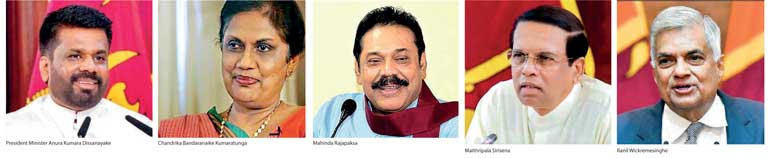
Marapana was not the only minister who had championed Avant Garde Ltd. Justice Minister Wijeydasa Rajapaksha had also done so. Soon stories began to circulate about a close relationship between Minister Rajapaksha and Senadhipathi. Minister Rajapaksha denied them, challenging JVP leader Anura Kumara Dissanayake and Minister Sarath Fonseka to a debate and promising to resign from his portfolio if the allegations were proved. In early January 2016, Minister Fonseka published a set of 2006 photos showing Messrs Rajapaksha, Senadhipathi and their families enjoying an American holiday together and in style (https://www.dailymirror.lk/print/breaking-news/wijeyadasa/108-98841). Despite this revelation, Rajapaksha continued to function as minister of justice until August 2017. 
In October 2015, another Avant Garde floating armoury was seized with 600 unauthorised weapons. In November 2015, President Sirisena ordered the cancellation of all contracts with the company. Avant Garde lost its business but escaped justice.
Favours owed; favours returned
The term ‘state capture’ was birthed by the World Bank in 2000, to explain the effects of mass scale privatisation in the former Soviet Union. The outcome was not the creation of a competitive market but the emergence of a cohort of “powerful oligarchs who manipulate politicians, shape institutions, and control the media to advance and protect their own empires at the expense of social interests.” (https://documents1.worldbank.org/curated/en/537461468766474836/pdf/multi-page.pdf).
The Guardian defined state capture as “not corruption of the system but corruption as the system.” When vested interests such as private companies, political families, and/or lobbying groups acting for foreign powers (like the AIPAC – American Israel Public Affairs Committee) take control of states, these “captured states stop being arbiters of public good and become guarantors of elite privilege” (Forget petty bribes, ‘State Capture’ is corruption so deep it is shaping the rules of democracy itself – 4.11.2025). In countries like ours where religion plays an outsized public/political role, vested interests aiming at state capture can include established clergy.
In Sri Lanka, state capture became a lived reality under the Rajapaksas. The Avant Garde saga was quintessential. As senior journalist Dharisha Bastians wrote in 2015, “The shadowy security firm has immensely deep pockets – CID sleuths found the company was raking in up to Rs 15 million daily from its floating armoury operation (this was between 2012 and 2015 when a million had more value than it does today) – and its tentacles reached several tiers deep within the new administration.” The company had “submitted an unsolicited proposal that was authorised without evaluation or tender procedure, by the former Defence Secretary. Weapons were being provided to the maritime security firm that was maintaining floating armouries, through Rakna Arakshaka Lanka Ltd, the Defence Ministry-owned company that was Secretary Rajapaksa’s pet project. In the first flush of investigations, the CID found thousands of extra weapons on-board the Avant Garde than had been authorised by the Defence Ministry” (https://dbsjeyaraj.com/dbsj/?p=43964).
(A relevant aside: When President Sirisena cancelled all contracts with Avant Garde Maritime Services, the company demanded from the Government-owned Rakna Arakshaka Ltd a Letter of Clearance asserting the legality of the company’s floating armouries. When Rakna Arakshaka Ltd refused to comply, an arbitration case was filed demanding compensation for breach of contract. In May 2019, the Singapore Court of Appeal dismissed the case, ordering Avant Garde to pay Rakna Arakshaka legal costs.)
Avant Garde Maritime Services got its lucrative business back under President Gotabaya Rajapaksa and retained it under President Ranil Wickremesinghe. After almost a year in power, the Government of Anura Kumara Dissanayake cancelled the contract, returning the profitable business to the Navy. Two writ petitions filed by the company were dismissed by the Appeal Court in February 2026. In August 2026, the Navy revealed that the company owed it over 780million rupees for services provided (https://www.facebook.com/NewsfirstEngSL/videos/sri-lanka-navy-breaks-silence-on-floating-armoury-operations-navy-reveals-unpaid/1340800734922274/). Whether the Government or the Navy takes action against the company remains to be seen.
Are the days of State capture over - or not?
In democracies, state capture, to be effective, must have the blessings of all political players. That was how Avant Garde Ltd saved itself from being buried under the 2015 collapse of Rajapaksa power. In his incendiary parliamentary speech of November 2015, Minister Marapana stated that on 10 January 2015 – i.e. the day after the Sirisena-Wickremesinghe Government was sworn in - he met Nissanka Senadhipathi through Minister Vajira Abeywardena. Subsequently, Marapana admitted that this meeting led to him being retained by the company as its lawyer and that he functioned in that capacity until he was sworn in as Minister of Law and Order in August 2015. With minister in charge of the police as its lawyer and the minister in charge of the AG’s Department as its friend, is it surprising that Avant Garde Ltd escaped justice?
Perhaps Senadhipathi has no such friends in the current Government. Perhaps this Government is not vulnerable to pressure by Avant Garde Ltd for there are no IOUs to be repaid. But this doesn’t necessary mean that this Government is invulnerable to pressure from all vested interests seeking to use state power for private gain.
In May 2025, underworld kingpin Nadun Chintaka Karunaratne alias Harak Kata, while being brought to court, shouted to the waiting journalists that he was being held in the Tangalle prison because he did not pay the 300 million rupee-bribe demanded by former minister of public security Tiran Alles and former IGP Deshabandu Tennakoon. After this public revelation, the police stated that they had begun an investigation into the matter. The question is, why did the police wait until that public statement to begin an investigation? Surely, this can’t be the first time they heard the allegation against Messrs Alles and Deshabandu? Surely, Karunaratne would have made that allegation when the new Government came to power, and especially after Tennakoon fell out of favour?
That incident happened over a year ago. What happened to the promised investigation? Did it vanish into the Lankan version of Bermuda Triangle (where so many high profile investigations go to die) because it involved former minister Tiran Alles? After all, the Government has already demonstrated a worrying willingness to stretch/bend the law in favour of its own allies/favourites. If it can happen with monk Pallegama Hemaratana, it can happen with others too. If so state capture will have a new season, same drama, different actors.
What do they believe in?
During the 2025 Democratic primary debate for New York mayoralty, contenders were asked which foreign country they would visit first as mayor of New York. As on cue, every contender answered Israel. The only exception was Zohran Mamdani who said that as mayor of New York, he wouldn’t be visiting any foreign country; he’ll stay in the city and look after the needs of all New Yorkers, including Jewish New Yorkers.
The New York city has the largest Jewish population outside Israel. The received wisdom was that an absolute majority of these Jewish New Yorkers would not vote for a candidate who wasn’t pro-Israeli. Mamdani’s answer therefore carried a significant risk to his neophyte candidacy. Yet, he stuck to what he believed, refusing to lie for the sake of a win. That rare authenticity would become a key factor in his eventual victory.
The Sirisena-Wickremesinghe administration promised to end political murders, corruption and nepotism. It kept the first promise but failed to keep the other two. After a relatively successful first year, it began to go downhill. The reason was simple: the Government had no belief in its own mandate. It was, in that sense, a Government of unbelievers. And the Government leaders’ lack of belief in their own much touted promises caused the electorate to lost its own collective belief in the Government. Inauthenticity led not to victory but to defeat.
Chandrika Bandaranaike Kumaratunga deserves commendation for being the only national level politician with the courage to speak out about the Pallegama Hemaratana scandal. She recently attributed the silence on the part of almost all other politicians to their fear of losing votes. It might be more correct to say that politicians on both sides of the aisle are more fearful of antagonising a powerful vested interest group – the Sangha.
The Opposition’s promises regarding the rule of law, justice, and equality before law have become somewhat threadbare due to its past performance. But the Government had a reputation to lose, and showed no hesitation in losing it. In the Pallegama Hemaratana case which pitted a socio-economically powerful monk against a poor and an unprotected child, the Government sided instinctively with the elite accused rather than the non-elite accuser.
The case has come this far due to public pressure. Without that, the case would have been buried by the Government with the Opposition’s connivance. Monk Pallegama Hemaratana might still be the Atamasthanadhipati while Child X would have joined the ranks of victims for whom justice will always remain a goal too far.
This is not the most corrupt Government in history. That distinction goes to the Rajapaksas. This is not the most tyrannical Government in history. There are many contenders for that title. But this Government might gain both titles someday, because it shows a disturbing capacity to be cavalier about its weightiest pledges and principles. Already promises to abolish the executive presidency and the PTA are dead. Pallegama Hemaratana case indicates that the promise to end corruption and the principle of justice too can be abandoned. Only belief in one’s principles and promises can enable governments to withstand the creeping power of vested interests. And once vested interests succeed in state capture, any infamy becomes possible.
“Do you believe in anything?” Abdul El Sayed, epidemiologist turned Democratic senate candidate for Michigan rhetorically asked leaders of his own party during an appearance on the podcast I’ve had it. This is a question valid for all countries, a question that Lankan voters across the political divide should ask their leaders (including religious ones). Do you believe in anything or is power (and wealth) your only divine?




