Thursday Oct 15, 2026
Thursday Oct 15, 2026
Wednesday, 17 June 2026 05:46 - - {{hitsCtrl.values.hits}}
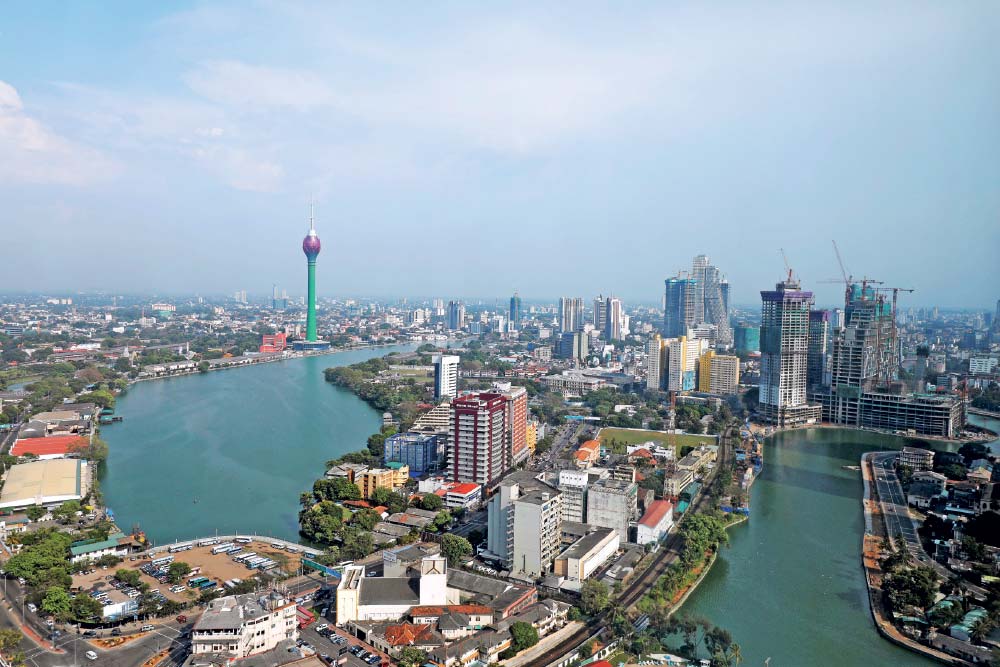
 The nation’s growth model has favoured one region at the expense of the rest. As the country seeks to rebuild from its economic crisis, this shift is not just desirable but also essential. Otherwise, Sri Lanka risks repeating the same cycle: growth in Colombo, stagnation elsewhere, leading to vulnerability everywhere
By the Neelan Tiruchelvam Trust
Sri Lanka’s graduation to middle-income status in 1997 led to the country being hailed as a South Asian success story. Social indicators, such as literacy and health outcomes, outpaced its neighbours. By 2018, Sri Lanka had even touched upper-middle-income status, albeit briefly. Yet just four years later, in 2022, the country plunged into an economic crisis so severe it triggered the first sovereign default in its history.
What went wrong?
According to economist Umesh Moramudali, who recently authored a study as part of the Neelan Tiruchelvam Trust’s Macroeconomic Policy and Socioeconomic Rights Fellowship, the answer lies not only in debt mismanagement or external shocks but also in something less discussed—the deeply uneven and spatially skewed nature of Sri Lanka’s growth. His research, “Sri Lanka’s spatially skewed growth through middle income transition-a deep dive”, argues that, while Colombo and the Western Province flourished, much of the rest of the island was left behind.
Colombo’s advantage
For decades, the Western Province has produced around 40 percent of Sri Lanka’s GDP. This is where industries cluster, foreign investors set up shop, and high-paying professional jobs are concentrated. Colombo became the centre of economic life, while other provinces, despite improvements in some basic infrastructure, struggled to attract industries or create decent jobs.
By 2018, nearly 60 percent of Sri Lankan workers were in the informal sector. Jobs in agriculture, small-scale businesses and casual services provided low wages, little security and no retirement benefits. For educated youth in rural provinces, the options were limited to migrating to Colombo, remaining unemployed, or accepting underpaid work that did not reflect their aspirations.
Moramudali explains that this pattern not only widened the income gap but also reinforced a cycle of dependency on Colombo. The brightest minds and most ambitious workers often moved to the Western Province, further deepening regional inequalities.
Why past efforts fell short
Initiatives such as the Regional Economic Advancement Programme (REAP) and rural garment factory schemes were designed to bring jobs closer to rural communities. But Moramudali’s research shows that many of these initiatives were short-lived, politicised, or overly focused on infrastructure, without creating sustainable employment opportunities.
A new highway or water system might improve access, but without investment in industries, skills training or enterprise development, such infrastructure does not automatically generate jobs. Particularly in the North and East, the gaps widened in the post-war years.
The human cost of skewed growth
Moramudali’s work illustrates several ways in which uneven development undermines basic socioeconomic rights in Sri Lanka.
It shows that, outside of Colombo, many are trapped in insecure agricultural or informal jobs. Decent, stable work is rare. Additionally, while Sri Lanka boasts high literacy and strong education outcomes, rural graduates often find that their qualifications lead them nowhere, locally. This forces them to migrate or remain underemployed.
The study found that migration into Colombo pushes up housing costs, with families from rural areas often ending up in cramped and inadequate housing. Women, informal workers and conflict-affected communities suffer the most from these disparities, reinforcing structural inequalities. Meanwhile, heavy reliance on informal work left millions exposed during the COVID-19 pandemic and the economic crisis, with no safety nets to protect them.
In short, while national income rose, large sections of the population were excluded from its benefits. Sri Lanka’s middle-income transition was never truly inclusive.
A different path forward
Moramudali offers five key recommendations to address these disparities and set the country on a more inclusive path of growth.
He suggests adopting a bottom-up regional development approach, whereby local bodies and provincial councils are empowered to shape economic strategies instead of relying solely on centralised and one-size-fits-all plans.
He proposes stronger linkages between large firms and local SMEs, encouraging partnerships to enable smaller enterprises in rural areas to integrate into supply chains, boosting job quality and stability.
Peripheral economic hubs must be developed, rather than spreading resources thinly across all provinces, thereby building up select regional centres so that they can act as anchors for surrounding areas.
The expansion of interregional business networks is recommended as a means of improving connectivity and trade between provinces, thus reducing overdependence on Colombo.
Finally, link social protections with economic empowerment: welfare programmes such as Aswesuma should not only cushion families during crises but also help them access jobs and enterprise opportunities.
These steps would move Sri Lanka beyond the old model of building infrastructure without creating sustainable livelihoods.
Why this matters now
Sri Lanka is still navigating its most severe economic downturn in decades. Poverty has risen, the cost of living remains high, and trust in political leadership is fragile.
If the country continues to rely on a Colombo-centric growth model, the risks are twofold. First, the inequality between regions will deepen. Second, Sri Lankan citizens will remain vulnerable to future crises.
The broader lesson is that achieving middle-income or even upper-middle-income status on paper does not guarantee that citizens will have equitable access to enjoy better lives. For development to be meaningful, it must be inclusive, reaching villages as much as cities, the North and East as much as the Western Province.
Towards inclusive growth
Sri Lanka has long prided itself on its strong human development indicators, compared to other countries in the region. But education, health and literacy alone cannot drive prosperity unless they are matched with opportunities.
Moramudali’s research shines a light on a hard truth—that the nation’s growth model has favoured one region at the expense of the rest. If policymakers embrace his recommendations to focus on local empowerment, regional hubs and the integration of small businesses into wider supply chains, Sri Lanka could begin to close its spatial divide.
As the country seeks to rebuild from its economic crisis, this shift is not just desirable but also essential. Otherwise, Sri Lanka risks repeating the same cycle: growth in Colombo, stagnation elsewhere, leading to vulnerability everywhere.
For citizens outside the Western Province, the hope is that future development will not leave them behind yet again. For the nation, inclusive growth may be the only path toward real stability, dignity and resilience.
(Umesh Moramudali authored the research paper “Sri Lanka’s spatially skewed growth through middle income transition-a deep dive” under the Macroeconomic Policy and Socioeconomic Rights Fellowship of the Neelan Tiruchelvam Trust. The full compilation of research papers produced through this fellowship can be accessed here: https://neelan.org/macroeconomic-_policy/)




