 |
 |
 |
 |
|
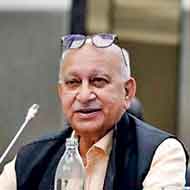
I hope that as the most important and most powerful superpower of the world, America does discover the geography of South Asia, does discover the geography of the Indian Ocean and does discover the importance of a genuine mutually beneficial friendship with India
- Former Indian Minister of State for External Affairs
M.J. Akbar
|
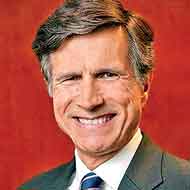
It is important for the Government to appoint a new Ambassador to Washington, who is prepared to represent its interests to engage with many of the new members of Congress, a number of whom know very little about Sri Lanka
- Former US Ambassador to Sri Lanka Robert O. Blake
|
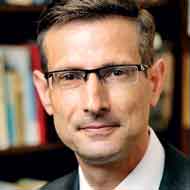
The best way to say where we stand right now is that we feel to be at the beginning of the end of the Trump era
- Henry Stimson Centre Senior fellow in the South Asia program Dr. Daniel
S. Markey |
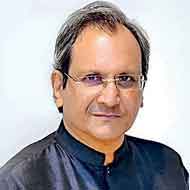
The US did not provide us with offensive weapons, but it did provide intelligence, the war would probably have continued for many more years
- Former Foreign Secretary and Sri Lankan Ambassador to the US Ravinatha Aryasinha
|
By Shanika Sriyananda
The Americans has delivered its verdict at the US midterm elections. According to political analysts with Democrats gaining control of both the House of Representatives and the Senate, President Donald Trump is likely to face influences in his policy approaches in different sectors including trade, foreign policy, security and the relationship with the Global South.
The changing political landscape in the US indicates significant implications for Sri Lanka for its relationship with the US, which is the largest export partner, accounting for nearly a quarter of the country’s exports.
At the webinar organised by the Pathfinder Foundation titled ‘America Votes, South Asia Adjusts: Implications for Sri Lanka and the Region’ former diplomates and policy experts looked into the implications of Washington’s political shift for South Asia, with trade access, human rights, international relations and regional security as key concerns
“For Sri Lanka and its neighbours, the task is not simply to understand Washington’s intentions but also to anticipate how its decisions may affect our economies, security and external relationships. Should we expect a change in American foreign policy? And are we in South Asia prepared to respond?” commencing the discussion Pathfinder Foundation Chairman Ambassador (Retd.) Bernard Goonetilleke, who moderated the session, raised the question.
Referring to possible foreign relations changes of the US with South Asia and China’s growing influence in South Asia and the Indian Ocean, Goonatileke said the question was whether a change in Washington would give regional countries more room to pursue their interests or bring new pressures to choose sides.
“The Indian Ocean also deserves particular attention. Securing maritime trade routes and chokepoints, maritime security, freedom of navigation, port infrastructure and undersea communications are becoming increasingly important”, he said adding that those matters have direct implications for Sri Lanka and the wider Indian Ocean region.
The speakers highlighted the possible implications of the changing political balance in Washington for US relations with India, Pakistan, China and other South Asian countries, while highlighting the economic and strategic considerations facing Sri Lanka.
India cannot be sidelined in regional security
Former Indian Minister of State for External Affairs M.J. Akbar stressed that the United States could not overlook India’s strategic importance in maintaining security and stability in West Asia, South Asia and the wider Indo-Pacific.
Akbar is a veteran journalist and a politicians who has written several books, including ‘The Past and Future of Pakistan’.
He said India’s role in the changing geopolitical landscape would become increasingly significant, particularly as conflicts stretching from Ukraine to West Asia and the Indian Ocean became more interconnected.
Questioning the Trump administration’s apparent shift away from the Indo-Pacific framework, Akbar asked whether Washington could afford to exclude India from the region’s security architecture.
“Can you remove India from the architecture of security and stability of West Asia, of the Indo-Pacific and of Asia?” he asked.
Akbar emphasised that India’s independent foreign policy should not be mistaken for opposition to international partnerships or cooperation with the United States.
“Independence is not a contrarian position. It is a position in which we offer partnership for a world order but through mutual cooperation, through an understanding of bilateral and even multilateral interests,” he said.
Describing India as a pivotal power in South Asia and Asia, Akbar said the country would become an increasingly influential force in regional and international affairs.
“India is a pivotal power in South Asia, it is a pivotal power in Asia and it will become an increasingly powerful force for the good of the region and for the good of the world,” he said.
“What I have described as the war of the five seas, searching for the sixth. The war in Ukraine began with Crimea in 2014. The five seas are the Mediterranean, Caspian, Red, Black and Arabian seas, with the conflict almost reaching the sixth sea – the Indian Ocean,” he said giving the focus to the Indian Ocean.
He identified Taiwan and the Malacca Strait as important flashpoints in the evolving US-China strategic rivalry and stressed the importance of India’s naval presence in the region.
Akbar also cautioned that the election outcome could influence Washington’s approach towards West Asia, including its policy on Iran, and warned of the possibility of renewed military escalation.
“There is a possibility that, because he does not want to be entre history books as a loser, he could actually reignite the conflict,” he said.
He also raised questions about the future of US-India relations and the implications of Washington’s evolving approach to the Indo-Pacific, stressing that India’s strategic interests and regional role would remain important considerations for the United States.
Concluding his remarks, he urged the United States to recognise the strategic importance of South Asia and the Indian Ocean and the need for a mutually beneficial relationship with India.
“I do hope that as the most important and most powerful superpower of the world, America does discover the geography of South Asia, does discover the geography of the Indian Ocean and does discover the importance of a genuine mutually beneficial friendship with India,” he said.
Repealing PTA
Former US Ambassador to Sri Lanka Robert O. Blake focused on the implications of the election results for Sri Lanka, particularly the potential influence of the incoming Democratic majorities in Congress on the Trump administration’s policies.
He identified US tariff policies and the possible renewal of the Generalised System of Preferences (GSP) as two important issues for Sri Lanka, given the significance of the American market to the country’s exports.
“The U.S. remains Sri Lanka’s most important export market,” he, who is the Senior Managing Director at McLarty Associates, where he leads the Climate and Sustainability and Southeast Asia practices, said.
Blake noted that Democrats would have opportunities to challenge some of President Donald Trump’s tariff measures when they assume control of the House of Representatives and Senate in January 2027.
However, cautioning against expecting a complete reversal of the existing tariff, said that he would not assume that Democrats would automatically seek to repeal them. “ It is worth remembering that when President Biden succeeded the first Trump administration, he retained most of the trade measures introduced during Trump’s first term,” he recalled.
Ambassador Blake said that the GSP scheme, which provides duty-free access to the US market for thousands of products from designated developing countries, including Sri Lanka, had lapsed in 2020.
He said its renewal was unlikely to be an immediate priority for the incoming Congress. However, if Democrats decided to revive the program, they could seek stronger provisions relating to workers’ rights, environmental protection and human rights.
“The latter in particular could bring renewed scrutiny on Sri Lanka,” he warned.
Blake stressed that Sri Lanka needed to strengthen its engagement with the new Congress, particularly as newly elected lawmakers might have limited knowledge of the country and its economic interests.
Suggesting several key steps to improve prospects of securing support for Sri Lanka to get effectively engaged with the new Congress, he stressed the important of appointing a new Ambassador to Washington have an active diplomatic representation.
“I think Mahinda Samarasinghe did a great job representing Sri Lanka and was very active in engaging both the executive branch and Capitol Hill,” he noted.
Commending President Anura Kumara Dissanayake’s efforts in addressing corruption, he said that he believes the new Democratic Congress was likely to scrutinise the human rights records of trading partners much more closely than the previous Congress did.
He suggested some effective measures, including the repeal of the Prevention of Terrorism Act (PTA) as a priority, that the Government could improve its standing and strengthen its prospects for GSP eligibility.
“We have been talking about repealing of the PTA for 20 years since I was an ambassador there, and it’s long outlived its usefulness,” he said.
He added that repealing the legislation could also improve Sri Lanka’s prospects of securing the renewal of the European Union’s GSP Plus trade facility.
Blake further called for tangible progress on reconciliation, including the demilitarisation of the Northern and Eastern provinces, the return of seized land and steps towards the devolution of power.
“These are all longstanding issues that have been promised and shouldn’t be that difficult to do,” he said.
He noted that the Government had an opportunity to advance these measures while President Anura Kumara Dissanayake continued to enjoy significant parliamentary support.
Blake’s observations highlighted the importance of proactive diplomacy and progress on domestic policy issues as Sri Lanka prepares to engage with a new US Congress, where trade access and human rights could receive greater attention.
Sri Lanka under scrutiny
Former Foreign Secretary and Sri Lankan Ambassador to the United States Ravinatha Aryasinha explained the changing US political landscape from Sri Lanka’s foreign policy and economic perspectives.
He said Sri Lanka had significantly recalibrated its foreign policy following the 2022 economic crisis, moving towards a more balanced position that enabled it to maintain constructive relations with major powers.
Aryasinha, who is the Executive Director of the Regional Centre for Strategic Studies, stressed the importance of preserving the diplomatic space created through this approach, particularly as Sri Lanka approaches the conclusion of its current International Monetary Fund (IMF) program in March 2027.
“From a Sri Lankan perspective, I would think that we should try to hold on at least to that window we opened on foreign policy,” he said.
He noted that international stakeholders had supported Sri Lanka’s economic stabilisation partly because of their economic and strategic interests in the country.
According to Aryasinha trade, investment and regional security as three major areas requiring careful attention in managing relations with Washington.
Commenting on trade, he expressed concern over relatively flat growth in Sri Lanka’s exports to the United States, citing uncertainty surrounding Trump’s tariff policies, the absence of a trade agreement and potentially weaker consumer demand in Western markets.
He observed that Sri Lanka’s apparel industry had remained competitive primarily because of the quality of its products rather than preferential trade arrangements.
“Sri Lankan apparel manufacturers compete successfully because they produce good-quality products. However, if tariffs increase or consumers reduce their purchases, the quality of the products alone will not be enough. This is something we need to watch closely and try to protect,” he said.
Ambassador Aryasinha acknowledged that attracting substantial foreign direct investment had remained a longstanding challenge, even during favourable economic periods.
He identified China’s established presence in Sri Lanka as a strategic consideration in US investment decisions but cautioned Washington against allowing its competition with Beijing to constrain engagement with Colombo.
“I am not telling the US that they must ignore their red lines,” he said, adding that demanding exclusive strategic alignment from Sri Lanka would be counterproductive.
He argued that Sri Lanka’s refusal to pursue exclusivity had helped maintain more balanced relationships with both Washington and New Delhi.
Aryasinha also referred to the regional implications of tensions involving Iran and the wider Middle East, stressing that Sri Lanka should retain the flexibility to make decisions based on its national interests.
He said the changing composition of the US Congress could bring renewed emphasis on human rights, reconciliation and democratic governance in Washington’s relations with Sri Lanka.
While acknowledging the importance of addressing these concerns meaningfully, he cautioned against using human rights as an instrument of political pressure.
Having served as Sri Lanka’s Ambassador in Geneva from 2012 to 2018, Aryasinha said human rights were used more as a means of keeping Sri Lanka under scrutiny.
“The US did not provide us with offensive weapons, but it did provide intelligence, the war would probably have continued for many more years,” he commended the US assistance during the final stages of Sri Lanka’s ar.
Despite differences over human rights, Aryasinha noted that bilateral relations had remained relatively stable through difficult periods.
He said Sri Lanka had so far managed the changing international environment without suffering major diplomatic setbacks, although it might not have secured all the gains it could have achieved.
Concluding his remarks, he stressed that Sri Lanka should remain responsive to US concerns while expecting the US to recognise the importance of Sri Lanka’s independent decision-making.
“Sri Lanka does best when it is allowed to kind of come to these decisions on its own,” he said.
Questions over US regional policy
Henry Stimson Centre Senior fellow in the South Asia program Dr. Daniel S. Markey, explained on the wider implications of the US election outcome for South Asia, particularly Washington’s relationships with India and Pakistan and its approach towards China and the Indo-Pacific.
He described the Democratic gains as a significant political setback for the Trump administration, although he cautioned against interpreting the results as an outright rejection of its foreign policy.
“The best way to say where we stand right now is that we feel to be at the beginning of the end of the Trump era,” Dr. Markey said, noting that President Trump would nevertheless retain considerable executive power during the remaining two years of his term.
For Sri Lanka, Bangladesh and Nepal, Markey said the future of relations with Washington would depend heavily on the strength of American diplomatic and government institutions rather than solely on decisions taken by the White House.
“The principal area of concern with dealing with the United States is process and institutions,” Dr. Markey, whose expertise are mainly focused on international relations and U.S. policy in Asia, said.
He highlighted the importance of professional diplomats and officials in the State Department, Defence Department and National Security Council in sustaining regional cooperation.
Markey questioned whether Washington would return to a more institutionalised approach to international relations or continue with a more personalised and transactional foreign policy.
Commenting on India-US relations, he said the election outcome was likely to be viewed positively in New Delhi, particularly following two years of friction over trade, the Iran war, Russia and Washington’s relations with Pakistan.
“The elections for India will in general terms be perceived as a welcome development,” he said.
Despite political differences, Markey observed that defence and technology cooperation between the two countries had continued through established government-level dialogues, military exercises and private-sector engagement.
He said the incoming Congress could provide further support for this cooperation.
However, Washington’s changing approach towards China remained a major concern for India.
Markey noted that for nearly two decades, US policy towards the Indo-Pacific had been shaped partly by strategic competition with China, making India an important regional partner.
“India was perceived by Washington as being very important, sometimes of principal importance,” he said.
He observed that the Trump administration had appeared to move away from this approach at various points, raising questions about Washington’s long-term commitment to the Indo-Pacific.
“None of these things provide the same confidence about U.S. commitment to its place of global leadership and especially not its commitment to the Indo-Pacific,” he said.
Dr. Markey said the next US administration could take a different direction on trade, alliances, climate change and multilateral cooperation, although a complete return to the Biden administration’s approach should not be assumed.
The webinar provided an opportunity to exchange views on how the changing political landscape in the United States could influence international relations and the strategic and economic environment of South Asia.



