Monday Oct 12, 2026
Monday Oct 12, 2026
Thursday, 18 June 2026 00:00 - - {{hitsCtrl.values.hits}}
By Neelan Tiruchelvam Trust
In 2022, Sri Lanka faced an economic collapse that deeply affected millions. Fuel queues stretched for miles, essential medicines ran out, and for the first time, the country defaulted on its sovereign debt. Analysts blamed external debt, trade imbalances and fiscal mismanagement.
However, researcher Yolani Fernando argues that these explanations only scratch the surface. In her paper, “Sri Lanka’s Accountability Deficit”, based on research conducted under the Neelan Tiruchelvam Trust’s Macroeconomic Policy and Socioeconomic Rights Fellowship, Fernando identifies a deeper cause: the erosion of accountability within the country’s governance system.
She explains how the “third deficit”, an accountability deficit, alongside the familiar trade and budget deficits, led Sri Lanka toward an economic crisis. She insists that, unless this structural flaw is fixed, Sri Lanka risks repeating the mistakes that drove it into crisis.
Power without oversight
Fernando’s research connects the problem to the concentration of power in the Executive Presidency. Over decades, this system hollowed out the state’s ability to exercise checks and balances.
Policy decisions that were evidently harmful, such as the sweeping tax cuts of 2019 or the imprudent fertiliser ban, were allowed to proceed without institutional challenge. These measures went unchecked because the mechanisms meant to restrain Executive power had grown too weak to intervene.
Her study shows that institutions designed to protect the public interest, such as Parliament, the oversight committees, the Central Bank and the civil service, all lost independence and authority under successive administrations.
Parliament’s decline
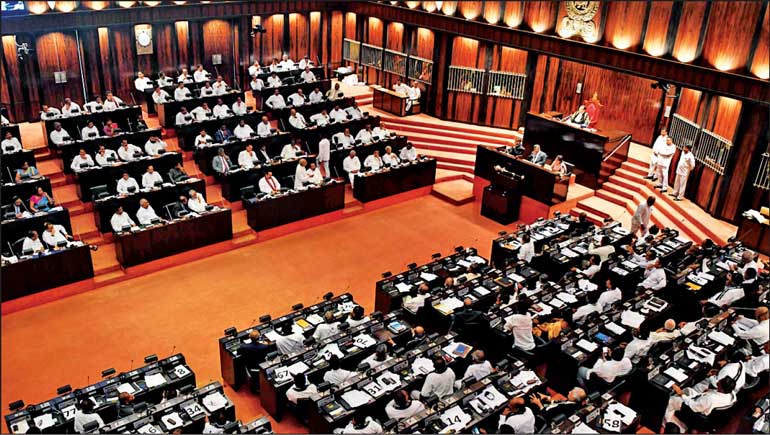
Fernando’s research illustrates how Parliament was reduced to a rubber stamp. Oversight committees such as COPE (Committee on Public Enterprises), COPA (Committee on Public Accounts), and COPF (Committee on Public Finance) lost credibility under political capture. When the ruling party took control of these bodies, their role as watchdogs evaporated.
Fernando also highlights the longstanding practice of Presidents retaining the finance portfolio for themselves—i.e., the “absentee Finance Minister” model. This removed an essential counterweight to presidential populism. Without an independent Finance Minister, there was little room for fiscal discipline, long-term policy planning, or unpopular but necessary reforms.
The Central Bank under pressure
Her research further shows how political interference undermined the Central Bank of Sri Lanka. Instead of acting independently, Central Bank Governors were subjected to direct instructions from Treasury Secretaries and Presidential Aides.
The results were disastrous. The fixing of the exchange rate, the denial of insolvency realities, and the reluctance to engage with the IMF all flowed from this breakdown of independence. By the time Sri Lanka finally turned to the IMF in 2022, the situation had deteriorated beyond repair.
The politicisation of the public service
Fernando also draws attention to the decline of Sri Lanka’s once prestigious Ceylon Civil Service. Over the years, it was replaced with a politicised bureaucracy that relied on patronage rather than merit.
This transformation left bureaucrats reluctant to challenge questionable decisions. Instead of resisting harmful policies, officials became complicit. Over time, the state’s technical capacity eroded, leaving the country more vulnerable to reckless policymaking.
Who bore the burden?
While Fernando’s paper is centred on governance, she makes it clear that these institutional failures had real human consequences. The fertiliser ban decimated farmers’ livelihoods and worsened food insecurity. The tax cuts hollowed out state revenues, resulting in reductions in health, education, and social welfare spending. Inflation and shortages placed unbearable pressure on low-income households and daily wage earners.
Women, informal workers and rural communities were among the hardest hit. These underserved groups, who are already excluded from decision-making, had little protection against the shockwaves of the crisis.
Fernando concludes that the accountability deficit is not just a matter of constitutional design. It is also a human rights issue because it undermines the socioeconomic rights of the most vulnerable.
A roadmap for reform
Fernando’s research does not stop at diagnosis. She outlines a series of reforms aimed at rebuilding accountability.
She espouses separating the Finance Ministry from the Presidency. This would restore fiscal prudence and create a buffer against populist decisions.
She calls for a revitalisation of parliamentary oversight. Key committees must be chaired by the opposition and provided with greater technical research support for budget scrutiny.
The Central Bank’s independence must be safeguarded—building on the 2023 Central Bank Act, the institution must be insulated from political interference in practice, not just on paper.
She recommends depoliticising the public service, asserting that transparent recruitment and career development are needed to restore professionalism and autonomy.
Finally, constitutional and financial management reforms must be implemented—there must be consistent enforcement of amendments such as the 21st Amendment to the Constitution and supporting legislation, such as the Public Financial Management Act and Debt Management Act.
However, Sri Lanka’s history of reversing reforms makes public vigilance essential. Laws alone are not enough. Sustained political will and citizen oversight are crucial.
Why this research matters now
Fernando’s study provides a lens for understanding why Sri Lanka’s crisis was not simply about economics. It shows how flawed governance allowed reckless policies to slip through unchecked, with devastating consequences for ordinary people.
Institutions that are meant to curb Executive excesses, such as the Parliament, the Central Bank, the Treasury and the civil service, must function as real guardians of the public interest. Without such accountability, policymaking will continue to prioritise short-term political gain over long-term stability and human rights.
A call to action
This is a reminder that economic recovery is not just about debt restructuring or financial reform. It requires rebuilding the very institutions that hold leaders accountable.
For citizens, the message is clear: accountability cannot be left to politicians alone. Civil society, independent media, and the public at large must play an active role in ensuring reforms are implemented and maintained.
The 2022 crisis exposed the fragility of Sri Lanka’s governance structures. Yet, it also offers an opportunity, a chance to rebuild institutions, restore trust and ensure that policymaking serves the collective good.
If Sri Lanka is to avoid another collapse, it must address its accountability deficit head-on. As Fernando shows, this is not just a matter of good governance. It is a matter of justice, rights and the protection of the most vulnerable.
(Yolani Fernando authored the research paper “Sri Lanka’s Accountability Deficit” under the Macroeconomic Policy and Socioeconomic Rights Fellowship of the Neelan Tiruchelvam Trust. The full compilation of research papers produced through this fellowship can be accessed here: https://neelan.org/macroeconomic-_policy/)




