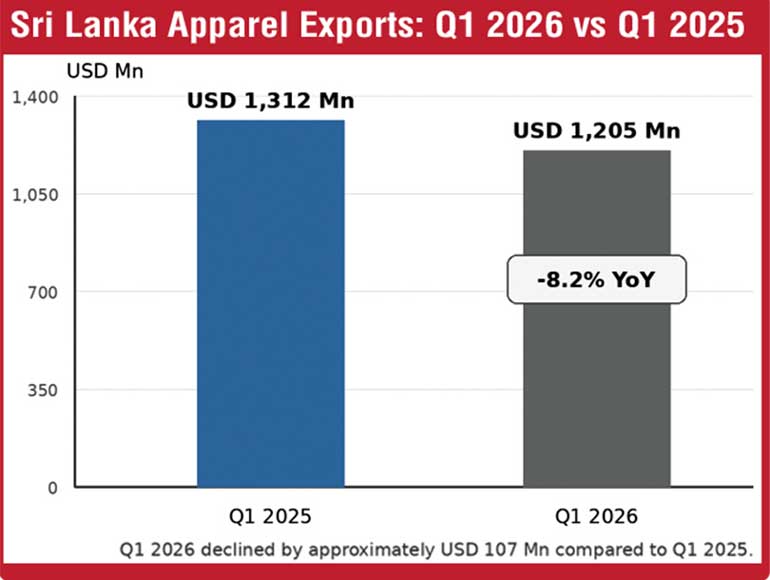
The European Union (EU) remains a strong second market, with Q1 exports down just under 8% manageable given global conditions. The traditional markets of Italy, Germany, the Netherlands, Belgium, and France continue to perform, while Spain’s March growth hints at diversification potential.
The real opportunity lies ahead: securing GSP+ renewal beyond 2027. With clear preparation and engagement, Sri Lanka can build on its current duty-free access and potentially expand its European footprint.
India and UK: Worth building on
India delivered nearly 10% growth in Q1 proving demand exists in accessible markets. The current 8 million piece cap under ISFTA hasn’t changed in 20 years, which means there’s enormous room to grow if that limit is raised through ISFTA revisions or the proposed ETCA agreement.
The UK market is responding positively to recent Developing Countries Trading Scheme improvements. Womenswear and school-wear segments are gaining traction, creating a foundation for broader market recovery.
The action plan
From JAAF’s perspective, Q1 has brought clarity on what needs to be done next. Priorities are clear: accelerate energy reform to ease cost pressures, secure GSP+ to protect and expand access to Europe, engage proactively with the US during the Section 122 window and Section 301 hearings, and move forward on trade access with India to unlock a high-growth market.
These are not long-term ambitions. They are immediate, actionable steps with clear timelines and tangible impact.
Sri Lanka’s apparel sector has navigated difficult cycles before and adapted. The fundamentals remain strong, with a skilled workforce, established buyer relationships, and proximity to key markets. With timely policy support, the industry is positioned not just to manage current pressures, but to strengthen its footing in a more competitive global landscape.