Monday Sep 28, 2026
Monday Sep 28, 2026
Friday, 1 May 2026 08:20 - - {{hitsCtrl.values.hits}}
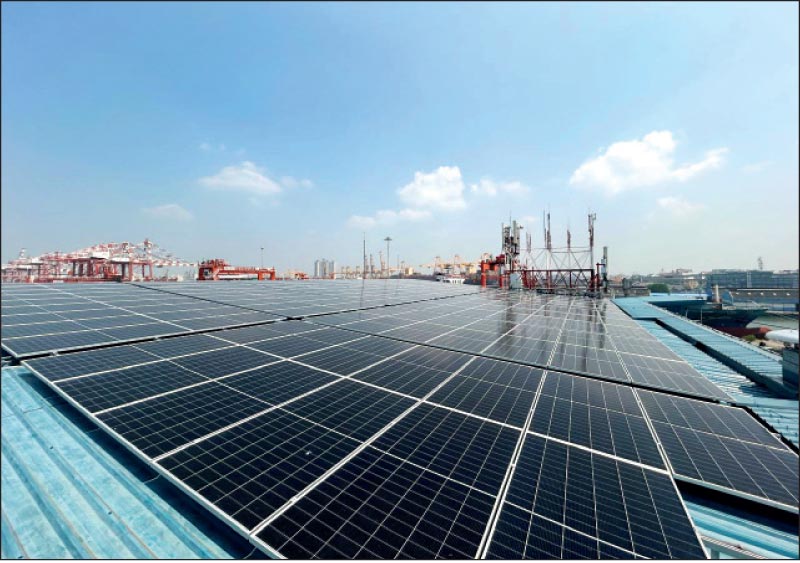
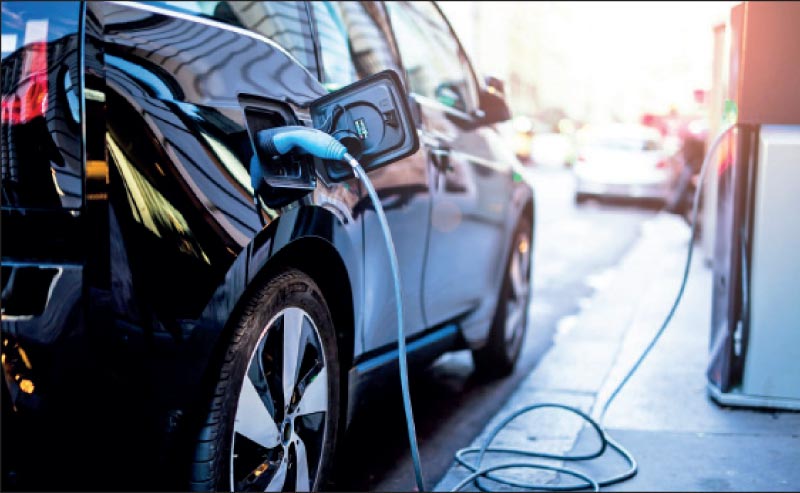
 Policy makers must take necessary steps to provide the right policy framework to encourage micro, small and medium enterprises to obtain solar power for their residents so that they can charge their electric vehicles and use these for their businesses. Current argument by policy makers is the excess solar PV energy during the day. This is a common phenomenon in other countries too, but battery technology has developed and reduced in price making storage of this excess cheap energy usable in the night and adding the benefit of grid stabilisation. However, we continue to complain about the grid instability to accept more renewable energy and discourage rooftop Solar PV
 Nothing in recent human history has dominated the life of a human being more than the motor car. Be it war, peace, exploration, or any kind of humanitarian activity, they have always increased in efficiency due to the motor car and of course its internal combustion engine. Even though the motorcar was developed into a luxurious car in European countries, including Germany and England, it was not until Henry Ford came up with this Model T, “a car for the great multitude” that the motorcar became really popular and became user-friendly so that even housewives could operate it. Henry Ford’s industrial ideology and his brilliant articulation of his thinking and of course the delivery of the most affordable car revolutionised the car industry.
In the lead up to WWII many automotive industries were looking at different options for fuel as well as engine types. Many electric vehicles were successfully developed and used at that time. However, after WWII car manufacturing restarted almost exclusively with petrochemical engines. Post WWII wealth also reversed what Henry Ford did by creating a massive number of models and types of cars, primarily for social separation. The rich and the poor could simply not drive the same car for conveyance. This proliferation of models meant that the motor car was unaffordable to many and for those who could afford, would distinguish themselves by selecting an unbelievable number of customisation options. Today, Toyota, as the world’s largest vehicle manufacturer, leads the way.
At the dawn of the millennium we see the entry and exit of the brown sahib of automotive manufacturing. Tata Motors went on a buying spree of English motor brands and thought it would be able to resurrect these brands and recapture market share. Included in these ambitious moves was the development of the Tata Nano. Indeed a fantastic concept similar to what Henry Ford did in the early 20th century. Tata planned to develop a motor car affordable to the masses of the Indian population, an internal combustion car for rupees 300,000. Needless to say it was a failure. A strategic failure coined by the phrase “trying to hit a Home Run a second time” or “no man steps in the same river twice”
It is probably 100 years since the first wave of electric cars and battery-powered cars were squashed by the petrochemical industry to maintain the demand for their product (oil) and their increase in profit. As a small middle income country, Sri Lanka has an opportunity to take a “second bite at the cherry” of electric vehicles to partially free itself from the dependency on petrochemicals and thereby the need for dollars. Along with the support of environmentalists the electric car manufacturers have now been able to put out hybrid vehicles and pure electric vehicles in the last twenty years. As the cost of production of these electric vehicles comes down, these manufacturers have also taken to including most options as standard options in vehicles so as to not have a big difference between models. So the super luxury model options in European and American cars models, are a standard function and feature found in a base model of one of these new electric vehicles shattering the social hierarchy associated with these vehicles, a true commoditised mode of personal transport affordable to all. Leading this charge is the world’s largest electric vehicle manufacturer from China; Build Your Dreams (BYD).
Right policy framework
Policy makers must take necessary steps to provide the right policy framework to encourage micro, small and medium enterprises to obtain solar power for their residents so that they can charge their electric vehicles and use these for their businesses. Current argument by policy makers is the excess solar PV energy during the day. This is a common phenomenon in other countries too, but battery technology has developed and reduced in price making storage of this excess cheap energy usable in the night and adding the benefit of grid stabilisation. However, we continue to complain about the grid instability to accept more renewable energy and discourage rooftop Solar PV.
What policymakers must take from this is that there are a whole heap of micro, small, and medium entrepreneurs who rely heavily on transport for their enterprise. Being able to use a conveyance which is almost free would help them compete in the bigger markets. All other economies are either getting on this bandwagon or already in it. Identifying these types of electric vehicles and minimising the taxes on them so that the cost of acquisition crashes and providing an advantage to our micro, small, and medium enterprise must be looked at in parallel. Additionally, the current customs duty structure can be adjusted for electric vehicles, promoting the transition to electric vehicles reducing the demand and dependency on imported fuel, reducing the outflow of dollars from the state. Mandating Time-Of-Day usage of electricity through smart meters and reducing the cost of electricity for these consumers during mid-day would further encourage the use of electric vehicles and also charging them during the daytime would partially address the issue of excess energy during the day time. This is the opportunity and this is the time to make the policy changes immediately. Waiting for another opportunity would probably mean catastrophe for our micro and small enterprise entrepreneurs.
Given the track record of Sri Lankan policymakers, this project is probably never going to get done in time for the micro, small and medium enterprises to make any kind of advantage. As such micro, small and medium enterprises should look at having a complete off grid option for their requirements. This will make them a lot more competitive in the market while keeping costs down. This will also reduce the demand for any fuel the business may need.
Competitive energy mix
As a small economy, Sri Lanka is well poised to do this and completely change our competitive energy mix and our competitiveness when it comes to our exports. Those micro, small and medium entrepreneurs who are able to use this opportunity, who have enough cash generated within their business to take advantage of this opportunity, must quickly get on to this to ensure that their long-term sustainability is achieved. Another opportunity such as this at a national scale will probably never be encountered in the near future.
(The author is the author of the book "How Small Countries Can Compete and Grow - A Case for Sri Lanka". He is the founder of Think Tank Lanka Ltd. – a Strategy think tank and R & R Associates Consulting, a sector-independent Strategy Consulting practice)




