Wednesday Aug 19, 2026
Wednesday Aug 19, 2026
Wednesday, 19 August 2026 03:52 - - {{hitsCtrl.values.hits}}
 India demonstrates that biometric systems can significantly boost attendance, provided a robust IT infrastructure supports them. Malaysia illustrates both the advantages and the dangers of discouraging professionals. New Zealand offers an alternative: transparency and trust instead of biometric surveillance. If Sri Lanka adopts this, it will improve accountability without fostering distrust and will build public trust by showing that accountability is essential
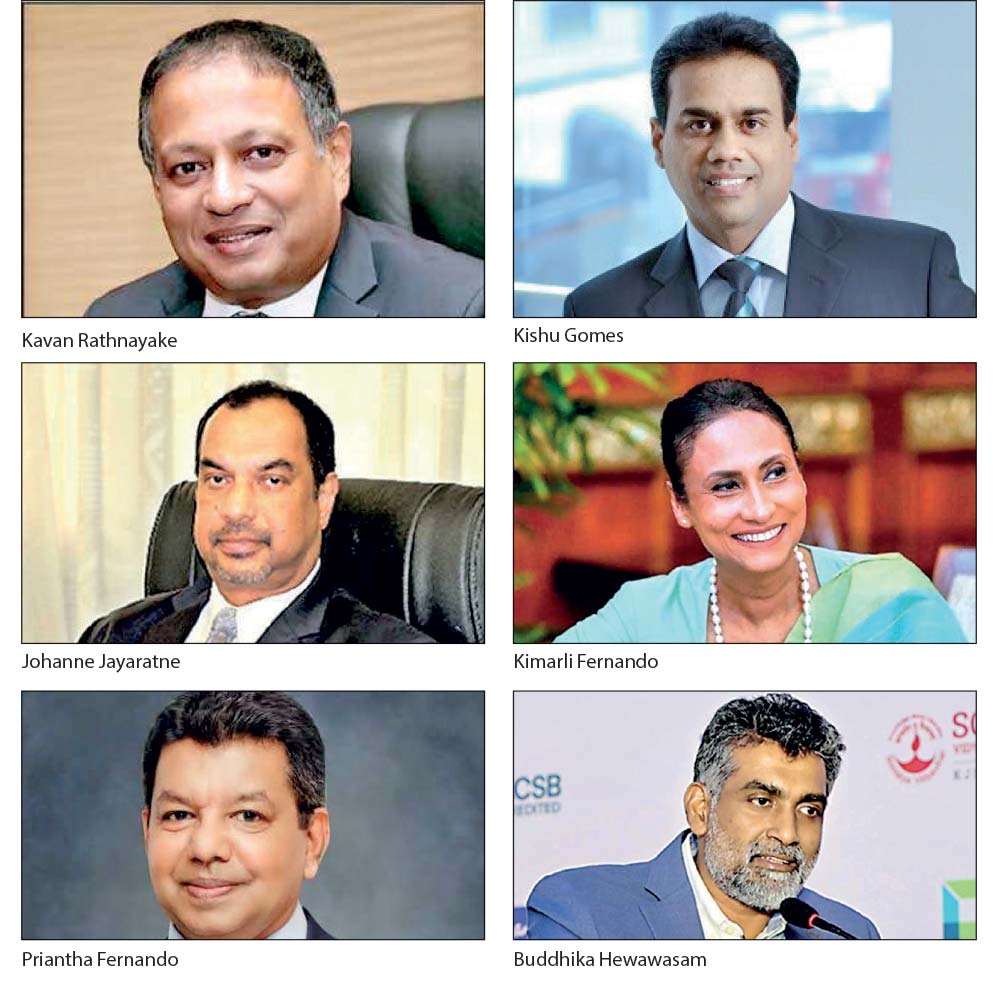
 Kavan Rathnayake (2018), Kishu Gomes (2019), Johanne Jayaratne (2019), Kimarli Fernando (2019-2022), Priantha Fernando (2022-2024) and now Buddhika Hewawasam (2024-2026).
For someone outside the tourism industry, this may look like another appointment for the post of Chairperson at Sri Lanka Tourism Development Authority (SLTDA) but for those who have followed the sector closely, it is part of a familiar pattern.
This is not an argument against one Government, minister or chairperson. Governments have the right to change direction and institutions should evolve.
The real question is not why leadership keeps changing, but why continuity has become so difficult to sustain.
Tourism is long-term, political leadership is not
Hotels take years to plan, finance and build. Airlines make route decisions based on long-term commercial potential. Investors need regulatory certainty. International tour operators establish programs over multiple seasons. Destination reputation takes even longer to build.
Politics on the other hand, operates on a different clock. A change of Government can reshape ministerial priorities, institutional leadership and ultimately, strategic direction.
There is nothing wrong with reviewing strategy. The problem begins when review becomes reset. An industry cannot build long-term value if every political transition requires it to relearn its direction over and over again.
The State governs tourism but the private sector drives it
Hotels, restaurants, travel companies, guides, drivers, guesthouses, attractions, tour operators and suppliers are overwhelmingly private-sector businesses. Government’s role is primarily regulation, planning, facilitation, coordination and infrastructure, while the private sector drives much of the commercial activity.
The scale is significant. Sri Lanka Tourism Development Authority data recorded 429,641 direct and indirect tourism jobs in 2023, including 204,591 direct jobs.
That is a large economic ecosystem and institutional continuity is therefore an economic necessity, not simply an administrative preference.
What happens to institutional knowledge?
Some of tourism’s most valuable assets are not documents but the people who understand why decisions were made, which markets responded, which initiatives failed, which were abandoned too early and which problems have already been solved.
Every leadership change can leave an organisation with a dangerous choice: preserve what it has learned or start again. Decisions can lose their rationale, programmes can lose momentum, lessons can be forgotten and problems that were already addressed can resurface.
Fresh leadership should indeed challenge assumptions and bring new ideas. But progress depends on knowing what came before. When institutional knowledge is sidelined, an organisation loses far more than key personnel - it loses the collective memory that prevents repeated mistakes.
Why do we keep reinventing the wheel simply because someone else built it, instead of asking how we can make it better?
Fixing the Tourism Act for years
The same problem becomes apparent in another long-running issue: the Tourism Act of Sri Lanka.
In 2005, it created the current institutional structure, including separate bodies responsible for tourism development, promotion and education. Whether those functions should remain separate or be brought together has remained a recurring point of debate.
At different points, governments have argued that the structure should be consolidated to reduce duplication, improve coordination and make better use of public resources. Others have argued for maintaining separate institutions with distinct mandates and greater
specialisation.
Both positions have merit. The problem is that we have spent years debating the structure without reaching a durable answer.
There have been policy proposals, consultations, cabinet decisions and draft legislation. Yet the fundamental question remains: what is the most effective institutional structure for managing Sri Lanka’s tourism industry?
Reforms are complicated, but at some point, a country has to make a decision, implement it, evaluate it and improve it.
How many slogans till we get it right?
The same pattern can be seen in Sri Lanka’s approach to destination branding.
Since the end of the war, we have moved through “Sri Lanka: Small Miracle” in 2009, “Refreshingly Sri Lanka” in 2011, “Wonder of Asia” from 2012, “So Sri Lanka” in 2018, “Sri Lanka Is Open” in 2021 and “You’ll Come Back for More” in 2023.
These were not all destination slogans. Some were campaign messages responding to specific circumstances. But taken together, they reflect a broader problem: we have struggled to maintain a consistent destination identity long enough for it to become associated with Sri Lanka.
Even in 2026, “Refreshingly Sri Lanka” branding can still be encountered in the market, years after its introduction. When old campaigns continue to coexist with newer ones, what exactly is the destination identity we are asking the world to remember?
India launched “Incredible India” in 2002, while Thailand launched “Amazing Thailand” in 1998. Both have evolved their campaigns over the years while retaining a recognisable core identity. The lesson is not that Sri Lanka needs to copy either country.
Destination brands need continuity as much as creativity to build brand equity. It is unfortunate that this inconsistency is not confined to the institutions themselves: it is increasingly reflected in how Sri Lanka presents itself to the world.
When a destination repeatedly changes its message, direction and priorities, the industry ultimately pays the price - through weaker recognition, uncertainty and the loss of momentum built over time.
The real measure of a successful tourism industry is whether it can sustain progress regardless of who occupies the chair. Governments, ministers, chairpersons will change. That is the nature of Government. But Sri Lanka’s tourism industry should not have to start from scratch every time they do
Can strategy survive politics?
This may be the simplest test of whether Sri Lanka has a long-term tourism strategy.
If every administration inherits the sector and redefines its priorities, perhaps what we call a “long-term tourism strategy” is simply a series of shorter strategies shaped by the Government of the day.
Because a strategy is genuinely strategic only if it can survive the people who created it. That brings us to a more fundamental question: is the problem really the people in the chairs?
None of this means the Government should step away from tourism. It cannot and it should not. Tourism requires public policy, infrastructure, regulation, destination management, investment facilitation and coordination.
The question is how that responsibility is exercised. An institution overseeing an industry of this scale requires leadership selected for its ability to manage a complex economic ecosystem.
Industry knowledge, governance experience and above all, integrity should matter. Performance should be measurable and leadership should have enough continuity to implement and assess a strategy before it is replaced.
Singapore offers a useful best-practice example. The Minister appoints the Chairperson of the Singapore Tourism Board, much as in Sri Lanka. The difference is not simply who makes the appointment, but what happens after the appointment is made.
Whether the institution is expected to repeatedly realign with the priorities of the Government or to carry out a coherent, long-term mandate for the sustainability and growth of an important industry.
The next Chairman may be the right person for the job and the person after that may be better still. But if the institution remains vulnerable to the same cycle of political transition, leadership change and strategic reset, the problem is bigger than the person in the chair.
So where does this leave us?
Sri Lanka’s tourism industry has already demonstrated extraordinary resilience. It has survived the end of the war, political crises, terrorist attacks, pandemics, economic crisis and the collapse of international travel.
Businesses adapted, reopened and returned to international markets. What the industry cannot do indefinitely is keep rebuilding its institutional foundations at the same time.
Government cannot eliminate every uncertainty faced by the industry. Nor should it. But it can provide something individual businesses cannot create on their own: institutional continuity.
We often hear the promise of system change from successive governments. But there is a question we rarely ask: what happens when the system responsible for driving change is itself unable to sustain change?
We have accumulated years of experience, institutional knowledge, strategies and hard-earned lessons. The challenge is no longer generating more ideas. It is learning to retain, build on and improve what we already know. Experience only creates value when institutions learn from it.
Visitor numbers, awards and positive headlines matter. But they are ultimately the outcomes of something deeper: stable institutions, functioning systems, strategic continuity and industry confidence. Get the foundations right and the numbers will follow.
The real measure of a successful tourism industry is whether it can sustain progress regardless of who occupies the chair. Governments, ministers, chairpersons will change. That is the nature of Government. But Sri Lanka’s tourism industry should not have to start from scratch every time they do.
(The author is a strategic communications professional who worked with the Sri Lanka Tourism Development Authority (SLTDA) from 2018–2021)



