Friday Feb 20, 2026
Friday Feb 20, 2026
Friday, 5 December 2025 05:12 - - {{hitsCtrl.values.hits}}
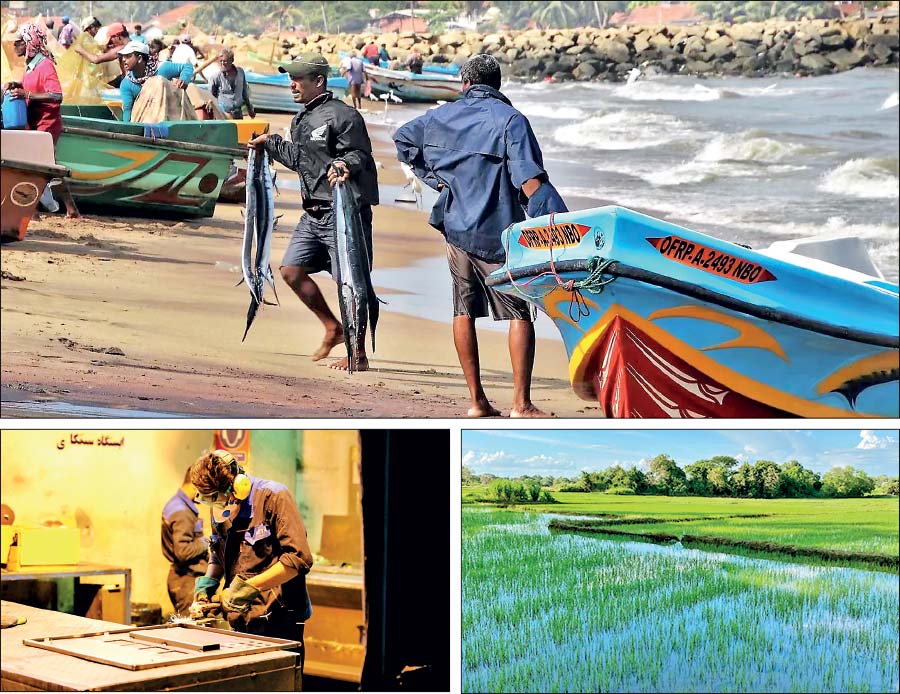
This Digital Platform will enable all financial institutions to register their charges created on moveable assets in addition to inventory, crops and intellectual property assets which are traditionally excluded from collateral-based lending
 There appears to be some misconception as there is an impression among a section of the general public that banks are not accepting movable assets as collateral.I could state with responsibility, Banks, have been accepting movable assets as securities and continue to do so in securing their exposures in the absence of the STR. Facilities amounting to billions of rupees are currently secured against moveables. The classification of movables are defined as any asset which could be physically moved from location to location, hence needless to state it is a major risk for the financier. This also includes certain types of machinery which are easily removables
 The long awaited Secured Transactions Registry (STR) has been finally launched due to the initiative and follow-up of the CRIB in ensuring the relative amendments are in place and accordingly the Secured Transaction Registry under the Secured Transaction Act No:17 of 2024 will be administered by the newly established Secured Transactions Registration Authority.(STRA).
I had the privilege of attending the launch which was officially inaugurated by the Central Bank of Sri Lanka Governor. This Digital Platform will enable all financial institutions to register their charges created on moveable assets in addition to inventory, crops and intellectual property assets which are traditionally excluded from collateral based lending. This will result in easy accessibility of credit to the Micro, Small and Medium Enterprises (MSME) sector. The launch of the STR Registry will be a major boost for the MSME Sector in gaining access in seeking financial assistance from the Financial Institutions.
At this opportune moment I am prompted in giving an insight and sharing some of my thoughts and expertise for the information of all stakeholders towards assisting the MSME inclusive of many ‘start-ups’ in availing facilities from Banks and Financial Institutions. The Secured Transactions Registry will be a major risk mitigating mechanism for the Financial Institutions, entrusted with the responsibility of assisting the MSME Sector. The accessibility of microfinance by the MSME sector is generally considered difficult due to their inability to provide acceptable collateral which compels them to seek the assistance of money lenders.
Movable collateral
There have been several news items in the media with regard to the acceptance of movable assets as collateral by banks to secure credit facilities with the implementation of the (STR), which will compel the banks to accept movables.
There appears to be some misconception as there is an impression among a section of the general public that banks are not accepting movable assets as collateral. As a personality with substantial exposure in this area of banking especially the Management and Operation of collateral, I could state with responsibility, Banks, have been accepting movable assets as securities and continue to do so in securing their exposures in the absence of the STR. Facilities amounting to billions of rupees are currently secured against moveables. The classification of movables are defined as any asset which could be physically moved from location to location, hence needless to state it is a major risk for the financier. This also includes certain types of machinery which are easily removables.
In reality the first option of the Banks is to secure their exposure against immovable assets and if a prospective borrower is not in a position to offer immovable property as collateral then they do consider the second option which is the movable property.
This is due to various important factors, since immovable property offered as security provides a variety of comforts to the banks and strengthens its security i.e., easy to monitor, appreciation of value, easy to realise the advance in case of any eventuality.
In addition there is an underlying factor based on our experience, facilities secured against immovable assets results in a compelling motivation on the part of the borrowers to meet their commitment; they will explore all financial avenues available at their disposal to regain possession of their valuable asset by ensuring their commitments are met. The default rate of facilities secured against immovables are low in comparison to movables.
Risks on movable assets
On the contrary, if a facility is secured against movable assets, banks do take a major risk. This will compel the banks to have an effective monitoring mechanism until the full recovery of the facility. This relates to calling for monthly statements of movables mortgaged, carrying out regular inspection at the site to ensure the movables pledged as security at the time of granting facility remains intact at all times until the settlement of the exposure. The management cost in monitoring such movables on post disbursement is high as this process has to be continued until the full recovery of the exposure. In addition the value of such moveables could become Zero overnight. The COVID-19 pandemic, the resultant lockdown followed by the economic crisis faced by the country should be a good lesson for Bankers of the need to be cautious and not to be complacent with the registration of their charges with the STR.
However, the major risk is there is always a possibility of the same movables being mortgaged to multiple financial institutions as it happens now. It is here the role of the STR becomes crucial.
In movable assets, no mechanism is available as a prospective borrower could just give a statement of the movables offered as security by way of an affidavit and the banks after a verification of the ownership, acceptability of its value the mortgage is created. It should be emphasised the existing risk faced by the Banks will continue notwithstanding the implementation of the STR until the Banks take immediate action to register all their existing charges with the STR and ensure all charges are registered as and when a mortgage is executed and confirm to STR of compliance. In the past banks were not in possession to ascertain the status of moveable to ensure whether it is free of any charge or encumbrances as there was no effective mechanism available.
At the launch of the STR, Hatton National Bank PLC MD/CEO Damith Pallewatta stated the reality at the panel discussion held after the launch.
Quote: the reform introduces a different perspective to risk assessment and will gradually shift Banks from property based lending towards models centered on cash flow, inventory and receivables. The registry allows us to view moveable property as a risk mitigation. We can now rely on these assets with most certainty when lending to higher-risk sectors, because we can recover in case of default” Unquote: The aforesaid is the reality which should be understood by all stakeholders.
Immovable property
On an immovable property the Banks do not face such risk as the mortgage is created only on its acceptance and recommendation of the Title and valuation of the property offered as collateral all of which are done by the respective professionals from the Bank’s panel. This procedure effectively prevents the creation of more than one charge and minimises the risk to a very great extent. There is no way a prospective borrower could duplicate the charge and create more than one mortgage without the concurrence of the primary mortgagee.
Motor vehicles as collateral
In motor vehicles which too are movable, the charge is registered with the Registrar of Motor Vehicles. This effectively prevents the borrower from disposing of the vehicle; the charge created at the Registrar of Motor Vehicles needless to state strengthens the bank’s position. The only risk is the vehicles being reported missing or lost. This is a remote possibility and it is mitigated by the insistence of a comprehensive insurance policy assigned to the financial Institution.
This effectively prevents the borrower from disposing of the vehicle; the charge created at the Registrar of Motor Vehicles needless to state strengthens the bank’s position. The only risk is the vehicles being reported missing or lost. This is a remote possibility and it is mitigated by the comprehensive Insurance Policy.
Considering the existing risks to which the Banks and Financial Institution are exposed the operation of the Secured Transaction Registry will strengthen the collateral aspects of the Banks and while expanding their existing portfolio could assist the MSME sector in accessing credit facilities without much impediments.
The implementation of the STR and its effective operation will result in the expansion of the MSME Sector, will boost the export market and economy, while generating employment to many
STR and the responsibility of Financial Institutions
It is now the responsibility of all Banks and Financial Institutions to register all their existing charges with STR, as a matter of priority towards strengthening their
collateral and preventing such assets being mortgaged to
multiple institutions. The Secured Transaction Registry will eliminate a major risk faced by the Financial Institutions and will give greater comfort to them. Once the registration process is fully completed all financial institutions could verify from the on-line Secured Transaction Registry of the status of the movables to ensure such assets are free of any charges or encumbrances and the STR will become a dependable instrument.
Impediments faced by the MSME sector
Microfinance mainly targets the poor and vulnerable for self-employment projects in generating income and taking care of themselves which has proven to be successful in many countries in eliminating poverty.
The high cost of living has affected everyone and diminished their purchasing power and will compel people, mainly low-income households to venture into alternate avenues towards enhancing their income and this is the time hidden talents will come out. Providing credit facilities under Micro Finance to the poor and underprivileged could be considered as a powerful tool in alleviating poverty and improving the lifestyle of the aforesaid category apart from the economic benefits the country could derive.
The major risk is there is always a possibility of the same movables being mortgaged to multiple financial institutions as it happens now. It is here the role of the STR becomes crucial
Simple example towards assisting the self-employed
Let me take a simple example which I have stated in one of my articles in assisting the MSME sector. Priya and Sriya,(not their real names), are two sisters without any opportunity to enhance their financial avenue. Instead of worrying they have ventured into making beautiful Lamp shades with innovative designs and were able to sell it in the local market as the cost of production was low. The eldest sister Priya is a Degree holder. She used her expertise and was able to successfully market these lampshades “online” overseas which resulted in large orders. This naturally required substantial finance to purchase essential raw materials and additional resources to execute the orders. None of the sisters possess any assets.
Towards meeting the increased demand due to lack of finance, they are tempted to seek the assistance of money lenders towards executing their orders on time. Needless to say such an approach will compel them to borrow at an exorbitant rate of interest which will result in their cost of production going high resulting in the loss of competitiveness. This is the predicament faced by many MSMEs as there is some trepidation on their part to approach the Banks and other financial institutions due to their inability to offer acceptable collateral.
The aforementioned case is the reality faced by many of the individuals under the MSME Sector. There are many such individuals with very valuable possession of innovative ideas. Due to their inability to offer any acceptable collateral, they are not in a position to compete due to the high cost of production. This is the reality. Banks could now assist such ventures by registering the charge over their raw materials etc., with the STR which will eliminate a major risk faced by all Financial Institutions.
Assisting the local entrepreneur
The decision taken by the Government to prohibit the importation of certain non-essential items which are and could be manufactured locally is a good and timely move which will boost the local economy. There is no necessity to import such items if locally produced items of similar quality are available in the country. One has to visit a Supermarket or a departmental store to observe the vast amount of imported consumer durables available at much higher prices than the local products. The affluent category still prefers and desires to purchase such items due to their strong purchasing power.
During my own Banking career, I have witnessed many successful MSME ventures, where the Banks have granted facilities on strict monitoring and supervision guidelines. Many such entrepreneurs have today become household names with strong Brands and earn valuable foreign exchange to the country. Some of them have even expanded their business operations to several neighboring countries. Sri Lanka is reputed to have produced several leading Global and local entrepreneurs with strong brands. They have created greater value to their products due to the acceptability of their products and services, thanks to the assistance rendered by Banks and Financial Institutions.
There is a misconception among some, that once a personality reflects in CRIB due to delayed payments they are unable to get credit facilities from Banks. This is not the reality. It is the responsibility of the Banks to consider such requests provided they are satisfied with the ability of the borrower and the viability of the projects notwithstanding their reflection in CRIB
Credit Information Bureau (CRIB)
The Credit Information Bureau(CRIB) maintains the data of all facilities granted by the Banks and financial institutions. It has been reported that CRIB manages close to 10 million facilities of 6.7 million individuals on a monthly basis. This does not deter the Banks from entertaining any facilities if a prospective borrower reflects in CRIB as a defaulter unable to meet their commitments on time. This is a very valuable tool for the Banker to ascertain the integrity of the prospective borrowers.
There is a misconception among some, that once a personality reflects in CRIB due to delayed payments they are unable to get credit facilities from Banks. This is not the reality. It is the responsibility of the Banks to consider such requests provided they are satisfied with the ability of the borrower and the viability of the projects notwithstanding their reflection in CRIB. Reflection in CRIB is only a cautionary note. It should be emphasised that the decision to grant or reject a facility is the responsibility of the Banks and all Financial Institutions and it is a responsibility solely vested with them.
It has been revealed many other important services are due to be brought into CRIB, and it will be an important tool in identifying the prospective borrowers’ creditworthiness, even though they may have not had any prior banking relationships. This will also target the sectors under MSME since all of them would have availed telecommunication and utility services which is a priority under today’s context.
The 2026 Budget presented by the current Government makes the MSME Sector as the major component of economic revival with easy access to finance for all stakeholders engaged in the MSME. The National Credit Guarantee Institution will be a major boost for the SME sector. Similar Credit Guarantee scheme was in operation many years ago which mitigated possible risks faced by the Banks in assisting this sector.
The implementation of the STR and its effective operation will result in the expansion of the MSME Sector, will boost the export market and economy, while generating employment to many. The initiative taken by the CRIB in taking effective steps in expediting the implementation of the Secured Transaction Registry needs to be commended. Even though this Act became law in 2009 the regulators could not proceed due to certain impediments all of which have now been rectified with the Amendment to the original Act.
All Banks and Financial Institutions have now a major responsibility in registering all charges created against moveable with the Secured Transactions Registry, in addition to the registration of all existing charges, in making the STR fully operational towards assisting the MSME sector.
(The writer is the Author of “Pinnacle of Five Decades of Banking - A Journey Beyond” and “Lending Against Collateral – What you should know .“He is a member of the Resource Panel of the Centre for Banking Studies, Central Bank of Sri Lanka)




