Monday Sep 28, 2026
Monday Sep 28, 2026
Saturday, 8 August 2026 00:26 - - {{hitsCtrl.values.hits}}
“History is not the past. It is the present. We carry our history with us. We are our history”
- James Baldwin
(American civil rights
activist and essayist)
|
Robert Knox
|
It is nearly 80 years since independence, a period long enough to discern the nation building capabilities of a people, as well as their inherent ways and philosophies.
Decidedly, the show has not brought down the house. Many neighbouring countries, starting with a much lower base, have marched ahead. There is a gaping mismatch between the hype and our actual performance, big talk but small deeds.
As a nation we are inclined to turn to history for validation. The popular choice is not objective history or well corroborated research, but legends, mainly oral traditions and romanticised sagas. To please our senses the story should end happily; the heroic race triumphed in war, the handsome prince won the hand of the beautiful maiden, governance was wise and just, there was amazing technology, there was plentitude, peace reigned. Myth over fact, embellishment over reality, a preference that points to a certain temperament and an outlook.
Useful guide to 17th Century Ceylon
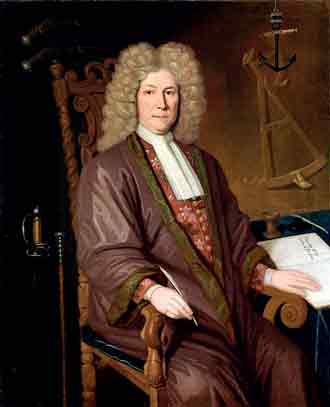
Robert Knox’s “An Historical Relation of Ceylon” is undeniably a valuable guide to 17th Century Ceylon. This is of course no mere tale. Knox lived as a captive of Rajasinghe II, King of Kandy, in the doomed Kingdom for 20 years. An Indiana Jones of a sort, only that there was no escape from the agonies for two long decades.
 While this kingdom slumbered, the world had moved forward. Isolated and insular, the hapless subjects of the Kandyan kingdom were enacting scenes that had gone on for centuries; living instinctively, performing their daily functions habitually; a people distinguished only by their poverty and ignorance. Upon his eventual escape Knox wrote the famous book, published in 1681, the first English book on Ceylon. Unlike many other “histories”, a contemporaneous record.
Son of a sailor (his father Robert Knox Snr, a Captain of a commercial ship) Robert Knox was no scholar. Having studied at a London school, he found the call of the sea irresistible, at the age of 14 joining his father on ship. Yet, his account of the strange and foreign land he was interned in; its people, geography, culture, flora and the fauna is more than competent, carries unity, realistic and credible.
Here, we are drawn unavoidably to contrast with the local culture; would the then social order have permitted a native to put on record his observations of the scene before him in that objective manner? True, we had no printing, and we do not know the level of literacy then prevailing, either in spread or depth, yet it is worth speculating whether the system allowed for such examination.
The issue here appears more complex than the mere lack of literacy or freedom. In modern times, more than a million Sri Lankans have chosen to move overseas, UK, USA, Australia, Canada, Middle East, Japan, Africa being desired destinations. Some of these recent immigrants are well educated. Yet there is hardly any writing by them of their adopted country; the lay of the land, its social standards, governance, the ways of its people. The immigrants’ interests are mundane, inward, eyes that only see what they want to see.
Robert Knox Snr had brought his ship to Trincomalee to repair damage caused by a storm while at sea. He was not trading with Ceylon, nor was his country at war with Ceylon. He and a group of sailors, including his son, were inveigled ashore by native officials, taken prisoner and marched to Kandy.
The prisoners were dispersed among various villages. The captain and his son were somewhat favoured in custody; meals were brought to them twice a day while the others had to go to village houses for the meagre food that the villagers could afford to share.
“The country being hot and their houses dark and dirty, my father chose an open house, with no walls. They placed a bedstead only with a mat upon it for him, which in their account is an extraordinary lodging, and for me a mat upon the ground”
Captain Robert Knox Snr soon caught the “fever”, perhaps malaria.
Dispirited and sick, Captain Robert Knox died a broken man before long. His son Robert Knox asked the villagers for help to bury his father. To his horror they sent him- “a rope to drag him by the neck to the woods. They could afford me no other help, unless I would pay for it.” Eventually, Knox with the help of the “black boy” (a South Indian boy who had joined the ship as a cabin boy) managed to dig a grave in the woods to bury his father.
Robert Knox was a keen observer of the land, the people and their ways.
He noted the extremely Spartan existence of the average subject in the Kingdom. “Their dyet and ordinary fare, is but very mean, as to our account. If they have but rice and salt in their house they reckon they want for nothing. For with a few green leaves and the juice of a lemon with pepper and salt they will make a hearty meal”. And their dwelling places “their houses are small, low, thatched cottages built with stick, daubed with clay…” As to the furniture, their furniture is but small. A few earthen pots, a stool or two without backs. For none but the King may sit upon a stool with a back”.
“For the Chingulays are naturally, a people given to sloth and laziness; if they can but any ways live, they abhor to work; only what their necessities force them to, they do, that is to get food and raiment. Yet in this I must little vindicate them. For what indeed should they do with more food and raiment, seeing as their estates encrease, so do their taxes also?”
“In their wars there is but little valour used, although they do accomplish many notable exploits. For all they do is by crafty stratagems.”
“These people are very ambitious of their titles, having but little else they can boast in; and of names and titles of respect they have great plenty in their language.”
“The better sort of women, as gentlewomen or ladies, have no other pastime, but to sit and chew betel, swallowing the spittle and spitting out the rest.”
“They are especially careful in their marriages, not to match with any inferior caste. Riches cannot prevail with them in the least to marry those they must eclipse and stain the honour of their family.”
“Their learning is but small. All they ordinarily learn is to read and write. But it is no shame to a man if he can do neither. Nor have they any schools wherein they might be taught.”
“They have no clocks, hour glasses or sun dials but keep their time by guess” No surprise that even today punctuality is not respected in this country!
“Here are no laws, but the will of the King, and whatsoever proceeds out of his mouth is an immutable law.”
“The king they call by a name that signifies somewhat higher than a man, and next to god.”
A description of the then people that throws light on today’s Sri Lankan politics- “They are crafty and treacherous, not to be trusted upon any protestations; for their manner of speaking is very smooth and courteous, insomuch that they who are unacquainted with their dispositions and manners may easily be deceived by them. For they make no account for conscience of lying, neither is it any shame or disgrace to them if they are catched in telling lyes; it is so customary.”
I came across the most spoken of Knox quotation, an observation that an ordinary farmer in the country is fit for kingship when the mud from the field is washed off him, long before I found the Knox book. Looked at from the familiar aspect of our post-independence leadership, I thought that this was tongue-in-cheek on the part of Knox. If they were anything like our present-day leaders, our kings were of peasant mentality, with only the mud washed off them!
Compared with the standards of his country, our King and his court were functionally illiterate. Europe was astir, this was the century of Issac Newton, Galilei and Descartes. Even Robert Knox who had joined ship at the young age of 14, had seen much (Africa, East Asia, India), had a broader view of the world, and possessed eyes more discerning than anyone he encountered here. His book, intelligent and sympathetic, was very successful, translated into several European languages
That so-called compliment was not an observation of Knox. It was a claim of a segment of the natives, with self-interest in the sustaining of a delusion.
The actual text from Knox's manuscript reads:
"...it is a usual saying among them, that if they want a king, they may take any man, of either of these two counties [Udunuwara and Yatinuwara, around Kandy] from the plough, and wash the dirt off him, and he by reason of his quality is fit to be a king.”
This is the same as a member of a leading political family of today asserting that if the various shenanigans committed by them can be ignored, they could yet be considered good leaders.
A failed political culture peddling a myth.