Wednesday May 06, 2026
Wednesday May 06, 2026
Tuesday, 6 January 2026 00:24 - - {{hitsCtrl.values.hits}}
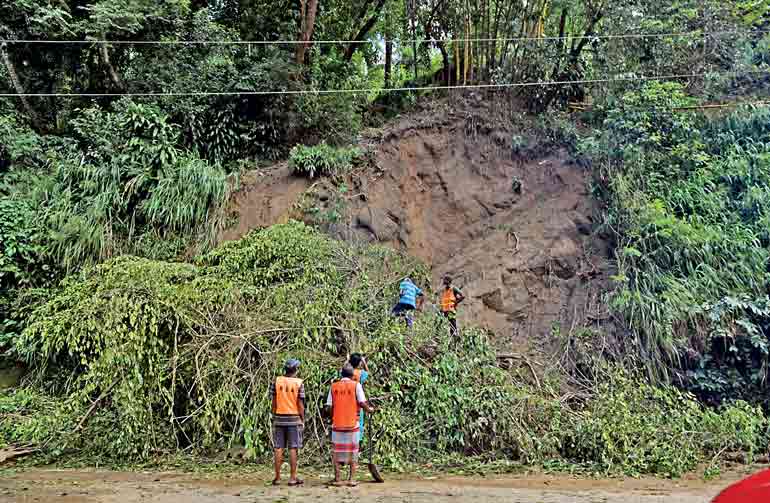
 DITWAH has come and gone. Its unprecedented loss and damage are still felt across Sri Lanka. Precious lives lost, homes destroyed, livelihoods wiped out, crops and animals ruined and vital infrastructure damaged. The cost incurred due to displaced families, and lives disrupted is immense. Beyond the immediate impacts, the cyclone has revealed the fragility of our natural systems and the high vulnerability of our society to extreme weather events. The loss is not just material, it is deeply human. The grief, fear, and uncertainty left behind are endless.
Preliminary damage assessments are now coming in from credible sources, including the World Bank (WB), Food and Agriculture Organisation of the United Nations (FAO), International Labour Organisation (ILO), etc. While estimates vary depending on the method, sectors covered, and scale of analysis, the numbers paint a stark picture. The WB estimates the immediate damage at roughly 4% of Sri Lanka’s GDP ($ 4.1 billion). This rapid assessment does not include the full cost of recovery, as the income losses, business interruptions and reconstruction were not accounted for. Meanwhile, the ILO has analysed the combined flood- and landslide-affected zones using night-time satellite imagery to better identify directly impacted areas. Their estimate suggests that the potential economic loss could reach $ 16 billion, reflecting the full scale of the impact of the disaster on livelihoods and infrastructure.
Prior to the Ditwah cyclone, the Central Bank of Sri Lanka revealed an impressive fiscal discipline of the country during the first 11 months of 2025. The Budget deficit contracted by 73% year-on-year and the primary surplus increased by 109%. However, in response to the disaster, the Government was compelled to approve a Rs 500 billion supplementary estimate to re-organise the 2026 Budget. With this, the Budget deficit will widen to 6.5% of GDP from the original 5.1% and primary surplus will reduce to 1% of GDP from the original 2.5%.
The cost of destruction to ecosystems, which are fragile, biologically rich, and home to many unique species, remains unknown. This disaster underscored the importance of investing in climate resilience, protecting natural capital, and planning ahead for disasters
All of the above clearly highlights the immediate economic impact of Cyclone Ditwah. However, so far, the cost of destruction to ecosystems, which are fragile, biologically rich, and home to many unique species remains unknown. The floods and landslides due to the cyclone have submerged or buried countless trees, plants and animals, in addition to the loss of human lives and property. These living systems are our natural assets, or “natural capital,” which provide essential services like water regulation, soil protection, and biodiversity support. Their destruction is not just an environmental concern, but a full-scale environmental catastrophe, with long-term consequences for both nature and human well-being.
While this disaster made a stark reminder that climate risks are real, and climate action is urgent and costly, it underscored the importance of investing in climate resilience, protecting natural capital, and planning ahead for disasters. Every flood prevented, every wetland preserved, every forest restored can save lives, reduce economic losses, and help communities bounce back faster.
The natural capital
Natural capital includes forests, rivers, land, oceans, wildlife, and the benefits they provide to people and the sustenance of the system. The natural capital supports our daily lives and the economy by providing food, clean water, protection from floods, and resilience to climate impacts, especially in countries like Sri Lanka that are vulnerable to natural disasters. However, these benefits are often not counted when governments measure economic growth. When nature is ignored in decision-making, it leads to environmental damage, greater risks from disasters, and higher costs in the long run. Keeping track of our natural resources is not just about protecting the environment, it is essential for a stable economy, reducing disaster risks, and ensuring long-term safety and well-being.
Upper watersheds in Sri Lanka
The upper watersheds in the Central Highlands of Sri Lanka refers to the highland areas located above 500 meters in elevation. This region includes mountain ranges such as the Knuckles, Horton Plains, and Peak Wilderness. Although this area covers only about 13.6% of the country’s land, about 77% of the rainfall the country receives falls in this upper watershed area. These watersheds regulate water flow, support agriculture, generate hydropower, and provide drinking water to millions of people downstream. This water flows down through 23 major rivers including the Mahaweli, Kelani, Kalu, and Walawe, and supplies water to communities, farms, and industries across the entire country. Hence, it is rightly known as “Sri Lanka’s Water Tower.”
The natural sponge
Healthy upper watersheds work like natural sponges. Forests, grasslands, and soil soak up rainwater instead of letting it rush away quickly. This helps reduce flooding, soil erosion, and landslides during heavy rains. At the same time, the stored water is slowly released, allowing rivers to keep flowing even during dry seasons. These natural areas also help keep water clean by trapping dirt and harmful substances before they reach rivers and reservoirs. In addition, upper watersheds are home to many plants and animals and help slow climate change by storing carbon from the atmosphere. Cyclone Ditwah exemplified the magnitude of downstream flooding. The impact of such events can be significantly reduced by improving the ecological health of upper watersheds by increasing it’s ‘sponge’ function.
The issue and the need
The upper watersheds are facing growing problems because of deforestation, changes in land use, harmful farming methods, and climate change. When these areas are damaged, there is less water available, the risk of floods and landslides increases, wildlife and plants are lost, and people living downstream face higher costs and hardships. This is why protecting and restoring the upper watersheds in the Central Highlands of Sri Lanka is important. Doing so ensures a steady water supply, reduces disaster risks, and strengthens the country’s ability to cope with future challenges.
The approach
Natural capital accounting (NCA) is a way to keep track of nature, seeing how healthy it is and how much it provides us with benefits, such as clean water, air, and food. Further, it helps us to understand the true worth of natural capital, how they are being used, and whether they are being degraded or preserved. Such information can be included in making decisions. It is like keeping a detailed financial account, but for nature.
Upper watersheds are home to many plants and animals and help slow climate change by storing carbon from the atmosphere. The upper watersheds are facing growing problems because of deforestation, changes in land use, harmful farming methods, and climate change
One of the main goals of NCA is to connect the health of ecosystems with economic and social well-being. The NCA goes further than traditional accounting by showing that when natural resources decline, the cost can be huge, not just environmentally, but economically and socially. For instance, degraded watersheds can lead to water shortages, crop failures, and higher expenses for disaster relief.
In countries like Sri Lanka, which are vulnerable to floods, cyclones, and droughts, NCA is especially important. By systematically tracking forests, wetlands, rivers, and other ecosystems, the Government can plan for disaster risk reduction, sustainable farming, and long-term economic growth. It helps ensure that natural resources are used wisely and preserved for future generations. In simple terms, natural capital accounting is about keeping track of nature; knowing what we have, what we use, and what we risk losing. It ensures that people, economy, and environment all benefit together, rather than one being sacrificed for short-term gains.
The Ministry of Finance has published the National Climate Finance Strategy (2025-2030), which includes NCA as one instrument in national accounts. Further, the Asian Development Bank (ADB) is currently preparing the Ecological Restoration program for Upper Watersheds of Sri Lanka, which is timely considering the damage caused by extreme rainfall events due to cyclone Ditwah. The Faculty of Agriculture of the University of Peradeniya, in collaboration with ADB and the Stanford University of USA, has also taken initiatives to build capacity by training trainers in Sri Lanka for NCA by using open-source software models such as InVEST (Integrated Valuation of Ecosystem Services and Tradeoffs), with the participation of the Department of External Resources and Department of National Planning of the Ministry of Finance in Sri Lanka.
Natural capital accounting (NCA) is a way to keep track of nature, seeing how healthy it is and how much it provides us with benefits such as clean water, air, and food
For Sri Lanka, natural capital is a strategic national asset. We need to understand the hidden value of nature. Protecting forests, rivers, and wildlife is not just an environmental concern, but an economic and social necessity. By recognising the worth of natural capital, and protecting and restoring ecosystems, political leaders and policy makers should provide smart directives to the society to engage in smarter actions, avoid costly mistakes, and build a more resilient and sustainable future.
(The author is a Senior Professor at the Department of Crop Science, Faculty of Agriculture, University of Peradeniya. He is the President of the Weed Science Society of Sri Lanka (WSSSL) and the Chairman, National Invasive Species Specialist Group (NISSG), Ministry of Environment. He is a Member, National Experts Committee on Climate Change Adaptation (NECCCA), Ministry of Environment and Editor of the Sri Lanka Journal of Food and Agriculture (SLJFA). https://sljfa.sljol.info/ . He can be contacted via emails at [email protected] and [email protected])



