Friday Mar 13, 2026
Friday Mar 13, 2026
Tuesday, 16 December 2025 00:01 - - {{hitsCtrl.values.hits}}
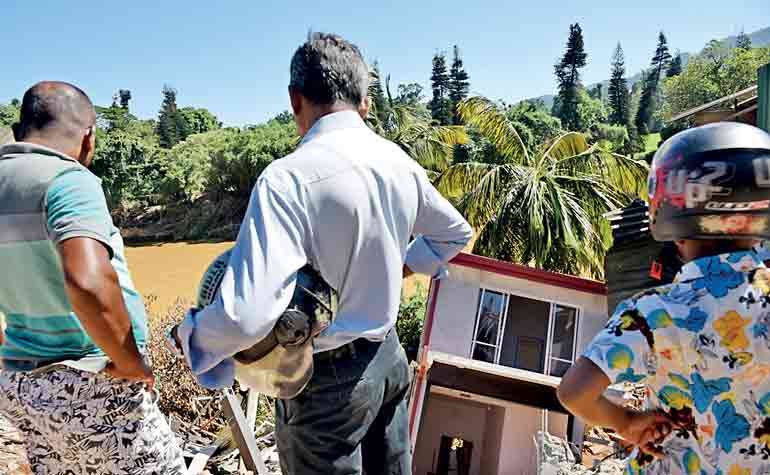
 Sri Lanka›s recent national disaster has disrupted more than daily life. It has shaken the commercial ecosystem that keeps the country moving. Supply chains faltered, customer patterns shifted, and even the most resilient industries felt the tremor. In this fragile landscape, one truth has become unmistakable: business recovery is a human strategy as much as an operational one.
Traditional KPIs no longer capture reality
Around the world, crises have repeatedly rewritten the rules of organisational resilience. After the 1995 Kobe Earthquake, Japanese companies realised that their traditional KPIs (output, expansion, quarterly performance) no longer captured reality. What mattered was restoring people, stabilising workflows, and reengineering structures for a new operating climate. Uber’s response to regional disruptions offers a more modern blueprint to redeploy skills fast, support teams on the ground, and let workforce intelligence guide business continuity.
Sri Lankan organisations now face a similar crossroads. Not all employees were directly affected, but every business was. And that places Human Resources at the centre of the recovery narrative.
More than well-being programmes
The Human Resources mandate is no longer limited to well-being programs. It is about restoring organisational capacity, strengthening continuity systems, and aligning leaders around crisisready metrics. Humancentric KPIs are not “soft measures” but economic stabilisers.
After the 1995 Kobe Earthquake, Japanese companies realised that their traditional KPIs no longer captured reality
Key recovery indicators include:
Operational readiness score: Assessing workforce availability, infrastructure safety, and supply chain flow
Critical skill redeployment ratio: Tracking how effectively talent moves to priority roles
Productivity recovery curve: Monitoring the return to sustainable output, not just speed
Continuity training penetration: Ensuring teams can function under pressure
Wellbeing and risk index: Protecting the human energy that drives performance
Community and market restoration impact: Recognising that economic revival depends on social stability
Human Resources at the centre of the recovery narrative
These KPIs shift the postcrisis question from «when can we get back to target?» to «how strong is our foundation to stay there?»
Sri Lanka›s recovery will be written by organization by organisation. Human Resources leaders now have an opportunity to champion a model that blends business urgency with human intelligence. If we measure what truly matters (resilience, adaptability, trust), our companies will not simply rebuild but will regain their competitive strength with more purpose than before.
Human Resource leaders now have an opportunity to champion a model that blends business urgency with human intelligence
(The author is a HR thought leader. He is also the former Head of HR at HSBC, NTB, NDB and several other leading institutions)




