Saturday Aug 29, 2026
Saturday Aug 29, 2026
Tuesday, 30 December 2025 02:51 - - {{hitsCtrl.values.hits}}
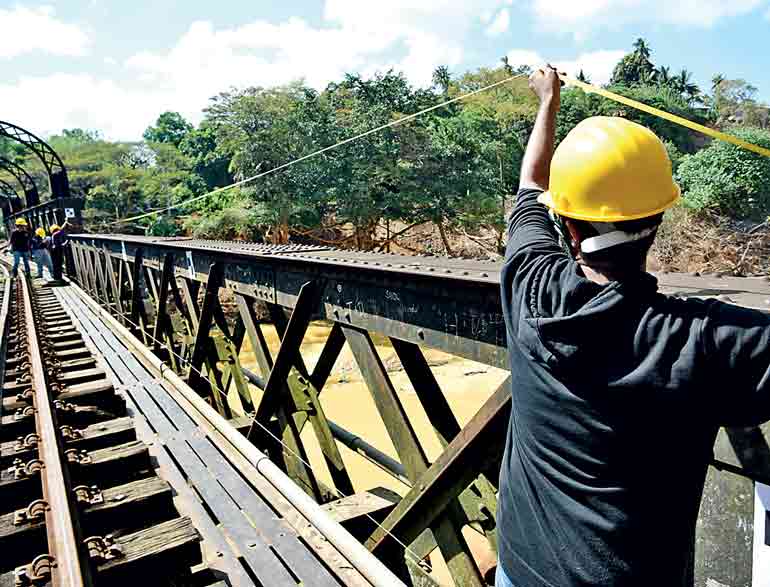
Railway network, mostly built over 150 years ago with limited consideration for environmental hazards, is now increasingly at risk from extreme weather events, cyclones, tsunamis, landslides, and floods. This is not just an infrastructure crisis, but a wake-up call to rethink our approach to railway planning and resilienceIn 2017, the SLSTL and the Institution of Engineers Sri Lanka (IESL) jointly proposed an alternative rail alignment to Kandy. Today, that proposal is more relevant than ever. As expressways now supplement Sri Lanka’s road network, the railway must also evolve towards safer, more resilient, and future-ready routes that are competitive with road transport.Recent landslides at Pahala Kadugannawa underscore the fragility of this stretch. While urgent restoration is needed, long-term planning for an alternative route is equally essential.Globally, countries are linking major cities with modern rail lines operating at 100–160 km/h. Known as Intercity Express (ICE) in Europe and Superfast in India, such services are now the norm. In contrast, the Colombo–Kandy Main Line takes over 2.5 hours, with serious capacity constraints between Rambukkana and Kadugannawa precisely the area hardest hit by Ditwah.Historically, alternative alignments were studied as early as 1846 by engineer Drane, including the Galagedera, Hingula (Gadessa), and Alagalla traces.In 1857, Capt. Moorsam favoured the Hingula trace. Yet in 1862, a new alignment, the Dekanda trace, was selected for cost reasons, despite its limitations. This is the alignment still in use today.The SLSTL and IESL identified two viable alternatives in 2017, both of which can build on the proposed electrified double-track up to Rambukkana:Galagedera Trace: Rambukkana to Katugastota and Kandy via Galagedera PassPattiagedera Trace: Rambukkana to Kandy via the Yattewera Oya valleyThese alternatives would enable:
- Faster travel times (under 90 minutes to Kandy)
- Electrification extensions from Polgahawela
- Safer alignments with reduced landslide risk
- Expanded access to Kandy and the hill country, supporting tourism
- Double-track capability, allowing up to 50 trains daily (versus the current 20)
- Avoid double tracking the existing railway which will be both environmentally unsound and extremely expensive.
Crucially, Kandy’s urban road network cannot absorb the traffic volume of a new four-lane expressway. A modern rail connection must be central to any sustainable transport solution.In 2017, SLSTL and IESL also concluded that a new railway and two-lane road could be built at lower cost than the proposed Central Expressway. They urged a national policy shift prioritising intercity express rail as the 21st-century model for mobility. Many countries have already embraced this rail-first approach as a smart, sustainable alternative to road-heavy development. The SLSTL now urges the Government to treat this proposal as a strategic infrastructure priority. We call for trace explorations to begin in 2026, laying the groundwork for a modern, disaster-resilient, high-capacity rail corridor to Kandy that would evolve to become a national network.In 2017, the SLSTL and the Institution of Engineers Sri Lanka (IESL) jointly proposed an alternative rail alignment to Kandy. Today, that proposal is more relevant than ever. The SLSTL and IESL identified two viable alternatives in 2017, both of which can build on the proposed electrified double-track up to Rambukkana:
n Galagedera Trace: Rambukkana to Katugastota and Kandy via Galagedera Pass
n Pattiagedera Trace: Rambukkana to Kandy via the Yattewera Oya valley.
These alternatives would enable: Faster travel times (under 90 minutes to Kandy); Electrification extensions from Polgahawela; Safer alignments with reduced landslide risk and Expanded access to Kandy and the hill country, supporting tourism
This is not just about repairing what was lost but about building something better. Let Cyclone Ditwah be the moment we choose to reimagine and rebuild smarter for a safer, faster, and more sustainable Sri Lanka.COMMENTS




