Thursday Oct 22, 2026
Thursday Oct 22, 2026
Tuesday, 7 April 2026 00:00 - - {{hitsCtrl.values.hits}}
 Infrastructure is what we cannot self-supply. By this definition, even credentialing (the true product of the education system) would constitute infrastructure. President CBK thought so and had an advisor dedicated to soft infrastructure. But this article is about hard infrastructure: transportation, energy, water and the like. Explanations of their significance are superfluous. Just thinking back to the 13-hour power cuts in 2022 March that triggered the aragalaya will do it.
If infrastructure is essential, it is the Government’s responsibility to ensure its availability. This does not mean available for free, or at an affordable price. It is important to differentiate between availability and affordability. Sometimes, availability is harmed by fixation on affordability. The two problems must be addressed with different policy instruments.
Supply constraints
Factors mostly outside the control of the Government (the coal procurement excepted) have affected the availability of fuel (for all purposes, but let’s focus on fuel for generating electricity for now).
For the past 57 years, Sri Lanka has operated a State-owned refinery. It is small, obsolete, and does not allow the exploitation of economies of scale. But it produces jet fuel and naphtha for power plants. At a recent press conference, the CPC Chairman revealed that a scheduled 90,000 MT crude oil shipment, expected between 24 and 25 March, had failed to arrive. “We can only operate the refinery until the middle of next month,” he said. No crude oil shipments are scheduled for April. A consignment is planned for June.
When the refinery cannot supply naphtha, power plants must switch to other more expensive fuels. As the Chairman stated, ““We cannot get naphtha. Instead, we have to consume diesel . . . From now on, the lights you get at night will be powered by diesel.” But there are constraints on the supply of diesel as well. Given the shortfall in the output of Norochcholai caused by malpractices and/or ineptitude in procurement and contract management and the non-availability of naphtha, the available options are expensive diesel or load shedding during peak (evening hours). This is where affordability can get in the way of assuring availability.
For the past 57 years, Sri Lanka has operated a State-owned refinery. It is small, obsolete, and does not allow the exploitation of economies of scale. But it produces jet fuel and naphtha for power plants
Electricity produced by burning diesel is costly. But the costs imposed on the economy by load shedding, especially unscheduled and/or lengthy load shedding are greater. A retailer with a freezer full of spoiled food will testify that availability is more important than affordability.
The lack of dollars that led to the 13-hour power cuts in 2022 is not present in 2026. The problem now is the non-availability of crude oil and therefore naphtha, and possible shortfalls in the supply of diesel. Furnace-oil supply is also shaky. A shipment is expected by 14 April, but these days, one cannot be sure until the ship docks.
If diesel runs out, the V8s as well as the battas that transport plucked tea leaves to factories will stop. If both diesel and furnace oil are unavailable, power cuts will be experienced in peak periods.
What can be done immediately?
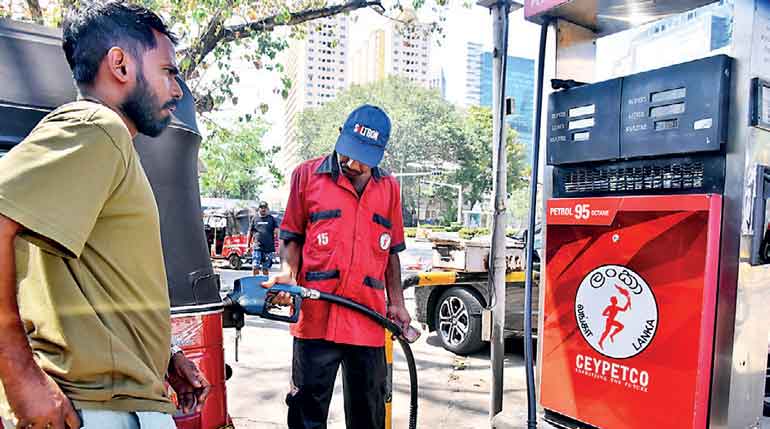
Prepare and publish credible data on stock availability for all fuels, including diesel and furnace oil. Make contingency plans for both diesel and furnace oil. Regarding diesel, the priorities should be goods transport and power generation. Increasing diesel prices even above cost recovery may be justified. Vehicles that require diesel for productive purposes can pass on the costs. The objective is to sharply depress demand for this fuel. Price is better than rationing in this regard. Higher prices will also stanch the flow of fuel to the black market, an inevitable accompaniment of rationing.
Electricity produced by burning diesel is costly. But the costs imposed on the economy by load shedding, especially unscheduled and/or lengthy load shedding are greater
Government (except the police, ambulances, and the like) should cease to use diesel vehicles. The armed forces should be brought within the QR based rationing scheme like everyone else. There is precedent. From this month South Korea is enforcing a five-day vehicle rotation system for the public sector. The Government will strengthen monitoring of the compliance with the license plate-based rationing system, under which public-sector vehicles are divided into five groups based on the last digit of their license plate numbers, and each group is prohibited from driving on a designated weekday. Electric and hydrogen vehicles are exempt.
If these efforts fail to preserve diesel for generation of electricity and the furnace oil does not arrive as expected, there will be no alternative to scheduled power cuts using the methods used in the past. There may be merit in introducing these limited power cuts early, depending on the projected stock situation, especially after raising diesel prices and bringing generators in SMEs into the QR based rationing scheme. Private firms should be given the choice between high-priced diesel and two hours without electricity during peak hours.
The Government will need a credible, single spokesperson to explain these measures to the public. The practice so far has been for multiple officials and ministers to make statements that are not entirely truthful and consistent, and then walk them back. This no longer works when it is easy to debunk false or incomplete claims. The energy minister would be ideal, but the incumbent is impaired. This may perhaps be the strongest reason for a Cabinet reshuffle.
Prepare and publish credible data on stock availability for all fuels, including diesel and furnace oil. Make contingency plans for both diesel and furnace oil. Regarding diesel, the priorities should be goods transport and power generation. Increasing diesel prices even above cost recovery may be justified. Vehicles that require diesel for productive purposes can pass on the costs




