Saturday Oct 24, 2026
Saturday Oct 24, 2026
Saturday, 24 October 2026 00:00 - - {{hitsCtrl.values.hits}}
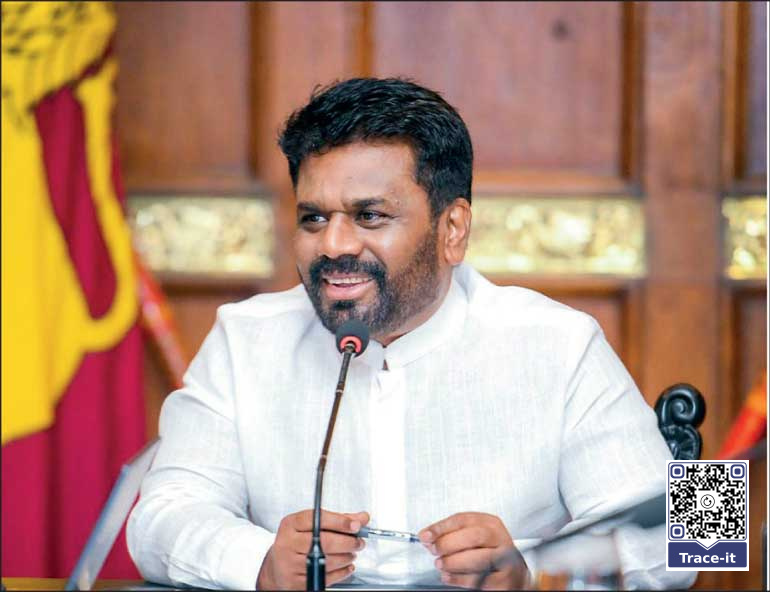
President Anura Kumara Dissanayake
These draft laws raise fundamental questions about the direction of governance reform in Sri Lanka. They concentrate powers that could be abused if not now in the future. Sri Lanka needs effective institutions capable of confronting corruption, organised crime and threats to public safety
By The National Peace Council
The NPP Government’s determination to tackle corruption, drug trafficking and organised crime, including criminality involving powerful politicians and senior state officials, presents a significant break with the past. Its mandate for system change requires both effective law enforcement and protection against arbitrary state power.
In this light, the National Peace Council (NPC) is deeply concerned that three bills now before Parliament pull in the opposite direction. These are the Protection of the State from Terrorism Bill, the Prevention of Organised Crimes Bill and the NGO Registration and Supervision Bill. Their provisions raise serious concerns about excessive state power and the potential for repression, now or under future Governments.
The Protection of the State from Terrorism Bill risks bringing legitimate political protest, trade union action and civil disobedience within the scope of terrorism offences. It provides for prolonged detention, inadequate judicial oversight and restrictions on access to legal counsel.
Sri Lanka’s experience with the Prevention of Terrorism Act (PTA) shows how such provisions are used against critics, minorities and political opponents. Any replacement must break decisively with this history and ensure meaningful judicial oversight, prompt access to legal counsel and effective remedies against arbitrary detention. Several petitions challenging the Bill were taken up before the Supreme Court. NPC trusts the outcome will ensure the proper balance that protects human rights and democratic freedoms.
The Prevention of Organised Crimes Bill has come before Parliament without public discussion. It provides for extensive surveillance powers, detention of up to a year and the admissibility of confessions made to the police. Ironically, provisions from the PTA, which is to be repealed, have come back through the backdoor in this draft law. The fight against organised crime is essential, but it must not create a separate criminal justice regime in which ordinary safeguards are diminished. Admitting confessions made in police custody invites coercion, as the record of PTA abuse shows.
The proposed NGO legislation would give the state broad discretionary powers over the registration, renewal, suspension and deregistration of civil society organisations, including NPC, placing them under excessive administrative control. This threatens freedom of association, expression and independent advocacy, on which a democracy depends. Civil society plays an essential role in strengthening accountability, supporting vulnerable communities and promoting reconciliation. Its independence must be protected, not undermined by disproportionate regulatory control.
Taken together, these draft laws raise fundamental questions about the direction of governance reform in Sri Lanka. They concentrate powers that could be abused if not now in the future. Sri Lanka needs effective institutions capable of confronting corruption, organised crime and threats to public safety. It also needs institutions that protect citizens from abuses of state power. These objectives are complementary, not contradictory. It is essential for the Government to substantially revise the three bills where their provisions fail to meet constitutional and international human rights standards.




