Monday Oct 26, 2026
Monday Oct 26, 2026
Monday, 26 October 2026 01:27 - - {{hitsCtrl.values.hits}}
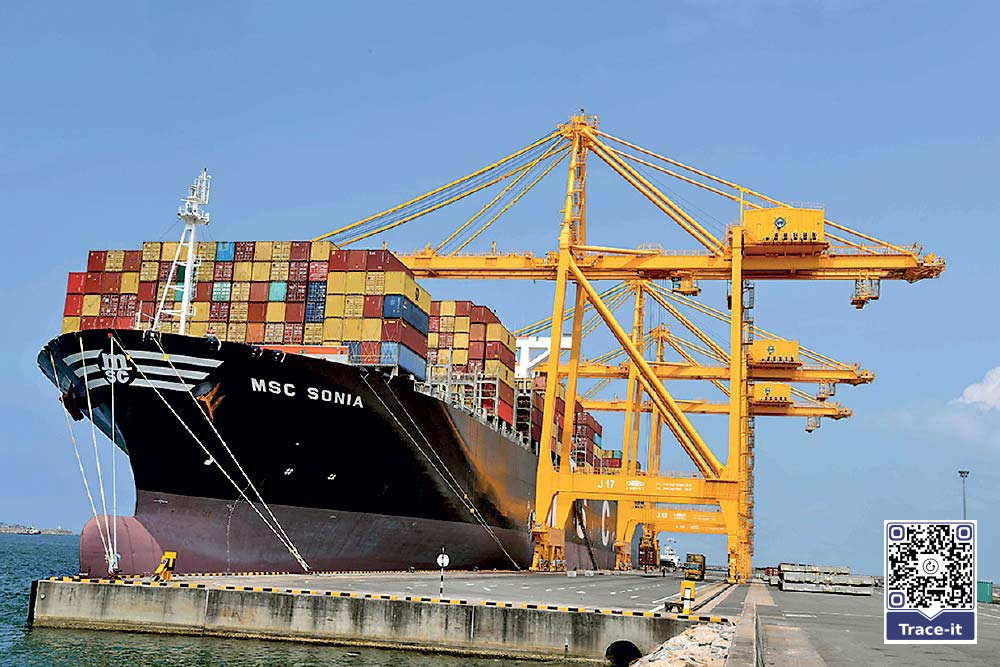
 The terminal’s major investments have already been made, and the remaining commissioning and system-activation work is expected to be completed by the latter part of 2026. In these circumstances, a decision to transfer the operation of the East Container Terminal to a private party would deprive the people of Sri Lanka of the full benefits of an investment made with public funds. Giving ECT to a second operator would mean making a substantial investment to develop a major strategic national asset without enabling the Sri Lanka Ports Authority to obtain the full benefits of its operations and commercial potential
The Joint Executives’ Alliance of the Sri Lanka Ports Authority (EAPA), comprising the Staff Officers’ Association of the SLPA and Engineers’ Association of the SLPA, have written to President Anura Kumara Dissanayake to retain the Colombo East Container Terminal under the full ownership and direct operational control of the SLPA. Following is the text of the letter signed by SLPA Staff Officers’ Association President C.D. Jayasekara, SLPA Engineers’ Association President K.C.M. Wanasinghe, Secretary M.M.S.R. Silva. and SLPA Staff Officers’ Association Secretary W.K.P. Suranga Walpola
We respectfully submit this letter to express our serious concern regarding the recently announced proposal to hand over the operations of the East Container Terminal (ECT) to a private party. By the way doing so, we draw your attention to the terminal’s operational readiness, financial strength, and long-term strategic significance, matters about which we have previously expressed concern. We firmly believe that the East Container Terminal, as a strategic asset belonging to Sri Lanka, should remain under the full ownership and direct operational control of the Sri Lanka Ports Authority (SLPA).
ECT is not merely another container terminal. Situated within the Port of Colombo, it is a nationally significant strategic asset capable of safeguarding the future competitiveness of our port and further strengthening the contribution made by the Sri Lanka Ports Authority to the national economy.
Sri Lanka has invested in ECT; securing its full benefits is the responsibility of the Sri Lanka Ports Authority
The Sri Lanka Ports Authority has already made substantial investments in developing ECT, using its own financial resources. Through this public investment, the terminal’s infrastructure, modern equipment, and automation systems have been developed, with the objective of establishing a modern, semi-automated container terminal capable of competing with the world’s leading terminals.
The principal capital investments in this project have now been completed. Major facilities already in place include 12 ship-to-shore gantry cranes, 40 automated rail-mounted yard gantry cranes, the Navis N4 terminal operating system, the ABB automation platform, and the operations building.
Over the past several years, the operations and engineering teams of the Sri Lanka Ports Authority have worked with continuous dedication to prepare operational and human-resource plans, study workflows, integrate systems, and overcome technical challenges. Through these efforts, employees and management of the Authority have made a substantial contribution towards bringing this terminal into operation.
The terminal’s major investments have already been made, and the remaining commissioning and system-activation work is expected to be completed by the latter part of 2026. In these circumstances, a decision to transfer the operation of the East Container Terminal to a private party would deprive the people of Sri Lanka of the full benefits of an investment made with public funds.
 The strongest argument for a new container terminal being operated successfully under public management is provided by the operational history of the Sri Lanka Ports Authority itself. By successfully operating the Jaya Container Terminal (JCT), the Authority has demonstrated its ability to compete with private-sector terminals and to manage operations efficiently and profitably. In 2014, the JCT operated by the Sri Lanka Ports Authority handled 2.56 million TEUs of containers. Similarly, since 2010, JCT, a terminal under SLPA management, has handled an average annual container volume exceeding 2 million TEUs
Sri Lanka Ports Authority has a proven ability to operate ECT successfully
The strongest argument for a new container terminal being operated successfully under public management is provided by the operational history of the Sri Lanka Ports Authority itself. By successfully operating the Jaya Container Terminal (JCT), the Authority has demonstrated its ability to compete with private-sector terminals and to manage operations efficiently and profitably.
In 2014, the JCT operated by the Sri Lanka Ports Authority handled 2.56 million TEUs of containers. Similarly, since 2010, JCT, a terminal under SLPA management, has handled an average annual container volume exceeding 2 million TEUs.
The Sri Lanka Ports Authority’s operating division has already developed the operational experience, human resources, financial resources, and system-integration capabilities necessary to make ECT operational. These achievements also demonstrate the terminal-operations experience required for future challenges.
The financial benefits are clearly demonstrated
As the Sri Lanka Ports Authority is a Government institution that pays dividends to the Treasury, its financial success is also directly connected to the public interest of Sri Lanka. It is a profit-making state institution that contributes to the national economy through the effective operation of its terminals.
According to the Sri Lanka Ports Authority’s own figures, during 2021–2025, the JCT terminal alone generated a total profit of Rs. 63.2 billion for the Sri Lanka Ports Authority. In comparison, the combined income generated by the two terminals, SAGT and CICT, for that period amounted to Rs. 62.5 billion.
Furthermore, between 2019 and 2025, the State-owned JCT terminal paid a total of Rs. 14.6 billion in dividends, while the contribution from the CICT terminal was Rs. 1.4 billion. Thus, JCT’s contribution was more than ten times that of CICT.
These figures make clear the real economic value of operating a terminal under SLPA control. The Authority estimates that operating ECT at full capacity could generate approximately $ 200 million in annual income for the port.
While all income earned by a state-owned terminal becomes part of Sri Lanka’s financial system, a considerable portion of the revenue received by a privately operated terminal flows overseas through financial arrangements. In contrast, income generated by a fully State-operated terminal remains within the country and directly supports the national economy.
By operating ECT directly, the Sri Lanka Ports Authority has the ability to strengthen its operating efficiency, future port development, infrastructure, modernisation, and training. Therefore, rather than simply transferring operations to a private party, the Authority should be given the opportunity to develop the terminal itself and obtain the benefits of its investment.
Consequently, when evaluating the proposed ownership and operating arrangement, it is not sufficient to consider only the income that the Sri Lanka Ports Authority may receive. It is also essential to consider the value that would be surrendered, the operational authority that would be lost, and the long-term financial returns.
The proposed model risks weakening the strategic future of the Sri Lanka Ports Authority
Your Excellency, we wish to draw your attention to an important matter concerning port ownership. Although the Sri Lanka Ports Authority would retain ownership of the port’s property, allowing a private operating party to take control of daily operations and the port’s strategic direction could undermine the Authority’s position.
Giving ECT to a second operator would mean making a substantial investment to develop a major strategic national asset without enabling the Sri Lanka Ports Authority to obtain the full benefits of its operations and commercial potential.
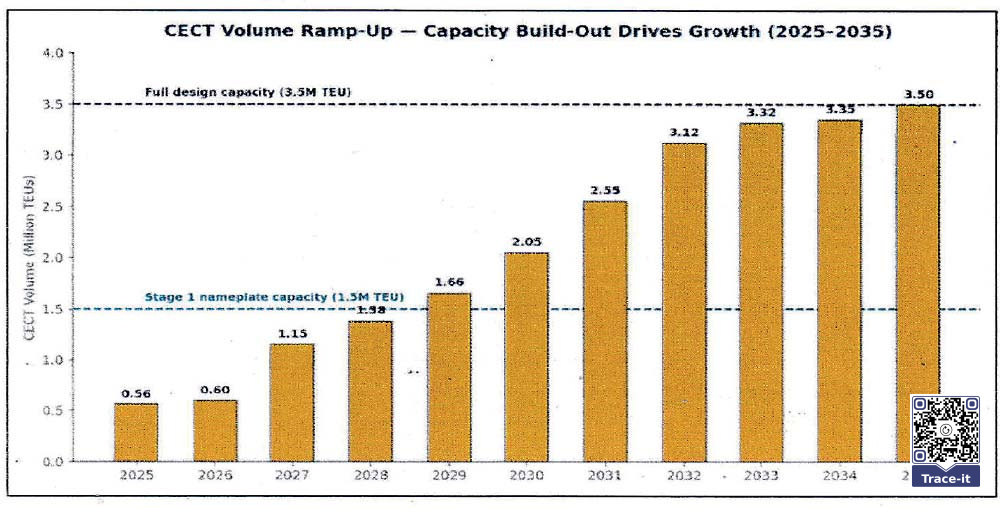
Regarding container-handling volumes, Your Excellency has stated that ECT currently handles approximately 0.5 million TEUs, and the view has been expressed that this volume could increase under private-sector management. However, the essential additional equipment has already been ordered but has not yet arrived. Therefore, regardless of who the operator is, ECT cannot at present function at its complete design capacity. Once the equipment is received, the SLPA will be ready to operate ECT at its full capacity, with the potential to reach 3.5 million TEUs annually. In the meantime, SLPA operating teams have been carrying out operations in stages and conducting tests under the available conditions.
ECT’s modern infrastructure, deep-water facilities, and its potential for an additional 800-metre expansion under the North Port project make the terminal extremely important for the next stage of growth of the Port of Colombo. Accordingly, this decision is directly linked to the future of the SLPA’s container-terminal business.
Projected growth of ECT container-handling volumes under the Sri Lanka Ports Authority
If direct operational control of ECT is taken away from the Sri Lanka Ports Authority, it may lose the capacity to compete commercially in the future, maintain its long-term financial stability, and finance future national port development. It is a risk that should not be taken lightly.
Moreover, ECT, when operated by the Port Authority, can function neutrally and openly for all shipping lines. Without depending on a particular shipping line or alliance, it can provide all operators with fair commercial access. This would serve the wider national interest and further strengthen the status of the Port of Colombo as a regional maritime hub.
The tender for the remaining equipment is already under way
The purchase of the remaining equipment needed to commence operations at the East Container Terminal, including SC equipment, is currently required. Steps have already been taken to coordinate this process with ECT’s public-sector operating division, and tenders have been called for that purpose. It is understood that several domestic and foreign bidders have expressed interest.
In addition, attention has been drawn to delays in tender procedures for the purchase of Straddle Carriers. Although there have been such delays, the required equipment can be procured through an accelerated process, and ECT can be brought into successful operation without unnecessarily extending the timetable. The relevant equipment specifications and requirements have already been prepared.
The Sri Lanka Ports Authority already possesses the principal infrastructure and operational capabilities required for ECT. Through proper coordination of the procurement of the remaining equipment, the implementation of the system can be accelerated. Handing the terminal to an overseas or private operator merely because its immediate operational income is lower would be a decision that overlooks the substantial public investment already made. Therefore, priority should be given to enabling ECT to operate successfully under SLPA control, so that the full returns on investment can benefit the nation.
 During 2021–2025, the JCT terminal alone generated a total profit of Rs. 63.2 billion for the Sri Lanka Ports Authority. In comparison, the combined income generated by the two terminals, SAGT and CICT, for that period amounted to Rs. 62.5 billion. Furthermore, between 2019 and 2025, the State-owned JCT terminal paid a total of Rs. 14.6 billion in dividends, while the contribution from the CICT terminal was Rs. 1.4 billion. Thus, JCT’s contribution was more than ten times that of CICT. These figures make clear the real economic value of operating a terminal under SLPA control. The Authority estimates that operating ECT at full capacity could generate approximately $ 200 million in annual income for the port
Private-sector participation is not indispensable
The Sri Lanka Ports Authority is not opposed to private-sector participation in the development and operation of container terminals at the Port of Colombo. In fact, the WCT II project and the proposed North Port development could be implemented through suitable public-private partnerships (PPPs), where appropriate.
There are also occasions when partnerships with the private sector are needed to carry out major new investments that the government cannot finance on its own. However, the East Container Terminal (ECT) is a different situation. Approximately 99% of the overall project cost has already been financed by the Sri Lanka Ports Authority, and the funds required to complete the remaining investment by the end of 2026 have also been allocated. Therefore, at this stage, transferring the operation of this terminal to a private party cannot be justified solely on the basis that private-sector investment is essential.
The strategic decision that needs to be taken at this final stage
Your Excellency, the real need at present is not to identify a new operator for the terminal but to allow the Sri Lanka Ports Authority to complete the commissioning of ECT successfully.
Investments have already been made, the principal infrastructure and equipment have been established, human resources have been prepared, employees have been recruited, and operating teams have gained experience. We stand ready to make an active contribution to the successful completion of this task.
Therefore, we firmly believe that giving the organisation that financed, developed, and prepared this terminal the opportunity to complete this work and lead its operations would be the more appropriate strategic decision.
Accordingly, Your Excellency, we respectfully submit the following requests:
1. That the proposal to transfer the operations of ECT to a private party be withdrawn and that the continuation of ECT under the full ownership and direct operational control of the Sri Lanka Ports Authority be assured.
2. That the Sri Lanka Ports Authority be given the opportunity to obtain the full economic benefits of the investment already made, strengthen its financial stability, make a meaningful contribution to the Treasury, and develop ECT as a strategic national asset capable of contributing to the future port development of Sri Lanka.
Your Excellency, the ECT is not merely a port facility. It is a massive investment made by the people of Sri Lanka, a commitment by the staff of the Sri Lanka Ports Authority, and a strategic
opportunity acquired by Sri Lanka. At this decisive stage, we believe that allowing the Sri Lanka Ports Authority itself to carry the investment forward will help preserve a national asset that can serve future generations.
We respectfully request that this matter be given your close attention in view of the long-term benefit of the Sri Lanka Ports Authority, the Port of Colombo, and the people of Sri Lanka. We also request an opportunity for a discussion with all the parties involved. We wish to respectfully inform you that the Joint Executives’ Alliance is prepared to provide further clarification and the necessary technical information regarding the implementation of the terminal.




