Monday Sep 28, 2026
Monday Sep 28, 2026
Tuesday, 5 May 2026 00:00 - - {{hitsCtrl.values.hits}}
By National Peace Council
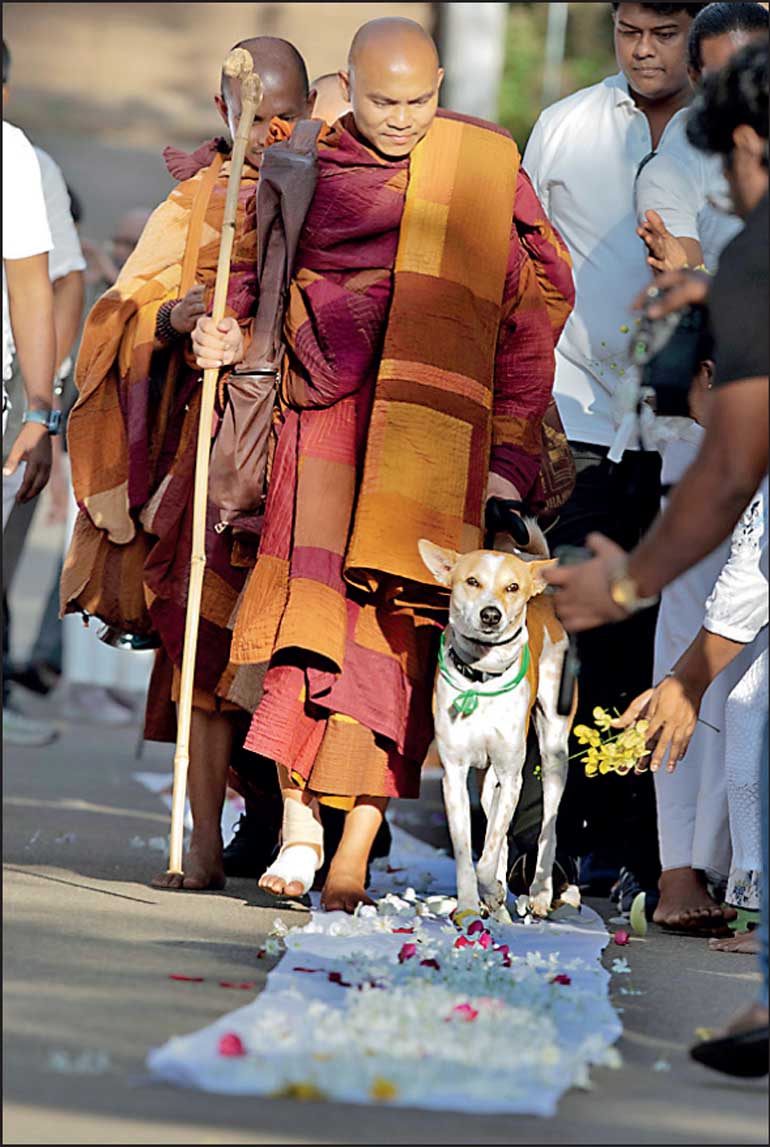
The conclusion of the international Walk for Peace led by Most Venerable Bhikkhu Thich Paññākāra from Vietnam, that took place in Sri Lanka last month generated interest and discussion across the country about the importance of peacebuilding and coexistence in the country. The public response to the walk, including support extended by people from different religious and ethnic communities, showed that there is much space within society for initiatives that encourage dialogue, restraint and mutual respect.
The National Peace Council believes this positive response should be used constructively, while recognising that reconciliation in Sri Lanka remains a long term challenge. More than seven decades of political conflict, ethnic polarisation, violence and mistrust cannot be overcome through symbolic events alone. Lasting reconciliation requires sustained political engagement, institutional reform and consistent efforts to build trust among communities. The underlying political issues linked to power sharing, equality, representation and accountability cannot be postponed indefinitely if reconciliation is to move forward in a meaningful way.
In this context, the holding of Provincial Council elections has become increasingly important. The demand made by opposition parties and civil society groups for these elections reflects the wider concern that democratic institutions linked to devolution and local representation need to be revitalised. The continued delay in holding these elections limits opportunities for inclusive governance, particularly in areas most affected by conflict. NPC believes that the government should take steps to engage all political parties, civil society organisations and communities on the way forward regarding devolution, power sharing and democratic participation.
The Walk for Peace should therefore be viewed not as an end in itself, or as a stand-alone event, but as one contribution within a much larger national process. Future peacebuilding initiatives need to involve broader participation by civil society organisations, inter religious groups, youth organisations, educators and local communities, including stronger engagement with the North and East where the impact of war continues to shape public attitudes and political realities. Continued efforts towards dialogue, democratic participation and political inclusion are needed if the country is to move towards a more stable and peaceful future.




