Saturday Oct 31, 2026
Saturday Oct 31, 2026
Saturday, 31 October 2026 00:00 - - {{hitsCtrl.values.hits}}
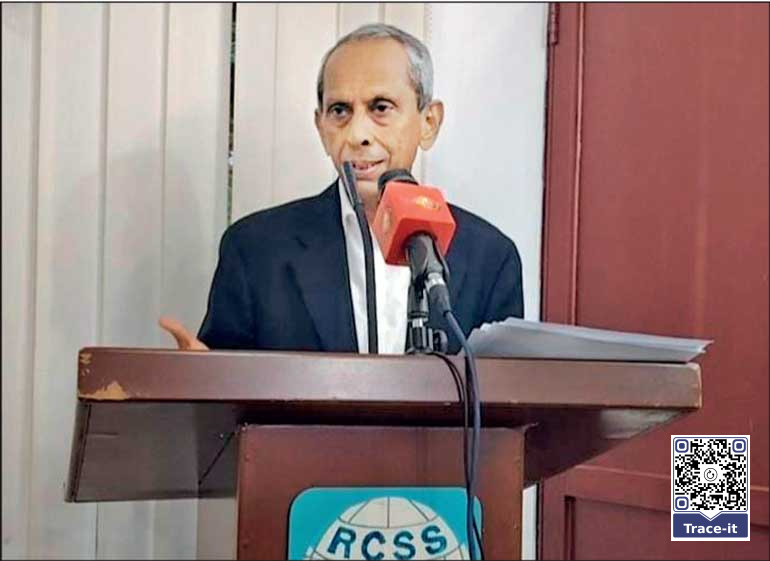
Former Foreign Secretary H.M.G.S. Palihakkara
Delivering the inaugural lecture of the SAU-RCSS South Asia Dialogue, Former Foreign Secretary H.M.G.S. Palihakkara has observed that SAARC seems to have gradually but inevitably, ‘normalised’ non-cooperation and they could instead use flexible, variable-geometry arrangements while keeping the wider regional framework open. Contending that this is a best practice of other regions, he called for the removal of the ’unanimity’ requirement which operates like a veto, from the ‘consensus’ rule in SAARC, so that everybody does not have to agree on everything, but can reach common ground on economics, with reservations concerning unbridgeable issues.
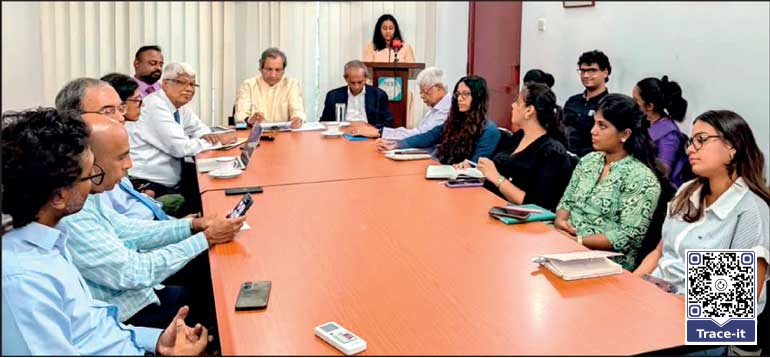
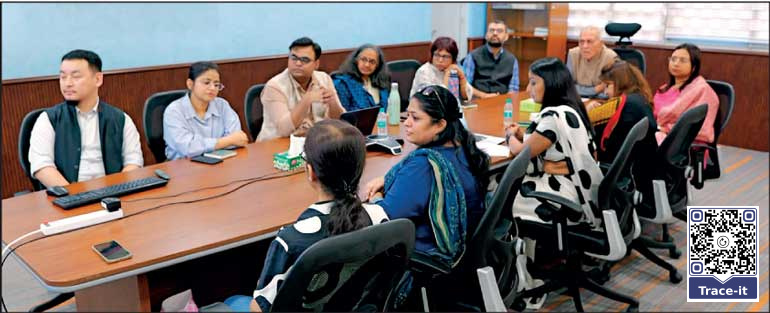
Palihakkara made these observations speaking on the theme ‘Regional Cooperation: Reflections on SAARC and Beyond’, during the South Asia Dialogue - a new joint initiative launched on 23 October 2026, by the Regional Centre for Strategic Studies (RCSS) located in Colombo, Sri Lanka and the South Asian University (SAU), New Delhi, India. Held from the RCSS office with esteemed guests present physically, it connected virtually with SAU students and faculty, RCSS members, alumni and friends spread across the world, and other South Asia watchers. The discussion was chaired by University of Colombo Department of International Relations Professor Chaminda Padmakumara, and the first Sri Lankan PhD awardee from the SAU, who commended the initiation of the South Asia Dialogue.
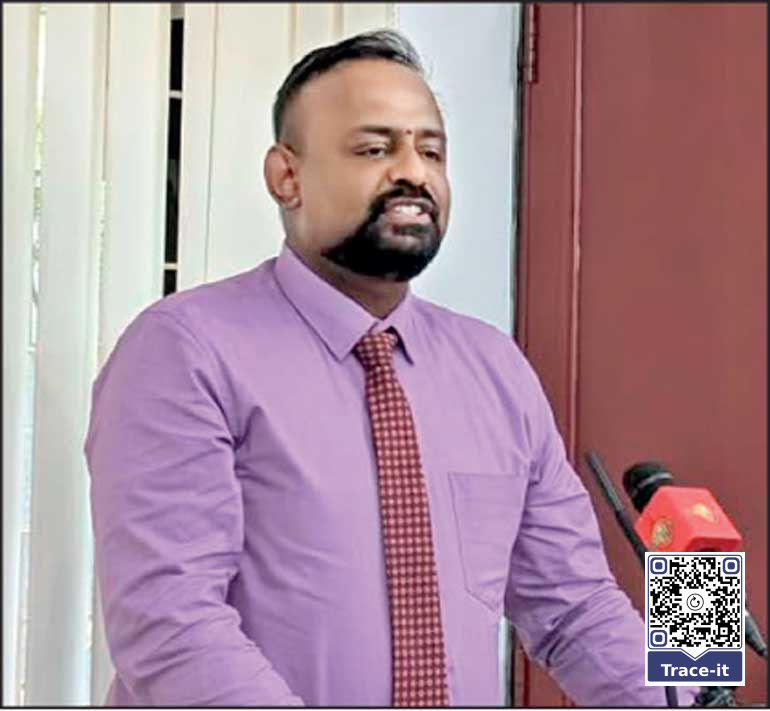
In opening remarks RCSS Executive Director and Co-Convenor Ambassador Ravinatha Aryasinha noted that the SAU-RCSS Memorandum of Understanding signed on 31 August 2026 and the South Asia Dialogue initiated, were in pursuance of the founding principles of both institutions - to strengthen South Asian identity and to collaborate in independent research, policy debates, and publications, particularly connecting young scholars from SAARC countries.
The President, South Asian University saw the event as an outcome of the MoU and underlined how spaces for dialogical engagement were the at the core of this partnership, and reaffirmed South Asian University’s mandate to build knowledge across borders. He underlined SAU’s firm commitment to build transformative networks of change across South Asia and saw the SAU-RCSS taking the vision forward. Faculty of International Studies Associate Professor and co-convenor of the series Dr. Shweta Singh, highlighted that the idea of this South Asia Dialogue series was to bring together academics, scholars, practitioners, young people in conversation on the idea of ‘South Asia’ and beyond. She underlined that this is pertinent as we move away from cartographic traps, to think about South Asia as an epistemic category, with its unique history, culture, politics, and ‘lived experience’.
Elaborating on the theme, Palihakkara pointed out that regional organisations that have been successful such as the ASEAN, not only had different regime and governance styles, but had also not eliminated every territorial and political dispute among its members before launching economic cooperation. However, they developed mechanisms that did not predicate economic cooperation on resolving political disputes. They have thus achieved flourishing cooperation and trade within the region and today command not only economic, but also geopolitical and strategic agency among the giants—China, as well as the West. He observed in this regard that SAARC has much to learn from the ASEAN’s ‘art of the deal’ to depoliticise economics and economise on politics. Trust, in other words, is not sentimental. It is an economic variable.
Palihakkara noting that many express the opinion that SAARC remains hostage to the Pakistan-India adversarial relationship, with Indian diplomatic opinion arguing that Pakistan resistance and cross-border terrorism militate against regional collectivity and integration - which of course deserves to be taken seriously by Pakistan. He also noted that India’s own diplomats have also criticised India’s role in the region as well, where in addition to the asymmetry, India has been ‘too calculative on short term costs and a narrowly conceived approach on regional cooperation. He said, beyond short-term costs, India seems to overlook the long-term strategic advantage of collective prosperity through regional cooperation.
He contended that small countries Nepal, Bhutan, Bangladesh, Sri Lanka, Maldives also calculate. While there is an opportunity, at the same time dealing with a colossus, brings economic, security, geopolitical implications. So, smaller states while needing access to India’s market, justifiably or otherwise also fear coercive dependence and loss of sovereignty and strategic autonomy for themselves in their public policy choices. Hence India must not expect sovereign assets or strategic loyalty as kickbacks for economic partnership. He observed that thematic considerations will also militate against the successful regional cooperation, as countries will hesitate to invest in regional infrastructure if politics can suddenly destroy the economic calculations - as businesses cannot build reliable supply chains if customs rules can be disrupted because of political differences. Smaller countries will also be cautious if dependence on a dominant neighbour could become unmanageable, hence trust becomes an economic variable and is important.
During the discussion responding to questions on China’s role within the region and the Belt and Road Initiative, Palihakkara noted that, no small nation in South Asia will play the China card against India, or the India card against China. India too has been recalibrating its relationship with China, expanding investments in partnership with China. He noted that every South Asian country should support India’s rule-based rise, and if democratic India’s ascent is peaceful and rules-based, it is not a threat to be feared but an opportunity to be seized.
Questions were also raised by students from SAU whether people to people diplomacy can overcome the stalled regionalism of SAARC; how India could build trust among South Asian states via the structural advantages of regionalism without raising concerns regarding asymmetries; and why they are looking to build alternatives to SAARC? Palihakkara noted that if alternative cooperation is pragmatically done, with no geopolitical intentions but based on economic advantage, no country should have an issue. He added, that while trade builds constituencies for stability, connected grids, cross-border supply chains, easier travel, and professional exchanges like what the SAU-RCSS collaboration is doing, makes disruption more costly. That is how it encourages cooperation. Besides ASEAN, the European and African insight goes to show how to achieve advanced regional cooperation, which also makes conflict increasingly irrational for modern state behaviour.
SAU Faculty of International Studies Associate Dean Dr. Dhananjay Tripathi, who delivered the closing remarks, whilst highlighting the importance of people-to-people interaction and the need to build institutions similar to the SAU where people can come together, noted that although history and memory still play a significant role in state interactions, people can still come together where states manage to accommodate. The Vote of Thanks was delivered by RCSS Research/Program Officer Chamika Wijesuriya, who is also a graduate of the SAU.