Sunday Sep 13, 2026
Sunday Sep 13, 2026
Tuesday, 9 June 2026 03:38 - - {{hitsCtrl.values.hits}}
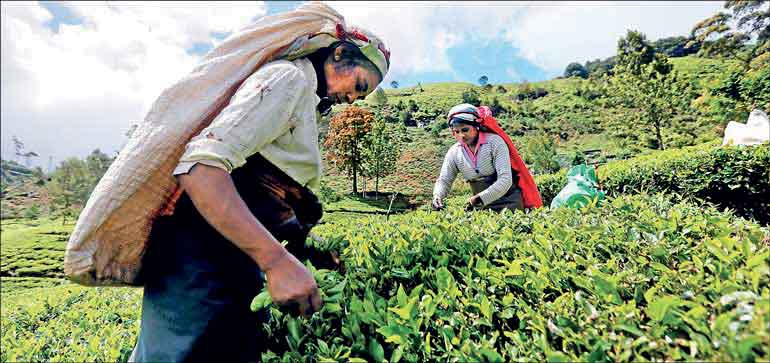
Revitalising tea, rubber, coconut, spices, and other export-oriented industries should be at the centre of the national economic strategy
 After one and a half years in office, the Government has little excuse for underperformance.
It enjoys an overwhelming parliamentary mandate, having secured an absolute majority and nearly a four-fifths majority in Parliament. It controls all the levers of executive power.
The President campaigned on a promise of transformative change. He appealed to the electorate to grant him a decisive mandate so that his reform agenda could be implemented without obstruction from what he described as a bankrupt and discredited Opposition. The people responded enthusiastically, delivering both the Presidency and an unprecedented parliamentary majority.
The question now is simple: what has been achieved during this period?
One area where the Government appears to have made tangible progress is the fight against corruption. Several senior public officials and former ministers have been investigated, indicted, and brought before the courts. It is encouraging to see the law being applied more rigorously than in the past. While it is too early to declare victory, the administration deserves credit for demonstrating a willingness to confront corruption in high places.
That said, the anti-corruption drive has not been without controversy. Some critics argue that elements of political vendetta have occasionally crept into the process. Equally concerning is the gap between rhetoric and results in certain high-profile cases. The public was repeatedly assured that those responsible for the Central Bank Bond Scam would be held accountable. Yet years later, many Sri Lankans remain unconvinced that justice has been fully served. For the average citizen, the promised reckoning appears incomplete.
Another area where the Government appears to have made tangible, if incomplete, progress is the fight against organised crime and drug trafficking. After a troubling surge in gang-related violence in early 2025, there has been a discernible shift in approach. A change of leadership at the helm of the police was followed by a more assertive and strategically focused crackdown. Several high-profile drug kingpins who had been directing operations from overseas from Dubai, Indonesia, and elsewhere, were tracked down, arrested through international cooperation, and repatriated to face justice in Sri Lanka.
Crucially, the current campaign has demonstrated a willingness to pursue the nexus between organised crime and political patronage, something conspicuously absent from previous efforts. The Inspector General of Police has reported significant improvements in performance metrics, including a substantial increase in narcotics seizures and weapons recoveries. The optics, at least, suggest that this Government is serious about dismantling structures that previous administrations either tolerated or actively protected.
The Government was elected with one of the strongest mandates in Sri Lanka’s history. Such a mandate brings not only power but responsibility. After one-and-a-half years in office, there have been encouraging signs in the fight against corruption and in restoring public security. Yet these achievements, important as they are, cannot by themselves secure the nation’s future
However, enforcement alone is not enough. While removing drugs from the streets and pursuing kingpins is essential, long-term success requires a comprehensive strategy that includes rehabilitation, education, and prevention. We must ensure that an entire generation is not lost to addiction. A balanced policy that combines firm policing with treatment and recovery program is indispensable.
Beyond these areas, the Government’s economic strategy remains open to serious scrutiny.
Sri Lanka continues to face an acute shortage of foreign exchange. Given this reality, one would expect a clear and innovative plan to expand export earnings and attract productive investment. Instead, there appears to be a growing emphasis on luxury apartment developments and high-end real estate projects.
This raises several important questions. Who is the market for these developments? Why are banks willing to finance such large-scale projects in a country still grappling with economic fragility? Is there sufficient demand to justify the rapid expansion of luxury housing stock?
Similar questions apply to the proliferation of boutique hotels and tourism ventures. While tourism remains one of Sri Lanka’s most promising sources of foreign exchange, concerns persist that a significant portion of tourism-related income is escaping the formal economy.
In several coastal areas, foreign visitors are reportedly operating unregistered accommodation services, restaurants and night clubs, transport businesses, surf schools, and other commercial ventures without the necessary licences, tax registrations, or regulatory oversight. At the same time, unauthorised operators continue to provide services that directly compete with legitimate local businesses that comply with the law and pay taxes.
The issue is not tourism itself, which should be welcomed and encouraged, but the apparent failure to regulate certain activities effectively. Every dollar earned through unregistered businesses represents lost tax revenue, lost foreign exchange, and an uneven playing field for law-abiding Sri Lankan entrepreneurs.
The authorities are undoubtedly aware of these concerns. The question is why more decisive action has not been taken. At a time when the country is searching for revenue and foreign exchange, the Government may be forfeiting millions of rupees through weak enforcement and inadequate regulation.
Tourist arrivals alone should not be the measure of success. What matters is how much of that revenue remains within the formal economy, contributes to Government revenue, and creates sustainable opportunities for Sri Lankan businesses and workers.
Bold and imaginative policy
Sri Lanka’s own history offers a powerful lesson in what can be achieved through bold economic thinking.
When J.R. Jayewardene assumed office in 1977, he inherited an economy burdened by years of inward-looking socialist policies. The country was facing severe shortages of essential goods, long queues for basic necessities, limited foreign exchange reserves, and high unemployment. There was a growing sense that the economy had reached a dead end.
The response was dramatic. The Government abandoned the prevailing closed economic model and embraced an open economy, liberalising trade, encouraging private enterprise, and actively courting foreign investment. Generous tax concessions and investment incentives were introduced to attract international capital and encourage industrial development.
One of the most ambitious initiatives of that era was the Accelerated Mahaweli Development Program. Through skilful diplomacy and international engagement, Sri Lanka secured substantial financial support from countries such as the United Kingdom, Germany, Canada, and Sweden. The program transformed vast areas of the country through irrigation, hydroelectric power generation, and agricultural development, creating long-term economic benefits that continue to be felt today.
Sri Lanka’s greatest challenge remains economic renewal. The country needs foreign exchange, investment, employment, and above all, confidence. It has overcome similar challenges before through bold leadership and imaginative policymaking. There is no reason it cannot do so again
Similarly, the strategic development of the Port of Colombo into a major container transhipment hub laid the foundation for what would eventually become one of Sri Lanka’s most valuable economic assets. The dividends from that decision continue to contribute significantly to the national economy.
Admittedly, not all of the Government’s plans unfolded as intended. The ethnic violence of July 1983 dealt a severe blow to investor confidence and tourism, slowing the momentum of economic growth and discouraging further foreign investment. Nevertheless, the broader lesson remains valid: bold and imaginative policy decisions can produce transformative results.
Courage to think big, act decisively
Sri Lanka once demonstrated that it could reverse economic decline through vision, courage, and a willingness to depart from failed orthodoxies. The challenge facing today’s Government is not entirely different. The country again faces the pressing need to generate foreign exchange, attract investment, create employment, and restore confidence in the future. History suggests that incremental adjustments alone may not be enough. Meaningful progress often requires the courage to think big and act decisively.
Most importantly, Sri Lanka cannot afford to neglect sectors that have historically generated substantial foreign exchange. In November last year, I wrote and published an article titled The Great Tea Illusion, highlighting the severe consequences of policy neglect in the tea industry.
Tea was once Sri Lanka’s single most important export earner and, for several decades before nationalisation, the plantation sector—comprising tea, rubber, coconut, and spices—accounted for nearly 75% of the country’s foreign exchange earnings. Yet today, these industries continue to suffer from inadequate attention, inconsistent policymaking, and a lack of long-term strategic vision.
At a time when Sri Lanka is desperately searching for foreign exchange, this neglect is particularly troubling. While the plantation sector alone cannot solve the country’s economic challenges, it remains a proven source of export revenue and employment. If economic recovery is truly the Government’s foremost priority, revitalising tea, rubber, coconut, spices, and other export-oriented industries should be at the centre of the national economic strategy rather than at its margins.
The Government was elected with one of the strongest mandates in Sri Lanka’s history. Such a mandate brings not only power but responsibility. After one and a half years in office, there have been encouraging signs in the fight against corruption and in restoring public security. Yet these achievements, important as they are, cannot by themselves secure the nation’s future.
Sri Lanka’s greatest challenge remains economic renewal. The country needs foreign exchange, investment, employment, and above all, confidence. It has overcome similar challenges before through bold leadership and imaginative policymaking. There is no reason it cannot do so again.
The Government has the mandate. It has the numbers. It has the authority.
What remains to be seen is whether it has the vision.
(The author is a plantation management professional and former Chairman of the State Plantations Corporation. He was the founding Chief Executive Officer of Kelani Valley Plantations PLC and has over four decades of experience in plantation management, agribusiness, and commercial enterprise in Sri Lanka and the United States. He has served as a consultant to the Government of Sri Lanka and has assisted the World Bank in studies relating to the performance of the plantation sector. He could be contacted at [email protected])




