Monday Sep 28, 2026
Monday Sep 28, 2026
Monday, 4 May 2026 05:56 - - {{hitsCtrl.values.hits}}
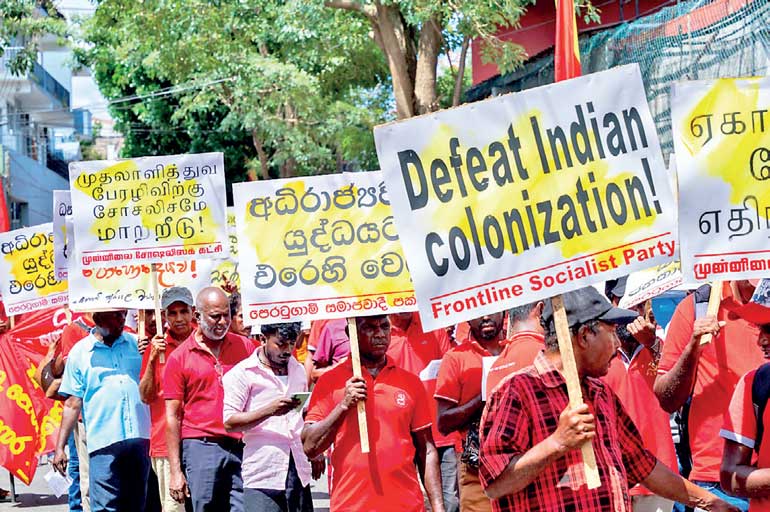
 1 May, internationally recognised as Workers’ Day, stands as a historic symbol of the struggles, sacrifices, and solidarity of the labour movement across the world. Its origins lie in the late 19th-century fight for the eight-hour working day, most notably linked to the Haymarket Affair in Chicago. From that defining moment, May Day spread across continents, becoming a day not merely of commemoration, but of collective strength—where workers unite to assert their rights, celebrate achievements, and demand justice where it is denied.
In Sri Lanka, May Day has long been recognised as a public holiday dedicated to honouring the contribution of the working class. For decades, it was marked by rallies, marches, and gatherings organised primarily by trade unions—platforms through which the voice of labour resonated with clarity and purpose.
However, over time, a gradual but unmistakable shift has taken place. Political parties, often operating through affiliated trade unions, began to dominate May Day activities. What was once a day of worker-centric expression increasingly evolved into a stage for political display. Strength was measured not by the advancement of labour rights, but by the size of crowds and the spectacle of rallies.
This year, that transformation reached an unprecedented level. Numerous political parties—some with little or no genuine connection to organised labour—held grand rallies, transporting supporters across regions to project numerical strength. Competing platforms echoed with rhetoric aimed less at addressing workers’ grievances and more at asserting political dominance. The result was an ironic and disheartening spectacle: May Day, a symbol of labour unity, reduced in many instances to a contest of political theatrics.
Both Government and Opposition appear more preoccupied with consolidating or capturing power than with addressing the pressing concerns of the working population. The authentic voice of labour—its struggles, aspirations, and achievements—remains overshadowed. This situation calls for serious reflection
More troubling, however, is the growing perception that governance itself is becoming increasingly detached from the hardships of the people. While public displays project strength and stability, many workers continue to experience mounting economic pressure, uncertainty, and insecurity. There appears to be a widening gap between political messaging and lived reality. Efforts to maintain authority—sometimes through carefully managed narratives and displays of control—risk deepening this disconnect, leaving the ordinary worker feeling unheard and, at times, helpless.
There is also a lesson from our own past that must not be forgotten. In the early 1990s, there was a genuine and determined effort to build a broad-based national trade union centre that could rise above partisan lines and represent the collective strength of workers.
The Ceylon Bank Employees’ Union (CBEU), under my presidency, had the responsibility of convening and guiding this initiative. It was an opportunity to create a unified labour platform with independence and clarity of purpose.
Yet, that effort was ultimately weakened—not by lack of vision or commitment—but by petty differences, external influences, and the inability to sustain unity in the face of competing interests. What could have emerged as a powerful, independent voice of labour was instead fragmented, leaving the movement vulnerable to the very political encroachments we witness today.
To the independent observer, the message is unmistakable. Both Government and Opposition appear more preoccupied with consolidating or capturing power than with addressing the pressing concerns of the working population. The authentic voice of labour—its struggles, aspirations, and achievements—remains overshadowed.
This situation calls for serious reflection.
May Day does not belong to political parties. It belongs to the workers. It is a day earned through sacrifice, built on solidarity, and sustained by the collective will of the labour force. Its meaning cannot be allowed to erode into mere pageantry or political competition.
Therefore, it is imperative that workers and trade unions in Sri Lanka reassert their independence and reclaim May Day as their own. The labour movement must rise above partisan divisions and rediscover its unifying purpose. Trade unions, regardless of affiliation, should come together on common platforms that prioritise workers’ rights, fair wages, job security, and dignity of labour.
The call today is not for division, but for unity—unity grounded not in political allegiance, but in shared interests as workers. The lessons of the past must guide the future. Only through such unity can the true spirit of May Day be restored.
Let May Day once again become a day where the worker stands at the centre—not as a prop in political display, but as the rightful bearer of its legacy and future.
(The author is a former President of Ceylon Bank Employees’ Union)




