Wednesday Aug 26, 2026
Wednesday Aug 26, 2026
Friday, 20 March 2026 00:00 - - {{hitsCtrl.values.hits}}
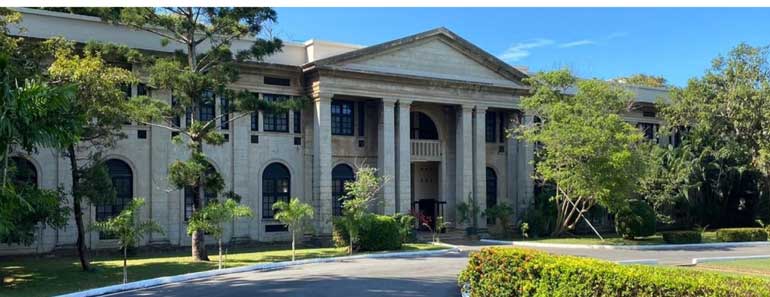
I write in response to the article titled “Legal experts decry move to demolish STC dining hall” (https://www.ft.lk/opinion/Legal-experts-decry-demolition-of-STC-Dining-Hall/14-789164) . While the concerns raised about heritage preservation deserve consideration, the public discussion must also remain grounded in a clear and accurate understanding of the law and the facts.
 No Thomian takes lightly the heritage of S. Thomas’ College, Mount Lavinia. The Dining Hall undoubtedly holds sentimental value for generations of students. However, heritage cannot be protected through alarmist interpretations or selective readings of legislation.
The article suggests that any alteration or demolition of the building would automatically constitute a criminal offence under the Antiquities Ordinance. This requires clarification. Sri Lanka’s Antiquities Ordinance No. 9 of 1940, as amended, does recognise structures over one hundred years old as potentially qualifying as antiquities. However, the law also establishes a clear legal framework for protection. For a structure to fall under strict legal protection as an “ancient monument”, it must normally be formally declared or gazetted by the Minister on the recommendation of the Department of Archaeology.
In the absence of such a declaration, the legal position is far less absolute than has been portrayed. The ordinance does not automatically place every privately owned building over a century old under blanket state control, nor does it automatically criminalise redevelopment purely on the basis of age. To present the law in such sweeping terms risks misleading readers and unnecessarily inflaming public sentiment.
Equally important is the broader context of the development itself. Educational institutions around the world must periodically modernise their infrastructure in order to serve future generations of students. Responsible redevelopment does not necessarily equate to the erasure of history.
It is also worth noting an irony that has received little attention. The redevelopment has been made possible through a substantial philanthropic donation from an Old Trinitian rather than a Thomian. When an individual outside the Thomian fold is prepared to make such a significant contribution toward the future of the school, the conversation should focus on constructive engagement rather than public condemnation.
Debate about heritage is healthy and necessary. But it must be conducted with legal accuracy and intellectual honesty. S. Thomas’ College has endured for nearly two centuries not because it resisted change, but because each generation understood how to balance tradition with progress.
Rehan Jayawickreme
STC batch of 2005




