Saturday Jul 25, 2026
Saturday Jul 25, 2026
Saturday, 25 July 2026 00:43 - - {{hitsCtrl.values.hits}}
 Five years on, the greatest legacy of “Boss” may not be the empire he built, but the trust he inspired
|
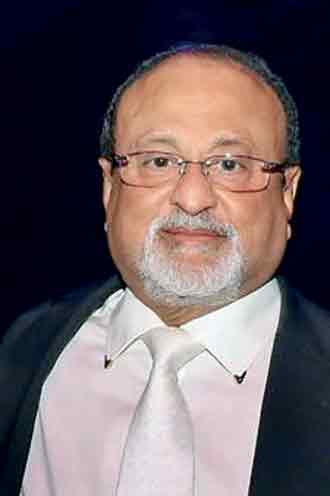
R. Rajamahendran - “Killi Maharaja”
|
Five years have passed since R. Rajamahendran - “Killi Maharaja” to the country and simply “Boss” to many of us - left us. Time has a curious way of changing memory. It softens grief, removes much of the emotion and eventually allows perspective to replace it. Looking back today, I have become convinced that Sri Lanka did not merely lose one of its foremost businessmen on 25 July 2021. It lost one of the country’s last great institution builders.
Successful businessmen
There is an important distinction. Successful businessmen build companies. Institution builders create cultures. Companies can be bought and sold, brands can rise and fall and market leaders eventually surrender their place to others. A culture, if it is strong enough, survives its founder. That is the true measure of leadership.
Many people would point to the Capital Maharaja Group as Boss’s greatest achievement. I have never quite seen it that way. The buildings, the factories, the radio stations, the television channels and the balance sheets were all tangible expressions of his success, but they were never, in my view, the essence of his legacy.
His greatest achievement was people. If the USA had not sourced it first
 He possessed a remarkable ability to recognise talent long before others did. He entrusted responsibility to people, expected them to grow into it and demanded standards they often thought impossible to achieve. Many of those who flourished under him would probably admit that they discovered their own capabilities only because Boss insisted they possessed them.
Working with him was rarely comfortable. It was not designed to be. Preparation mattered. Facts mattered. Deadlines mattered. If you entered his office with a proposal, you were expected to know your subject thoroughly. If you made a promise, it was expected to be honoured. He had little patience for excuses and even less for mediocrity.
Yet those exacting standards were matched by an extraordinary loyalty. Once Boss placed his confidence in someone, he backed that individual with remarkable conviction. He demanded much, but he also gave people the confidence to achieve far more than they believed themselves capable of achieving.
He also refused to accept that Sri Lanka should think small simply because it was a small country. He wanted international standards. He believed Sri Lankan companies could compete with the very best, provided they were prepared to work harder, think differently and never become comfortable with second best. That philosophy shaped not only the Capital Maharaja Group but generations of executives who passed through it.
 Successful businessmen build companies. Institution builders create cultures. A culture, if it is strong enough, survives its founder. That is the true measure of leadership. On 25 July 2021 Sri Lanka lost one of the country’s last great institution builders
Media occupied a particularly important place in his thinking. Broadcasting was never simply another business. It informed, educated, entertained and, when necessary, challenged authority. Those responsibilities could never be measured solely in commercial terms. They demanded judgement, courage and, above all, credibility.
I was reminded of Boss only a few weeks ago at the 46th Executive of the Year Awards organised by the Capital Maharaja Group. During his remarks, the Managing Director of S-Lon, Shan Wickremasekere, one of the Group’s flagship companies, spoke about a single word that has remained with me ever since.
He spoke about trust.
Decades creating
As I listened, it struck me that this was no carefully crafted corporate slogan. It was, in many respects, the culture that Boss had spent decades creating. Those of us who worked in the media during those years remember a very different environment. Newsrooms were different. Broadcasting was different. Competition was different. Yet one value stood above everything else. Trust was not merely desirable; it was imperative. It was the foundation upon which editorial judgement, commercial relationships and professional reputations ultimately rested.
 Killi’s greatest achievement was people
Boss understood something that many leaders never fully appreciate. Technology can be bought. Companies can be acquired. Talent can be recruited. Trust can do none of those things. It must be earned patiently, protected consistently and never taken for granted. Once lost, it is seldom recovered in full.
Perhaps that explains why, five years after his passing, one senses that this remains the Maharaja Organisation’s greatest inheritance. Stewardship has naturally passed to the next generation, but the culture of trust that Boss nurtured over decades has not been abandoned. It has been carried forward by his heir, not simply as a valuable corporate asset but as a solemn responsibility. To preserve trust is infinitely more difficult than to create wealth, and yet that appears to be precisely what the Maharaja Organisation continues to value.
Influential leader
Like every influential leader, Boss had his critics. He would probably have regarded that as inevitable. Leadership requires decisions, and decisions invariably attract disagreement. History, however, has a habit of judging leaders not by the noise surrounding them at the time, but by what remains after they are gone.
When I think of Boss today, I do not first remember meetings or editorials although there is one that remains outstanding!
 He believed Sri Lankan companies could compete with the very best, provided they were prepared to work harder, think differently and never become comfortable with second best. That philosophy shaped not only the Capital Maharaja Group but generations of executives who passed through it
I remember the standards he insisted upon, the confidence he inspired and the quiet belief he instilled that Sri Lanka could aspire to excellence if only it refused to settle for the ordinary. Our country has produced many successful businessmen and many accomplished corporate leaders. It has produced far fewer people prepared to spend a lifetime building institutions that others could inherit with pride.
Five years after his passing, the companies remain. The brands remain. Above all, the trust remains.
Perhaps that, more than anything else, is the true measure of the man whom so many of us simply called “Boss”. Be that as it may.