Sunday Sep 13, 2026
Sunday Sep 13, 2026
Tuesday, 17 February 2026 01:52 - - {{hitsCtrl.values.hits}}
 |
 |
 |
 |
 |
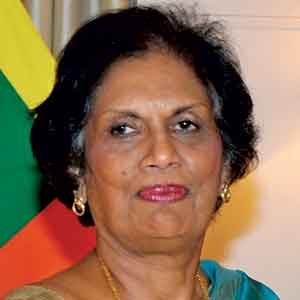 |
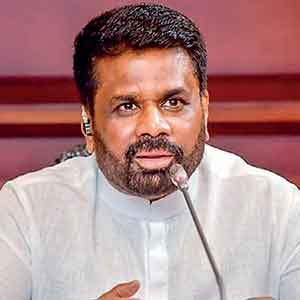
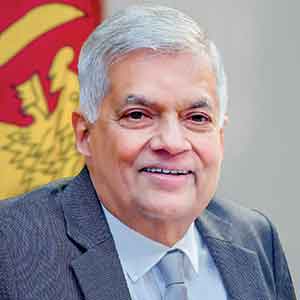
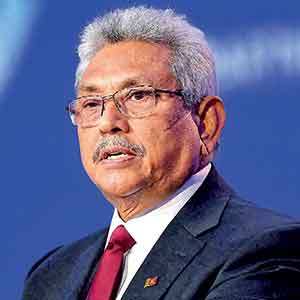
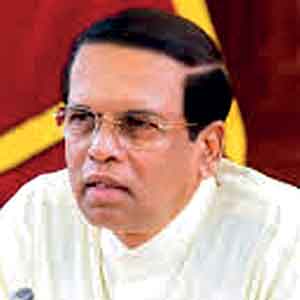
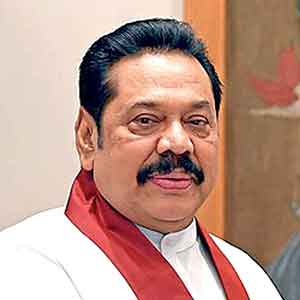
| President Anura Kumara Dissanayake | Ranil Wickremesinghe | Gotabaya Rajapaksa | Maithripala Sirisena | Mahinda Rajapaksa | Chandrika Kumaratunga |
 OVER the years, Sri Lanka has transformed to a developing country surpassing the underdeveloped status. Previous governments, particularly year to 2019, have contributed in many ways with their effective policies and development programs leading to economic growth, overcoming the losses hitherto resulted by riots and destruction. To my knowledge, the smooth running of the economy was hard and difficult because of riots and industrial actions by radical and extremist groups which retarded the growth of the economy for their egotistical aspirations. The major upheavals were the JVP insurrections in 1971, 1987-1989 and the LTTE civil war which took three decades to expunge. The recent educational reforms exacerbated the healing process of the wounded State, creating disharmony and failing to find effective tangible solutions to uplift the economy and address poverty issues.
Systemic downfall – Significant issues
A summary of events which led to bankruptcy is highlighted below. On 12 April 2022, the Governor of the Central Bank of Sri Lanka unilaterally declared that Sri Lanka is bankrupt, suspending ongoing payments of all external debts amounting to $51 Billion. This became a contentious issue and opened questions about the power of the Governor to make a public declaration about the state of the economy. Was this high-handed action a result of making the CBSL an independent organisation or was it to intentionally bypass Parliament, the sole authority to make public statements on the economy?
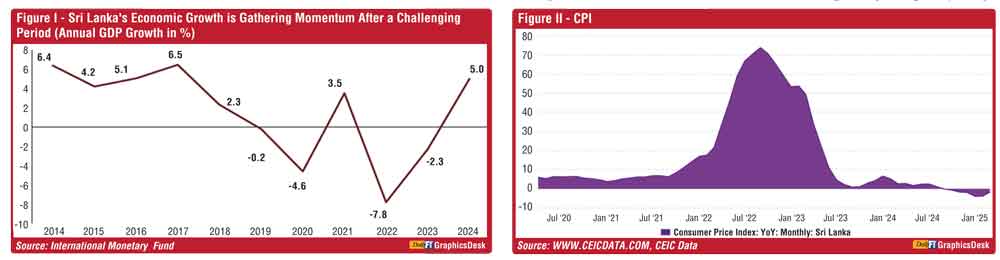
The graphs below give the extent of economic performance before and after the declaration of bankruptcy and the modest recovery following the election of the interim President.
The events that led to bankruptcy
Constitutional crisis – October 2018
The rift between the then President and Prime Minister (PM) had grown to an unprecedented level. The President executed his powers and sacked the PM as revenge. Subsequently, with the President instituted as an alternative PM, this appointment was subsequently challenged in court and lasted 52 days exactly. Since then the GDP has been on a negative steep slope primarily owing to a parliamentary coup orchestrated by the President.
Easter Sunday bombing: Sunday, 21 April 2019
On Easter Sunday 2019, six suicide bombings hit Catholic churches and luxury hotels in Sri Lanka, killing 269 people. The perpetrators were identified as domestic religious extremists, the NTJ (National Thowheeth Jama'ath), as claimed by Islamic State. This led to controversies that the bombings were a political manoeuvre by the battered opposition to grab State power.
Gotabhaya’s ascendancy to the Presidency – November 2019
As highlighted above there were questions surrounding his ascendance to power. The main theme was national security. However, nothing progresses to find the culprits and those who were responsible for the Easter Sunday attacks. The Presidential Commission report was not tabled in Parliament. The President instead appointed his own team to review the report. The report finally made it to the public domain with the removal of many pages and chapters saying they were politically sensitive.
COVID 19 pandemic - Post 2019
The first case of the virus in Sri Lanka was confirmed on 27 January 2020. The pandemic hit Sri Lanka severely in mid-2020, which led to various containment measures by the Government including travel restrictions and the confinement of those who were infected to hospitals. During COVID-19, certain Government cronies had been given a free hand to import COVID-19 testing kits and vaccinations, confining arriving and transiting passengers in hotels arranged by them, a bonus for pre-election support.
To be fair, blaming only the present Government for the societal, political and economic wounds is unreasonable as they were a collective result of all past governments and opposition parties
Unwarranted decisions
The President Gotabaya Rajapaksa made arbitrary decisions and did not think of the pros and cons carefully. Furthermore, reducing the import tax on selected commodities – to benefit his supporters who funded the election victory, abrupt changes to organic fertilisers and announcing “Sir Kiwwa” as substitutes for Government circulars.
The results of the economic impacts hit the economy and affected the people, particularly those at the lower end of society. The GDP dropped to -4.6% in 2020 from 6.6% of 2017. The scarcity of medicines, long queues for gas, petrol and food created enormous problems affecting the daily lives of people while there were deaths due to gas cylinder explosions. This was the beginning of the people’s unrest which grew into an “Aragalaya” and the expulsion of the President.
At the time, the Opposition was raising concerns about a looming state bankruptcy in Parliament to which the Governor of the Central Bank provided a comprehensive road map for economic recovery. However, it did not take off the ground before its momentum disappeared. The sole aim was to challenge and discredit the opposition cry for an IMF recovery program.
The Aragalaya 2022
The Aragalaya or the eruption of public anger had grown as a result of the continued mismanagement of the economy which led to the JVP-NPP opposition taking advantage of the growing public discontent unlike the other opposition groups. Finally, the President escaped and resigned.
Constitutional provisions
As per the constitutional provisions, with parliamentary majority, an interim President was instituted for the remaining period of the presidency and Parliament. During the interim period the Government wholeheartedly embraced the IMF economic recovery package, measures were taken primarily based on macro-economic recovery, less empathy to the most vulnerable of the society – micro economy was put into the backburner. However, the Government was able to resolve the domestic issues such as scarcity of petrol and gas, availability of food items despite the Cost of Living index jumped to unimaginable levels in 2022 -2023 and was subsequently brought down in 2024 (Figure 2). It was considered an achievement in that it prevailed during the turbulence period. The poverty alleviation program called “Aswesuma” was brought into effect and reached the most vulnerable in society. Questions have been asked about the amount of funds spent on administering the program against the money given to the people. Beneficiaries were not the poor but the officers who administered. I have seen long queues at regional secretariats from very early in the morning.
During this period too there have been unconstitutional actions. One is the appointment of the IGP without majority consent. Furthermore, cancelling Provincial Council Elections which were scheduled despite the allocation of funds. It was a totally unacceptable display of dictatorship style leadership within the democracy.
NPP – JVP Government taking over State power
This team tactically exploited the public grievances to their advantage, primarily based on jealousy, anger and hatred. The well-trained team had no fear of indoctrinating the hearts and minds of the lower end of society driving to eradicate corruption, bringing in all culprits within the provision to the full extent of law, transparency of all Government actions thus building a “Rich Country and conducible life for all”. To date all those promises and slogans have gone to the drain despite the public waiting with bated breath. The latest report of a UK based research organisation reported the Sri Lanka corruption index ranked in 2025 at 24.7, dropped by 7.3 notches, zero being 100% corruption. It has also been observed that Government MPs are always on a collision course in the Parliament and in public debates on popular TV programs, strongly defending and vehemently opposing counter arguments directed at Government business.
Issues subject to controversies
Qualifications and post nominal of Government MPs – this resulted in the 3rd citizen leaving Office. Furthermore, one Minister has gone to the CID for wrongly listing post nominals, i.e. Barrister against the name.
The release of 323 red label containers was a serious issue of violating the transparency promoted at election rallies and which subsequently led to a Cabinet reshuffle. To date no official report has been published to this effect.
The head of prisons was remanded/incarcerated for releasing an inmate under the cover of the President’s pardon. Was the action a misuse or intentional?
The supply of coal to Norochcholai power plant (substandard low calorific value) also corrupted the tender procedure. This has become a hot issue and the minister in charge is being challenged to a public debate by opposition MPs
The Ditwah Cyclone – late lukewarm action by the Government despite weather warnings by local authorities and regular updates by Indian weather forecast teams. The estimated loss is around $4.1 billion for infrastructure and livelihoods with intangible losses hardly accountable.
Impulsive response by the Executive as damage control by promising compensation with no proper assessment of damages. Announcing lucrative compensation for the affected and later backing down and adding conditions to qualify. Not well thought but to redress the growing public anger.
Importation of heavy and passenger vehicles: this increases Government revenue as a result of taxes and duties. The increase results in the rupee depreciating against major currencies. The depreciation and the volatility determine the state of the economy. This move too was contrary to facts that had been popular in the election rallies.
One will not see effective tangible actions being taken to heal wounds and differences but band-aid solutions when incidents hit, e.g. Ditwah cyclone, thus all actions for political survival at the expense of the nation’s wellbeing. The recent local Government election results showed the declining trends of voter acceptance, but the Government is making all efforts to nullify public perception and remains undeterred. There is no tangible treatment to stop bleeding from the wounds that are spread across the political, economic and social spheres
Year 6 English module – another serious issue – leading Year 6 students of age 11 to access websites using QR code(s). While it is understood that several public servants who were responsible for the inclusion and not reviewed the textbook have been blamed and interdicted. Always when an issue is surfaced, blaming public servants and building a culture for politicians to escape from accountability.
The MoU signed with India was not disclosed in Parliament, it being the accounting authority. It led to suspicions of importing low quality drugs from India that resulted in a few recent deaths. I have seen a leading officer of the NMRA protecting the Minister but blaming the authority that imported the medicine.
Analysing the list of controversies, Sri Lanka is showing early symptoms and heading to a totalitarian state of governance.
Government initiatives
Clean Sri Lanka and the eradication of the drug menace were two significant initiatives showcased by the current Government. Achieving results require public participation and public support and should not be the sole effort of the Government. Successive governments had failed to address both issues, e.g. the previous IGP, a political appointee, wasted public funds eradicating the drug menace. Similarly, clearing household waste must be done to a schedule and with a method. During my short holiday in Sri Lanka, I observed there were no scheduled collections for household waste and no marked collection locations for waste to be dumped. As a result, waste was simply dumped in places that were convenient to people with the potential for it to become a health issue if neglected.
Conclusion
The public overwhelmingly voted for the NPP-JVP and brought them to power at the presidential and parliamentary elections. It promised to eradicate corruption and made other pledges to reduce the burden of household expenses and to negotiate fresh and favourable DSA with the IMF. To date all the promises have not been fulfilled and the Government instead, is continuing with the same IMF program saying there is no flexibility to do otherwise due the economy it inherited.
It was very unfortunate to see Sri Lanka in a state where the wounds were not only confined to the economy but pervaded all facets of public life with the people struggling to make ends meet. Despite the slogan “Eka Mitata” the social cohesion was at a very low level with some YouTubers talking filth under the guise of freedom of speech and causing anger among the people. The IMF DSA program looks primarily at GDP growth and sets the targets YoY. Being in an IMF program opens a gateway to borrow funds from multilateral agencies without concerns about the cost of borrowing. The Government boasts about their macro-economic achievements and presents only numbers and statistics that are favourable to them. The Government income basically comes from taxes and levies, not from the profit of Government business operations. For example, counting the number of visitors that arrive instead of the foreign exchange earned per person. The MSME sectors are still crawling and not contributing to the GDP as expected, most of the businesses are loan defaulters with no Government support to revive the sector. Even the parate scheme was temporary and wound back. The unspent capital budget in the account balance sheet was thus showing a surplus and growth, favourable to receive the IMF tranches.
To be fair, blaming only the present Government for the societal, political and economic wounds is unreasonable as they were a collective result of all past governments and opposition parties. In the current political setting, the present Government came to power to resolve inequalities and irregularities but appears to be worse than the past regimes, fearlessly navigating their political ideology – e.g. challenging the decisions of the Constitutional Council, (thanks to Yahapalana Government for decentralising power and bringing in severable favourable reforms), exploiting indirect avenues to discredit the office of the Attorney General and unscrupulously protecting the supporters. If this trend continues will be a dangerous irrevocable ploy which will reorient the minds of Gen Z and Gen Alpha.
Finally, one will not see effective tangible actions being taken to heal wounds and differences but band-aid solutions when incidents hit, e.g. Ditwah cyclone, thus all actions for political survival at the expense of the nation’s wellbeing. The recent local Government election results showed the declining trends of voter acceptance, but the Government is making all efforts to nullify public perception and remains undeterred. There is no tangible treatment to stop bleeding from the wounds that are spread across the political, economic and social spheres.
(The author is an engineer)
Ref Sources
https://www.ft.lk/opinion/Debt-after-Ditwah-Why-Sri-Lanka-should-be-cautious/14-786536#
https://www.ft.lk/opinion/Ditwah-disaster-response-Legal-limits-and-market-costs-of-suspending-debt-payments/14-786537#
https://www.google.com/search?q=how+much+cash+Sri+Lanka+printed+in+2025&rlz=1C1GIVB_enAU788AU788&oq=how+much+cash+Sri+Lanka+printed+in+2025&aqs=chrome..69i57j33i160l2.23587j0j15&sourceid=chrome&ie=UTF-8
https://www.cbsl.gov.lk/sites/default/files/cbslweb_documents/publications/fssr/fssr_2023e.pdf
https://internationalbanker.com/finance/sri-lanka-from-stability-to-growth/
https://www.ceicdata.com/en/indicator/sri-lanka/consumer-price-index-cpi-growth
https://tradingeconomics.com/sri-lanka/current-account-to-gdp
https://www.dailymirror.lk/breaking-news/Is-Sri-Lanka-losing-anti-corruption-battle/108-331087




